Taleonspareskenya.co.ke

Genuine vs. Ex-Japan vs. Aftermarket Spare Parts in Kenya: How to Choose the Right Fit

Every Kenyan motorist eventually faces the exact same crossroads. Your mechanic wipes grease off their hands, points underneath your vehicle, and tells you that a critical component needs replacement. Maybe it is a leaking front shock absorber after an unavoidable encounter with a crater on Mombasa Road, a worn-out control arm bushing rattling over the speed bumps of Kiambu Road, or a humming wheel hub bearing that started singing halfway through an upcountry trip to Nakuru.

Once you get past the initial sigh of an unplanned repair bill, the real question begins: What kind of spare part should you buy?

Walk down Kirinyaga Road, Grogan, Industrial Area, or browse online auto stores in Nairobi, and you will immediately be presented with three distinct options at three wildly different price points: Genuine (OEM), Ex-Japan (used original), and Aftermarket (brand-new third-party). Pick the right one, and your car drives like it just rolled off the assembly line, saving you thousands of shillings over the next several years. Pick the wrong one—or fall victim to a counterfeit packaged as “original”—and you will find yourself paying for the same repair twice, stranded on the highway, or compromising your family’s safety.

At Taleon Autospares Kenya, we speak to daily commuters, Uber and Bolt drivers, upcountry travelers, professional mechanics, and commercial fleet managers every single day. Because our core mission—as detailed in our story—is helping Kenyan motorists keep their vehicles on the road longer and safer, we believe an informed driver makes the smartest purchasing decisions.

In this comprehensive guide, we break down the exact differences between Genuine, Ex-Japan, and Aftermarket spare parts in Kenya, explain how each performs under local road and climate conditions, reveal how to spot counterfeits, and give you a clear, component-by-component framework for choosing the right fit every time.

Understanding the Three Tiers of Spare Parts in Kenya

Before deciding where to spend your money, it helps to strip away the street jargon used in Nairobi’s spare parts markets. Words like “original,” “Taiwan,” “Japan,” “genuine,” and “commercial” are often thrown around loosely. Technically, every replacement component available in Kenya falls into one of three categories.

1. Genuine Parts (OEM – Original Equipment Manufacturer)

Genuine parts are brand-new components made by—or directly under contract for—the automaker that built your car (such as Toyota, Nissan, Mazda, Subaru, BMW, or Land Rover). They come sealed in the vehicle manufacturer’s official branded packaging, complete with authentic part numbers, holograms, and factory barcodes.

  • Who makes them? Automakers rarely manufacture every single bolt, shock absorber, or brake disc in-house. Instead, they partner with tier-one engineering giants—such as KYB (Kayaba), Denso, Aisin, Tokico, NGK, Bosch, Brembo, or ZF—to produce parts to the automaker’s exact blueprints and strict metallurgical tolerances. When that part is boxed with a Toyota or BMW logo, it is sold as Genuine.
  • Quality & Fitment: Guaranteed 100% factory specification. Bolt holes align effortlessly, rubber compounds match factory durometer ratings, and electronic sensors communicate seamlessly with your car’s ECU.
  • The Catch: Price and availability. Genuine parts carry the highest price tag due to automaker branding, import duties, and dealership markups. Furthermore, for older imported vehicles (such as a 2008 Toyota Noah or 2005 Corolla Fielder), waiting for a brand-new genuine part from an official dealer can sometimes take weeks if it is not a fast-moving service item.

2. Ex-Japan Parts (Used OEM / Salvage Parts)

Because over 80% of private passenger vehicles on Kenyan roads are pre-owned imports from Japan (with smaller shares from the UK, UAE, and South Africa), a massive secondary market exists for Ex-Japan spare parts.

  • Where do they come from? Japan enforces strict, expensive periodic vehicle safety inspections (known as Shaken) alongside high taxes on aging vehicles. Consequently, Japanese owners frequently retire or trade in vehicles with relatively low mileage (often between 40,000 km and 90,000 km) that have spent their entire lives driving on smooth, well-maintained Japanese asphalt. Specialized dismantling yards in Japan strip these vehicles down—removing engines, gearboxes, shock absorbers, coil springs, steering racks, and body panels—and ship them in containers to Kenya.
  • Quality & Fitment: Because an Ex-Japan part was installed on the car at the factory in Japan, it is 100% original factory quality. When sourced from a reputable dealer, an Ex-Japan component often outlasts a cheap brand-new imitation part by tens of thousands of kilometers.
  • The Catch: You are buying a used component with an unknown exact service history. While metal components like heavy-duty coil springs, drive shafts, and engine blocks hold up remarkably well, parts that rely on internal seals, rubber, or friction materials—such as shock absorber oil seals or used brake pads—have already experienced partial wear and aging.

3. Aftermarket Parts (Brand-New Third-Party Replacements)

Aftermarket parts are brand-new components manufactured by independent companies that are not affiliated with the original carmaker. When you browse a comprehensive parts collection in Kenya, aftermarket options represent the widest range of choices—and the widest gap in quality.

Crucially, not all aftermarket parts are created equal. In Kenya, you must distinguish between two sub-tiers:

  • Tier-1 OEM-Grade Aftermarket: These are made by the exact same global suppliers that build parts for car factories (e.g., KYB shocks, Denso spark plugs, Brembo or Bosch brake discs, 555 Sankei suspension ball joints, Febest bushings). They meet or exceed factory specifications, come brand-new in the supplier’s own box, and typically cost 25% to 50% less than dealer-branded Genuine parts.
  • Budget / Economy Aftermarket: Manufactured by lower-cost factories (often targeting price-sensitive developing markets) using thinner steel, softer rubber bushings, or inferior friction compounds. While they look identical out of the box, they wear out rapidly on rough Kenyan roads.

(Note: A fourth category—Counterfeit / Fake Parts—masquerades as Genuine or Tier-1 Aftermarket using forged Toyota or Nissan stickers. We will cover how to spot and avoid these later in this guide.)

Side-by-Side Comparison: Genuine vs. Ex-Japan vs. Aftermarket

To see how these three categories stack up for Kenyan vehicle owners, look at how they compare across the six factors that matter most at the workshop:

Evaluation FactorGenuine (Dealer OEM)Ex-Japan (Used OEM)Tier-1 AftermarketBudget Aftermarket
ConditionBrand NewUsed (Low-Mileage Salvage)Brand NewBrand New
Upfront Cost (KSh)Highest ($$$) \vert{} Low to Moderate ($) \vert{} Moderate ($$)Lowest ($)
Fitment Accuracy100% Exact100% Exact98%–100% ExactHit-or-Miss
Lifespan on Kenyan RoadsMaximumModerate to High (Part-dependent)High (Equal to OEM)Very Short
Availability in NairobiLimited to fast-movers; special order for older modelsVery high for Japanese cars (Toyota, Nissan, Mazda, Subaru)High across all makes (Japanese & European)Very High
Warranty / Return SupportManufacturer warranty (if dealer-fitted)Short testing/exchange guarantee (e.g., 7–14 days)Seller/brand defect warrantyRarely guaranteed

Why Kenyan Driving Conditions Change the Rules

If you lived in Tokyo, Munich, or Singapore, choosing spare parts would be a straightforward calculation based on mileage intervals. In Kenya, however, our physical environment subjects vehicles to mechanical stresses that factory engineers rarely anticipate. When evaluating parts in our online auto shop, you have to factor in four local realities:

1. Speed Bumps and Sudden Potholes

From unmarked rumble strips on major highways to massive residential speed bumps in Nairobi suburbs and sudden potholes during rainy seasons, Kenyan suspension systems endure extreme vertical impact loads. A budget aftermarket control arm made with soft stamped steel can bend on a single deep pothole, throwing your wheel alignment out and ruining a brand-new set of tyres within weeks.

2. Heavy Passenger and Cargo Loads

Many popular Kenyan family cars and commercial workhorses—such as the Toyota Fielder, Axio, Probox, Succeed, Noah, and Voxy—regularly carry five adults plus luggage, agricultural produce, or business supplies over uneven upcountry terrain. Standard Japanese-market coil springs are tuned for smooth roads and lighter loads, which is why sagging rear suspension is so common here.

3. Dust, Mud, and Murram Roads

Fine red murram dust and standing rainwater are lethal to exposed mechanical joints. If the rubber dust boot on a steering rack, CV joint, or ball joint cracks prematurely because of inferior aftermarket rubber, grit mixes with the internal grease to form an abrasive grinding paste—destroying the metal joint in months.

4. Stop-and-Go Traffic and Steep Escarpments

Nairobi’s heavy traffic keeps automatic transmissions and braking systems running hot at low airflow, while highway descents down the Rift Valley escarpment, Limuru Road, or Kericho hills demand massive thermal dissipation from brake discs and pads. Cheap brake discs warp under sudden thermal shock, causing steering wheel judder when braking at high speeds.

Component-by-Component Guide: Which Option Should You Buy?

The secret to smart car maintenance in Kenya is never taking a one-size-fits-all approach. A seasoned mechanic or fleet manager does not buy 100% Genuine parts for everything, nor do they buy 100% Ex-Japan parts. Instead, they match the part category to the mechanical function and wear profile of the specific component.

Here is the definitive breakdown across the eight most critical systems on your vehicle.

1. Shock Absorbers (Struts)

Shock absorbers control spring oscillation, keep your tyres planted on bumpy roads, and prevent nose-diving when you brake.

  • Best Choice: Tier-1 Aftermarket (e.g., KYB, Tokico, Bilstein) or Genuine.
  • When Ex-Japan Makes Sense: If you are on a tight budget and need an immediate replacement for a popular Japanese car—such as a Toyota Noah, Voxy, Harrier, or Nissan B15—a clean, tested Ex-Japan shock absorber (typically priced around KSh 3,000 to KSh 5,000 depending on the model) offers authentic factory valving at a fraction of dealer cost.
  • What to Watch Out For: Avoid cheap unknown brand-new shocks; their internal seals blow out quickly over speed bumps. If buying Ex-Japan shocks, always inspect the chrome piston rod for rust pitting or oil weeping, and verify that the gas pressure pushes the rod back smoothly when compressed.

2. Coil Springs (Standard & Heavy-Duty)

Unlike shock absorbers, steel coil springs do not contain oil or rubber seals that degrade sitting on a shelf.

  • Best Choice: Ex-Japan Heavy-Duty Springs or Tier-1 Aftermarket.
  • Why Ex-Japan Excels Here: High-grade Japanese spring steel retains its tensile strength for decades. In Kenya, upgrading to Ex-Japan heavy-duty coil springs—particularly for vehicles like the Toyota Fielder (2005–2012+ models) and Toyota Axio—is one of the smartest investments you can make. They provide extra ground clearance, prevent the rear end from bottoming out over speed bumps when loaded, and eliminate the need for temporary rubber spring buffers.

3. Brake Discs (Rotors) and Brake Pads

Your braking system is your primary life-saving mechanism. Never compromise here.

  • Best Choice: Genuine or Tier-1 Aftermarket (e.g., Brembo, Bosch, Akebono, TRW).
  • Avoid Ex-Japan for Pads; Be Cautious with Discs: Never buy used Ex-Japan brake pads—friction material hardens with age and heat cycles, and you have no idea how much lifespan remains. While low-wear Ex-Japan brake discs can sometimes be used if measured with a micrometer for minimum thickness, brand-new Tier-1 aftermarket brake discs and pads give you guaranteed metallurgy, even heat dissipation, and zero warping.

4. Control Arms, Ball Joints, and Bushings

Control arms connect your wheel hubs to the vehicle chassis, absorbing every lateral and vertical shock from the road.

  • Best Choice: Tier-1 Aftermarket (such as 555 Sankei for Japanese cars, or Lemförder / Meyle for European cars) or Genuine.
  • Ex-Japan Caveat: Buying a complete Ex-Japan control arm works well if the rubber bushings show zero dry-rot cracking and the ball joint is still tight. However, because rubber degrades over time regardless of mileage, pressing brand-new Tier-1 bushings into an original arm—or buying a complete OEM-grade replacement arm—often delivers better longevity.

5. Steering Racks (Hydraulic & Electric Power Steering)

A failing steering rack causes clunking noises, steering play, fluid leaks, or heavy steering. Because a brand-new Genuine steering rack from a dealership can easily cost upwards of KSh 80,000 to KSh 180,000+ (especially for modern Electric Power Steering / EPS units), this is where Ex-Japan shines.

  • Best Choice: Ex-Japan (Low-Mileage) or Genuine.
  • Why Ex-Japan Wins: An Ex-Japan steering rack gives you authentic Japanese factory engineering, tight internal gears, and intact torque sensors at roughly 25% to 40% of the new dealer price. Just ensure your mechanic checks the tie-rod ends and installs fresh rubber boots before fitting.

6. Wheel Hubs and Bearings

A bad wheel hub bearing produces a distinct humming, roaring, or growling noise that increases with vehicle speed. Modern vehicles feature integrated hub assemblies with built-in ABS speed sensors.

  • Best Choice: Tier-1 Aftermarket (e.g., NTN, NSK, Koyo, SKF, Timken) or Genuine.
  • Pro Tip: Japanese automakers literally use NSK, NTN, and Koyo bearings on their assembly lines. Buying an NSK or Koyo wheel hub in an aftermarket box gives you the exact same bearing as the dealership part without the automaker’s markup. Avoid cheap generic wheel hubs—their ABS sensors frequently trigger dashboard warning lights immediately after installation.

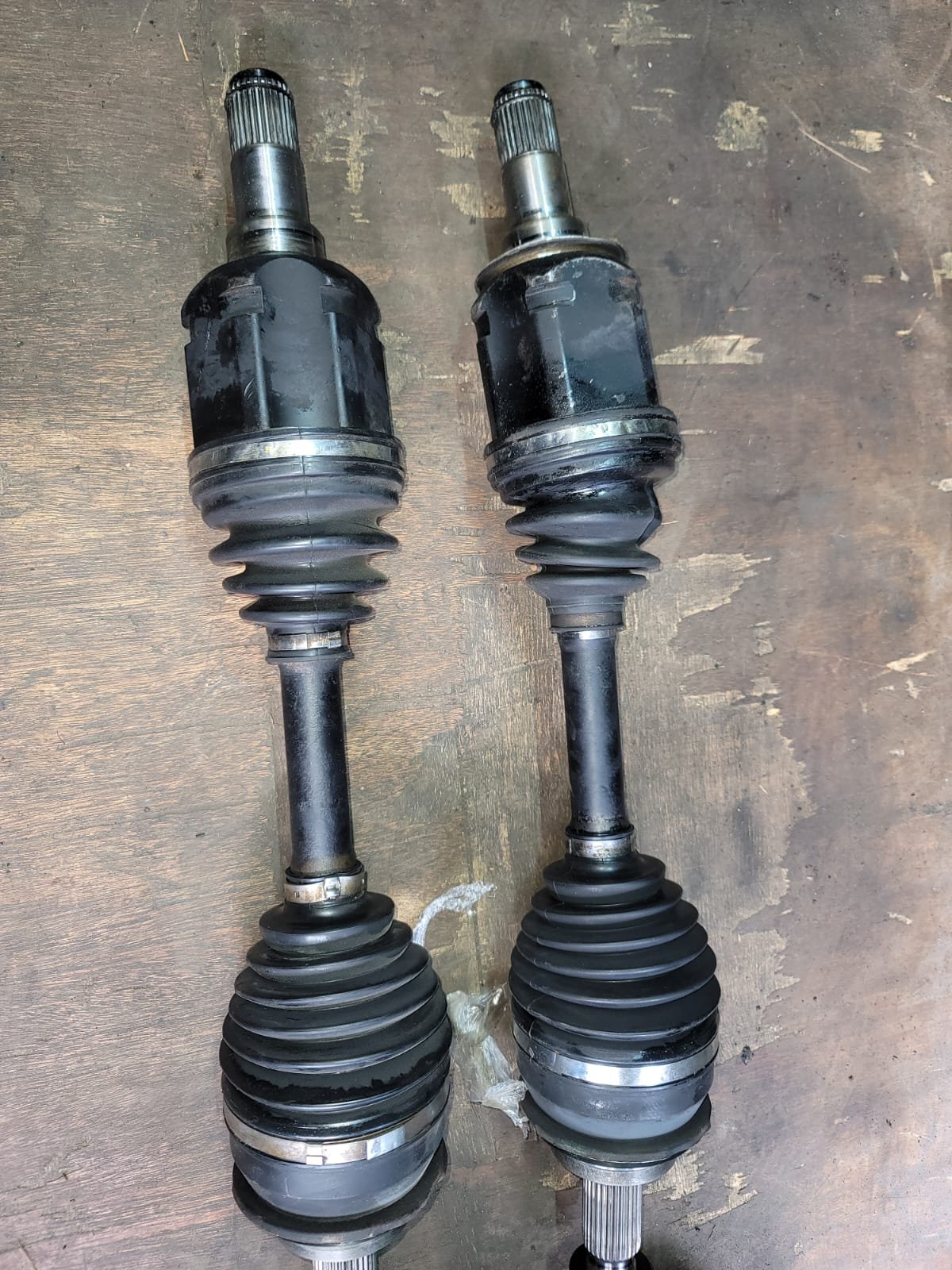
7. Drive Shafts and CV Joints

If you hear a sharp clicking or popping sound when making tight turns, your outer CV joint or drive shaft is worn.

  • Best Choice: Ex-Japan Complete Drive Shaft (for Japanese vehicles) or Tier-1 Aftermarket CV Joint Kits.
  • Why: An entire Ex-Japan drive shaft assembly includes original balanced steel shafts, factory-packed high-temperature grease, and durable OEM neoprene boots—which outlast cheap rubber aftermarket boots by years. If only the outer joint is damaged, replacing just the outer CV joint with a quality Japanese aftermarket unit (like NKN or HDK) is also a reliable, cost-effective fix.

8. Engine Assemblies, Sensors, and Cooling Components

  • Complete Engines & Gearboxes: Ex-Japan is overwhelmingly the gold standard in Kenya for engine replacements, offering low-mileage, tested mechanical assemblies at a fraction of rebuilding costs.
  • Engine Sensors, Spark Plugs & Thermostats: Always buy Genuine or exact OEM-supplier Aftermarket (Denso or NGK for Japanese cars; Bosch for European cars). Modern engines rely on precise voltage readings from oxygen sensors, mass airflow (MAF) sensors, and crankshaft position sensors. Cheap aftermarket sensors frequently cause rough idling, poor fuel economy, and persistent Check Engine lights.
  • Filters (Oil, Air, Fuel, Cabin): Always buy Brand-New Genuine or Tier-1 Aftermarket. Never use second-hand filters.

Japanese vs. European Vehicles in Kenya: Tailoring Your Strategy

The Kenyan vehicle fleet has diversified significantly. Alongside perennial Japanese favorites—Toyota, Nissan, Mazda, Subaru, Honda, and Mitsubishi—Nairobi and major towns have seen rapid growth in European luxury and performance SUVs and sedans, including BMW, Range Rover, Mercedes-Benz, Volkswagen, and Audi.

Your sourcing strategy should reflect the origin of your car:

For Japanese Vehicles (Toyota, Nissan, Mazda, Subaru, Honda)

  • Ex-Japan availability is unmatched. Because Japan’s domestic market mirrors Kenya’s vehicle population, finding clean Ex-Japan shocks, coil springs, drive shafts, steering racks, and body parts is fast and affordable.
  • Tier-1 Japanese Aftermarket brands (KYB, Denso, Aisin, 555, NSK, Koyo, NGK, Advics) are widely stocked in Kenya and deliver true factory reliability.

For European Vehicles (Range Rover, BMW, Mercedes-Benz, VW)

  • Ex-Japan parts are scarcer (though some right-hand-drive European imports from Japan and the UK are dismantled locally).
  • European OEM Aftermarket is your best friend. German and British automakers rely heavily on specialist engineering firms—ZF, Lemförder, Sachs, Bilstein, Bosch, Brembo, Mahle, and Mann-Filter. Purchasing parts made by these OE suppliers gives you genuine European engineering at sensible prices, without risking the electrical gremlins caused by cheap knock-offs.

How to Protect Yourself from Counterfeit Spare Parts in Kenya

One of the biggest risks facing Kenyan car owners is the counterfeit market. Unscrupulous traders import low-grade generic parts and package them in convincingly printed red-and-white “Toyota Genuine Parts” boxes or fake “Nissan” labels. Paying genuine prices for a fake part is the worst possible outcome.

Before you hand over your money, use this 6-point authentication checklist:

  1. Inspect the Packaging Print Quality: Genuine OEM boxes feature crisp, high-resolution typography, accurate color saturation, and clear part numbers. Counterfeit boxes often have slightly blurry text, spelling errors, washed-out reds or blues, or flimsy cardboard.
  2. Verify the Part Number Against Your Chassis (VIN) Number: Every vehicle has a unique 17-character Vehicle Identification Number (VIN) or Japanese chassis code (e.g., NZE141-6045892 or ZRR70-0123456). A reputable spare parts supplier will cross-reference your chassis number against electronic parts catalogs (EPC) to verify the exact OEM part number before selling to you.
  3. Examine the Metal Finish and Welds: Genuine and Tier-1 aftermarket parts exhibit clean CNC machining, uniform welds, smooth casting edges, and laser-etched branding or batch codes directly on the metal. Counterfeits often show rough casting burrs, sloppy weld beads, or ink-stamped logos that wipe off with brake cleaner.
  4. Check Rubber Quality and Smell: Authentic OEM bushings, boots, and mounts are made from dense, supple natural or synthetic rubber compounds that bounce back immediately when pressed. Cheap imitations feel overly hard, plastic-like, or overly spongy, and often emit a sharp chemical/petroleum odor.
  5. Beware of “Too Good to Be True” Pricing: If a dealership quotes KSh 18,000 for a genuine front wheel hub assembly and a random street vendor offers the exact same “brand-new genuine” box for KSh 4,500, it is counterfeit. Authentic OEM manufacturing has a real floor price.
  6. Buy from Transparent, Accountable Suppliers: Avoid buying critical safety parts from anonymous roadside hawkers with no physical premises, no digital footprint, and no return policy. Work with established specialists who clearly distinguish between Genuine, Ex-Japan, and Aftermarket options.

The True Cost Math: Cheap Parts vs. Right-Fit Parts

Many motorists fall into the trap of optimizing solely for the lowest upfront receipt. Let’s look at a real-world example on Kenyan roads: replacing front lower control arm bushings and ball joints.

  • Scenario A: The Budget Imitation Route
    • Cheap generic control arm set: KSh 5,000
    • Mechanic labor + Wheel alignment: KSh 3,500
    • Total Initial Spend: KSh 8,500
    • Outcome: Within 5 months (roughly 8,000 km of Nairobi potholes), the soft rubber bushings tear and the ball joint develops play. Worse, the misalignment causes uneven inner-edge wear on two front tyres (costing KSh 18,000+ to replace early). You now have to buy better control arms and pay labor + alignment all over again. Total 1-year cost: KSh 35,000+.
  • Scenario B: The Tier-1 Aftermarket or Verified Ex-Japan Route
    • Quality OEM-grade control arms (e.g., 555 / Genuine / clean Ex-Japan): KSh 11,000
    • Mechanic labor + Wheel alignment: KSh 3,500
    • Total Initial Spend: KSh 14,500
    • Outcome: The suspension stays tight, quiet, and aligned for 50,000+ km (2.5 to 3+ years), preserving your tyres and keeping your steering crisp. Total 1-year cost: KSh 14,500.

Buying the right part the first time is not an expense—it is the single most effective way to lower your annual cost per kilometer.

5 Questions to Ask Before Ordering Any Car Part Online in Kenya

Whether you are a DIY enthusiast ordering from home, a busy professional coordinating with your mechanic, or a fleet manager maintaining twenty vehicles, run through these five quick checks before confirming any order:

  1. Have I shared my exact Chassis / VIN number or model year? Two cars of the same model—like a 2007 vs. 2012 Toyota Fielder, or a 2WD vs. 4WD Harrier—frequently use completely different shock absorber mounts, brake disc diameters, or axle spline counts. Always confirm fitment before paying.
  2. Which tier is being quoted—Genuine, Ex-Japan, or Aftermarket? Ensure your supplier is transparent about the exact origin and brand of the part so you can compare apples to apples.
  3. Should I replace this part in pairs? Suspension and braking components—specifically shock absorbers, coil springs, brake discs, brake pads, and control arms—should always be replaced in axle pairs (both front left and front right, or both rear left and rear right). Replacing only one side creates uneven damping and dangerous pulling under hard braking.
  4. Are ancillary hardware items included or needed? When replacing shocks, ask about dust boots and strut mounts. When replacing brake discs, replace the pads simultaneously. When replacing timing belts, replace the tensioner and water pump at the same time.
  5. What is the fitment and return policy? Even with careful checking, occasional variations occur on imported cars. Confirm that your supplier supports straightforward exchanges if a part does not match upon inspection at the garage.

For more practical maintenance checklists, troubleshooting guides, and diagnostic tips tailored to Kenyan motorists, explore our latest articles on the Taleon Autospares blog and insights hub.

Frequently Asked Questions (FAQs)

Are Ex-Japan spare parts better than brand-new aftermarket parts in Kenya?

It depends on the component. For coil springs, steering racks, drive shafts, engine assemblies, and body panels, low-mileage Ex-Japan parts are often superior to budget aftermarket parts because they retain original Japanese factory metallurgy and precision. However, for wear-and-tear items with rubber seals or friction surfaces—such as brake pads, filters, engine belts, and sensors—brand-new Genuine or Tier-1 Aftermarket parts are always the better and safer choice.

How can I tell if a shock absorber is still good when buying Ex-Japan?

First, inspect the outer body and upper seal for any signs of leaking hydraulic oil. Second, examine the shiny chrome piston rod—it should be mirror-smooth with zero scratches, rust spots, or pitting (which would tear the oil seal). Third, push the rod down firmly by hand; a healthy gas-charged shock will offer strong, consistent resistance and extend back out smoothly on its own.

What are the most trusted aftermarket spare part brands in Kenya?

For Japanese vehicles (Toyota, Nissan, Mazda, Subaru, Honda), look for KYB (Kayaba) and Tokico for shocks; Denso and NGK for ignition and sensors; Aisin for clutches and water pumps; 555 (Sankei) for ball joints and tie rods; and NSK, NTN, or Koyo for wheel bearings. For European vehicles (BMW, Range Rover, Mercedes-Benz, VW), trust Bilstein, Sachs, Lemförder, Bosch, Brembo, and ZF.

How do I make sure I order the exact part that fits my car?

Locate your vehicle’s Chassis Number (VIN) on your logbook, insurance certificate, or the metal plate inside your engine bay/door frame, and share it with our fitment team along with your car’s make, model, year, and engine capacity. We verify exact compatibility before dispatching your order anywhere in Kenya.

Ready to Find the Exact Fit for Your Vehicle?

Choosing between Genuine, Ex-Japan, and Aftermarket spare parts does not have to be a guessing game. Whether you need heavy-duty Ex-Japan coil springs for your Toyota Fielder, OEM-grade shock absorbers for your Noah or Harrier, precision brake discs, or suspension components for your BMW or Range Rover, getting honest advice and verified fitment makes all the difference.

Explore our complete catalog at Taleon Autospares Kenya, browse parts by category in our online shop, or share your vehicle details and chassis number with our team today for a fast, accurate quotation. Let’s keep you moving safely on every Kenyan road.

Uber & Bolt Driver Survival Manual: Lowering Weekly Vehicle Maintenance Costs

Navigating the morning corporate rush along Nairobi’s Westlands elevated section, battling the bumper-to-bumper crawl along Mombasa Road and Uhuru Highway, or pulling late-night airport shifts from JKIA, full-time ride-hailing drivers operate under intense economic pressure.

Driving for platforms like Uber, Bolt, Faras, or Little Cab in major Kenyan hubs—such as Nairobi, Mombasa, Nakuru, and Eldoret—turns your vehicle into a high-intensity commercial workhorse.

While everyday commuters cover 15,000 kilometers a year, a full-time gig driver averages 150 to 250 kilometers daily—racking up 40,000 to 60,000 kilometers annually.

Popular platform vehicles like the Toyota Vitz, Mazda Demio, Honda Fit (and Fit Hybrid), Nissan Note (and Note e-Power), Toyota Axio, Toyota Fielder, and Suzuki Alto are legendary for their fuel efficiency.

However, subjecting these compact hatchbacks and sedans to high commercial mileage across Kenya’s demanding road network exposes their chassis and undercarriage to severe physical degradation.

High-rumble estate speed bumps, sudden deep asphalt potholes, unannounced road ridges, waterlogged streets during rainy seasons, and fine silica dust take a continuous toll on brake pads, disc rotors, front MacPherson struts, lower control arm bushings, tie rod ends, CV axle joints, transmission fluids, and engine mountings.

When weekly vehicle maintenance is managed reactively rather than strategically, repair bills, emergency towing fees, and lost fare revenue quickly erode gig profits.

This comprehensive technical survival manual breaks down how Uber and Bolt drivers in Kenya can systematically lower their weekly vehicle maintenance costs, detailing high-wear components, preventative inspection routines, fluids management, counterfeit part detection, and where to source authentic replacement parts.

1. The Gig Driver’s Economics: Mileage vs. Component Wear

To lower your weekly vehicle maintenance overhead, you must first understand the financial dynamic between daily operating mileage and accelerated component fatigue.

+-------------------------------------------------------------------------+
|                  RIDE-HAILING OPERATIONAL MILEAGE MATRIX                |
+-------------------------------------------------------------------------+
| [DAILY URBAN MILEAGE]     --> 150 km to 250 km per 12-hour shift.       |
|                                       |                                 |
|                                       v                                 |
| [WEEKLY MILEAGE ACCUMULATION]--> 1,000 km to 1,500 km per week.         |
|                                       |                                 |
|                                       v                                 |
| [ANNUAL COMMERCIAL MILEAGE] --> 50,000 km to 70,000 km per year!         |
|                                       |                                 |
|                                       v                                 |
| [ACCELERATED COMPONENT AGE]   --> 1 year of gig driving equals 4 years |
|                                   of standard family car wear!          |
+-------------------------------------------------------------------------+

The “Cost-Per-Kilometer” Metric

Successful ride-hailing drivers do not just track daily gross fare earnings; they track their Total Cost Per Kilometer (CPK). Every kilometer driven incurs fractional depreciation across tires, brake linings, engine oil, and suspension linkages.

If your vehicle costs KES 18 per kilometer to operate (including fuel, service, and wear) and a platform fare pays an effective rate of KES 35 per kilometer, delaying routine undercarriage maintenance leads to mechanical breakdowns that erase your entire net margin for the week.

To explore verified OEM and tier-one OES replacement service filters, brake friction kits, and suspension parts tailored for popular ride-hailing vehicles, visit the Taleon Spares Kenya Shop.

2. Undercarriage High-Wear Breakdown: Steering & Suspension

Because ride-hailing vehicles frequently pull into unpaved residential drop-off points, clear estate speed bumps loaded with passengers, and maneuver through city traffic, front suspension components endure continuous kinetic stress.

                      FRONT UNDERCARRIAGE WEAR ZONES
                                       |
    +-----------------+----------------+----------------+-----------------+
    |                 |                |                |                 |
    v                 v                v                v                 v
[1. Front MacPherson  [2. Lower Control [3. Ball Joints  [4. Stabilizer    [5. Inner & Outer
   Gas Struts]          Arm Bushes]       (Press-Fit)]    Links & Bushes]   Tie Rod Ends]

Component 1: Lower Control Arms & Rubber Bushings

The front lower control arm (wishbone) anchors your wheel hub to the vehicle’s subframe while managing acceleration and braking forces.

                  CONTROL ARM BUSHING DEGRADATION

  [Stop-and-Go Braking & Speed Bumps] --> Rubber tears away from steel sleeve.
                                              |
                                              v
  [Control Arm Shifts Under Load]    --> Front wheel alignment collapses (Toe-out).
                                              |
                                              v
  [Severe Tire Scrubbing & Pulling]  --> Inner edge of front tires wears to cords
                                         in less than 15,000 km!
  • The Wear Problem: Cheap budget control arms utilize soft, low-density recycled rubber bushes that tear within 10,000 kilometers of urban driving.
  • Cost-Lowering Strategy: Install pre-assembled, heavy-duty lower control arms manufactured by established tier-one OES suppliers (555 Sankei Japan or CTR). Their high-density vulcanized rubber bushes withstand heavy urban cycling, protecting expensive front tires from uneven wear.

To browse chassis-matched lower control arms, sway bar links, and shock absorbers, explore the Taleon Spares Kenya Parts Collection.

Component 2: Front MacPherson Gas Struts & Strut Mounts

  • The Wear Problem: Carrying 3 to 4 adult passengers over Nairobi estate speed bumps compresses front shock absorbers near their travel limits. Once internal fluid seals weep hydraulic oil, the damper loses rebound control.
  • Failure Symptoms: The vehicle nose-dives under braking, sways in highway crosswinds, and produces a hollow knocking sound over road ripples.
  • Cost-Lowering Strategy: Replace worn dampers in axle pairs using heavy-duty gas-charged struts (KYB Excel-G or Tokico). Quality gas dampers maintain stable ride height, protecting inner CV boots and steering linkages from uncalibrated flex angles.

Stay updated on technical vehicle guides, maintenance advice, and gig-driver service strategies by visiting the Taleon Spares Kenya Blog & News.

3. High-Friction Braking Systems: Extending Pad & Rotor Lifespan

Stop-and-go city traffic combined with frequent passenger pick-ups means a full-time gig car’s braking system works constantly.

                      BRAKING SYSTEM DEGRADATION PATHWAY

  [Heavy Urban Stop-and-Go Traffic]
                |
                v
  [High Thermal Build-Up (250°C–450°C)]
                |
                +---> [Low-Grade Friction Pads]  --> Glaze over, squeal, & cut deep grooves
                |                                    into steel disc rotors.
                |
                +---> [Premium Ceramic OES Pads] --> Dissipate heat smoothly, maintain full
                                                     stopping power, & preserve rotor faces!

Ceramic vs. Low-Grade Metallic Brake Pads

Many drivers attempt to save money by purchasing cheap KES 1,500 budget brake pads. This is a false economy:

+---------------------+-----------------------------------+-----------------------------------+
| Feature / Attribute | Low-Grade Budget Brake Pads       | Tier-One Ceramic OES Pads         |
+---------------------+-----------------------------------+-----------------------------------+
| **Purchase Price**  | Low initial cost (KES 1,200 – 1,800)| Moderate cost (KES 3,500 – 5,500) |
+---------------------+-----------------------------------+-----------------------------------+
| **Lifespan (Gig)**  | **10,000 km – 15,000 km** (Fast)   | **35,000 km – 50,000 km** (Durable)|
+---------------------+-----------------------------------+-----------------------------------+
| **Disc Rotor Impact**| High iron abrasive content cuts   | Smooth ceramic transfer layer;    |
|                     | deep scoring grooves into rotors. | preserves rotor steel thickness.  |
+---------------------+-----------------------------------+-----------------------------------+
| **Thermal Fade**    | Glazes under heat; pedal turns    | Resists thermal fade up to 550°C; |
|                     | soft during long traffic jams.    | consistent, quiet stopping power. |
+---------------------+-----------------------------------+-----------------------------------+
| **Recommended       | **UNSUITABLE** for commercial     | **HIGHLY RECOMMENDED**            |
| Selection**         | ride-hailing operations.          | (**Akebono**, **Brembo**, **Textar**)|
+---------------------+-----------------------------------+-----------------------------------+

Read more about our commitment to bringing verified, authentic components to vehicle owners across Kenya by reading Our Story at Taleon Spares Kenya.

4. Driveline & Transmission Care: Protecting CV Axles & CVTs

Most popular ride-hailing vehicles (Toyota Vitz, Mazda Demio, Honda Fit, Nissan Note, Toyota Axio) utilize compact Front-Wheel-Drive (FWD) layouts powered by Continuously Variable Transmissions (CVTs) or multi-speed automatics.

+-------------------------------------------------------------------------+
|                  DRIVELINE PREVENTATIVE MAINTENANCE                     |
+-------------------------------------------------------------------------+
| 1. CV AXLE BOOT INSPECTION                                              |
|    - Inspect flexible rubber bellows boots during every oil change.     |
|    - Catching a split boot early allows repacking with Moly grease &     |
|      replacing the boot (KES 1,500 fix) before grit grinds the joint!  |
|    - Ignoring a split boot destroys the outer CV joint (KES 7,500 fix). |
|                                                                         |
| 2. CVT FLUID FLUSHING PROTOCOL                                          |
|    - CVT fluids operate under extreme shear stress and heat.            |
|    - Drain and refill CVT fluid every 40,000 km using exact factory     |
|      specifications (e.g., Toyota Fluid FE, Nissan NS-3, Honda HCF-2). |
|    - NEVER use generic Dexron ATF in a CVT transmission!                |
+-------------------------------------------------------------------------+

5. Counterfeit Parts Protection: How Drivers Avoid Fakes

Counterfeit automotive parts are widespread in informal spare parts markets. Cheap fakes stamped with logos like “Toyota Genuine” or “555” are built with low-grade materials that fail rapidly under commercial use.

                  AUTHENTIC OES vs. COUNTERFEIT CHECKLIST

  [1. Inspect Packaging]   --> Genuine OES boxes feature heavy cardstock, crisp printing,
                               aligned barcodes, & tamper-evident holographic seals.
           |
  [2. Check Laser Marks]   --> Authentic OES parts (555, KYB, NTN, Denso) feature deep,
                               razor-sharp laser etching on the steel body.
           |
  [3. Demand ETR Invoices] --> Insist on itemized receipts specifying exact brand names.
           |
  [4. Buy Direct]          --> Source through verified digital stockists like Taleon Spares.

6. The Gig Driver’s Preventative Maintenance Schedule

Implement this structured commercial maintenance schedule to minimize total operating costs and prevent unexpected roadside breakdowns:

+-----------------------------------------------------------------------------------------+
|                   COMMERCIAL RIDE-HAILING MAINTENANCE SCHEDULE                           |
+-----------------------------------------------------------------------------------------+
| SERVICE INTERVAL  | TARGET INSPECTION & MAINTENANCE ACTIONS                             |
+-------------------+---------------------------------------------------------------------+
| **Weekly Check**  | - Check engine oil level, coolant level, & windshield washer fluid.|
| (Driver Self-Check)| - Inspect tire pressures (including spare) & check for tread cuts. |
+-------------------+---------------------------------------------------------------------+
| **Every 7,500 km**| - Change synthetic engine oil & replace engine oil filter.          |
|                   | - Inspect front brake pad thickness & check CV rubber boots.        |
+-------------------+---------------------------------------------------------------------+
| **Every 15,000 km**| - Rotate tires front-to-back & balance front wheels.                |
|                   | - Replace cabin air filter (keeps AC fresh for 5-star rider rating)|
|                   | - Inspect lower control arm bushes, ball joints, & sway bar links.  |
+-------------------+---------------------------------------------------------------------+
| **Every 40,000 km**| - Drain & refill CVT / Automatic Transmission Fluid (OEM Spec).     |
|                   | - Replace engine air filter & Iridium spark plugs (Denso/NGK).      |
|                   | - Flush hydraulic brake fluid (DOT 4) & engine coolant.             |
+-------------------+---------------------------------------------------------------------+
| **Every 80,000 km**| - Overhaul front suspension (Struts, control arms, tie rod ends).   |
|                   | - Replace water pump assembly, thermostat, & engine mount set.      |
+-------------------+---------------------------------------------------------------------+

Summary Reference Table

Vehicle ComponentRide-Hailing Failure SignRecommended ActionPreferred OES Brands
Front Brake PadsSquealing, extended stopping distanceReplace with ceramic pad setAkebono, Brembo, Textar
Lower Control ArmsInner tire wear, steering wanderReplace complete pre-assembled arm555 Sankei, CTR
Front Gas StrutsNose-diving under braking, knockingReplace in pairs with gas dampersKYB Excel-G, Tokico
Outer CV JointsRhythmic clicking sound on turnsReplace outer CV joint or bootsHDK Japan, NKN, GSP
Wheel Hub BearingsLow-pitched roaring hum (60+ km/h)Replace sealed hub unitNTN, NSK, Koyo
Spark PlugsEngine misfire, poor fuel economyInstall Iridium spark plugsDenso, NGK

Final Thoughts: Protect Your Vehicle, Protect Your Earnings

Operating a full-time ride-hailing vehicle on Uber or Bolt in Kenya requires a business mindset. Attempting to lower costs by buying cheap knockoff parts or skipping routine undercarriage inspections leads to frequent breakdowns, high secondary repair bills, bad passenger ratings, and lost daily income.

By adopting a proactive maintenance routine, investing in tier-one OES friction and suspension components, maintaining fluid change schedules, and sourcing authenticated spare parts, you minimize your cost-per-kilometer, extend your vehicle’s operating lifespan, and protect your weekly profits across every road in Kenya.

Keep your ride-hailing car operating at peak efficiency. Browse authenticated shock absorbers, lower control arms, brake pads, CV axle shafts, wheel hub bearings, and service kits on the Taleon Spares Kenya Shop today and enjoy fast, reliable delivery straight to your doorstep or garage anywhere across Kenya!

Off-Road 4×4 Accessories & Chassis Spares: Preparing Your SUV for Safari Routes

Whether you are planning an expedition through the mud-filled tracks of the Maasai Mara during the Wildebeest Migration, navigating the rocky terrain of Lake Turkana and Marsabit, scaling the steep inclines of the Aberdare Ranges, or making long-distance upcountry runs across Nanyuki and Naivasha, Kenya offers some of the most spectacular off-road driving adventures in the world.

From legendary full-size 4×4 rigs like the Toyota Land Cruiser (70, 80, 100, and 200 Series), Land Cruiser Prado (J120 / J150), and Mitsubishi Pajero, to dual-purpose pickup platforms like the Isuzu D-Max, Toyota Hilux, and Ford Ranger, as well as compact 4×4 crossovers like the Suzuki Vitara / Escudo and Subaru Outback, four-wheel-drive vehicles are built to venture where standard tarmac ends.

However, conquering Kenya’s legendary safari routes and remote upcountry tracks presents a punishing environment for your vehicle’s chassis, driveline, and suspension.

Safari routes expose 4×4 vehicles to extreme physical stress: high-frequency corrugated gravel washboards, deep volcanic dust (fesh-fesh), sharp obsidian rocks, river crossings, deep mud ruts, and heavy expedition payloads (roof racks, spare tires, auxiliary fuel, recovery gear, and camping equipment).

Taking a stock factory SUV onto demanding off-road safari tracks without proper chassis reinforcement, suspension lifts, driveline protection, and essential recovery accessories is a recipe for disaster.

A single broken lower control arm ball joint in the middle of Samburu, a ruptured CV axle boot letting in silica dust, a cracked radiator from an unprotected undercarriage rock strike, or a bent steering tie rod can turn a dream safari trip into a stranded, multi-day mechanical nightmare.

This comprehensive technical guide breaks down everything you need to know about preparing your SUV for safari routes in Kenya using heavy-duty 4×4 accessories and chassis spares, covering chassis mechanics, heavy-duty suspension lifts, driveline protection, steering linkage reinforcement, emergency spare parts kits, and where to source authentic components.

1. The Physics of Safari Driving: Understanding Off-Road Kinetic Stress

To properly outfit your 4×4 for off-road safari tracks, you must first understand the mechanical forces acting upon your vehicle’s undercarriage when leaving paved tarmac.

+-------------------------------------------------------------------------+
|                  SAFARI ROUTE KINETIC STRESS MATRIX                     |
+-------------------------------------------------------------------------+
| 1. CORRUGATED WASHBOARD ROADS (High-Frequency Vibration)                |
|    - Shakes chassis bolts loose; overheats standard hydraulic shocks;  |
|      fatiguing steering linkages, shock mounts, & lower control arms.   |
|                                                                         |
| 2. ROCK CRAWLING & DEEP RUTS (Impact & Flex Articulation)               |
|    - Forces suspension to full compression & droop travel limits;       |
|      exposes oil pans, differentials, & transfer cases to rock strikes. |
|                                                                         |
| 3. FINE VOLCANIC DUST & WATER CROSSINGS (Contamination & Thermal Shock) |
|    - Fine silica dust penetrates cracked CV boots & ball joint seals;   |
|      water crossings submerge differentials, transaxles, & wheel hubs.  |
|                                                                         |
| 4. HEAVY EXPEDITION PAYLOAD (Constant Vertical Static Load)             |
|    - Roof tents, dual battery setups, recovery winches, water tanks,    |
|      & extra spare tires compress factory springs to bump stops.        |
+-------------------------------------------------------------------------+

The Factory Compromise vs. Safari Reality

Vehicle manufacturers design factory stock 4×4 SUVs with a compromise: they are engineered to deliver a quiet, comfortable highway ride on urban tarmac, with light off-road capability for moderate dirt tracks.

To achieve this daily comfort, factory 4×4 setups utilize soft linear coil springs, low-pressure twin-tube shock absorbers, rubber shackle bushes, and light-gauge sheet metal underbody guards.

When subjected to 500 kilometers of corrugated upcountry tracks while carrying a full safari load, factory suspension setups collapse:

  • Shock Absorber Fade: Standard hydraulic shock absorbers overheat within 20 minutes of high-speed corrugated driving. The internal hydraulic oil boils and foams (aeration), resulting in total loss of rebound dampening. The vehicle sways uncontrollably, bottoms out over bumps, and risks rollover on high-speed gravel curves.
  • Rear Suspension Sag: The combined weight of safari gear pushes factory rear springs down to their rubber bump stops. This reduces ground clearance, ruins approach and departure angles, and causes extreme tire scrub.
  • Driveline Strain: Increased suspension flex angles over rough ruts place extreme torque stress on constant velocity (CV) drive axle joints and universal joints (U-joints).

To explore verified OEM and heavy-duty 4×4 replacement parts, suspension upgrade kits, and undercarriage components tailored for popular Japanese and European models, visit the Taleon Spares Kenya Shop.

2. Heavy-Duty Suspension Systems: Lifts, Springs & Dampers

The foundation of any serious safari-ready 4×4 is a heavy-duty suspension upgrade. Upgrading your suspension is not just about gaining a taller, aggressive stance; it is about expanding load capacity, increasing suspension travel articulation, and maintaining highway handling safety.

                  SAFARI SUSPENSION ARCHITECTURE
                                 |
    +----------------------------+----------------------------+
    |                                                         |
    v                                                         v
[1. Progressive Heavy-Duty Springs]          [2. High-Pressure Monotube/Twin-Tube Gas Dampers]
- Thicker wire gauge (coils) or reinforced    - Nitrogen gas pressurization prevents oil aeration.
  multi-leaf parabolic packs (leafs).        - Larger bore diameters (40mm–50mm piston)
- Increases payload capacity by 200kg–500kg.  dissipate intense corrugated thermal heat.
- Restores 40mm–50mm (1.5–2 inch) lift height. - Brands: KYB New SR/Gas-A-Just, Tokico, Ironman.

Component 1: Progressive Heavy-Duty Coil Springs & Reinforced Leaf Packs

For coil-sprung 4x4s (like the Land Cruiser Prado J120/J150, Land Cruiser 200, and Mitsubishi Pajero), factory linear coils must be replaced with heavy-duty progressive coil springs (such as Japanese OBK Heavy-Duty Blue Series or heavy-duty OES ratings).

  • The Progressive Advantage: Progressive coils feature variable winding pitch. The top, softer coils absorb small high-frequency washboard ripples smoothly, while the stiffer bottom coils engage when loaded with heavy safari equipment, preventing rear-end sag over deep dips.
  • For Leaf-Sprung Workhorses (Hilux, D-Max, Land Cruiser 70 Series): Upgrade rear leaf packs with heavy-duty helper leaves or parabolic leaf spring conversions paired with polyurethane shackle bushes. This prevents leaf flattening under expedition loads while eliminating rear axle chatter.

To browse chassis-matched heavy-duty coil springs, leaf spring packs, and suspension upgrade kits, explore the Taleon Spares Kenya Parts Collection.

Component 2: High-Performance Gas Dampers (Shock Absorbers)

Safari shock absorbers must endure extreme heat generated by continuous piston movement over corrugated gravel tracks.

+---------------------+-----------------------------------+-----------------------------------+
| Shock Absorber Type | Operational Characteristics       | Safari Route Suitability          |
+---------------------+-----------------------------------+-----------------------------------+
| **Factory Hydraulic | Fluid boils under continuous use; | **UNSUITABLE** for long upcountry |
| (Twin-Tube)**       | loses dampening ("shock fade").   | safari expeditions.               |
+---------------------+-----------------------------------+-----------------------------------+
| **Heavy-Duty Gas    | Nitrogen gas pressurization       | **EXCELLENT** for standard safari |
| (Twin-Tube)**       | stops foaming; heavy piston rod   | routes & moderate payloads        |
|                     | (e.g., **KYB Excel-G / Tokico**). | (e.g., Mara, Nakuru, Samburu).    |
+---------------------+-----------------------------------+-----------------------------------+
| **Monotube / Remote | Separate oil & gas chambers;      | **ULTIMATE PERFORMANCE** for      |
| Reservoir**         | massive heat dissipation capacity | extreme remote overland expeditions|
|                     | under heavy expedition loads.     | (e.g., Turkana, Chalbi Desert).   |
+---------------------+-----------------------------------+-----------------------------------+

Stay updated on technical vehicle guides, off-road maintenance protocols, and safari preparation tips by visiting the Taleon Spares Kenya Blog & News.

3. Undercarriage Protection & Heavy-Duty Chassis Spares

When navigating rocky riverbeds in Laikipia or deep rutted tracks in the Rift Valley, the vital components beneath your engine bay sit dangerously close to ground obstacles. A single hidden rock can puncture an oil sump or crack a transfer case housing.

                      UNDERCARRIAGE PROTECTION ZONES

  [FRONT BUMPER / RADIATOR]  --> Heavy-Duty Skid Plates (Aluminum / 4mm Steel) protect
                                 steering rack, front diff, & engine oil pan.
                                              |
                                              v
  [TRANSMISSION & TRANSFER CASE] --> Mid-Chassis Skid Plates shield gearbox oil pan &
                                     4WD transfer case housing from rock strikes.
                                              |
                                              v
  [REAR DIFFERENTIAL HOUSING] --> Differential Armor Guards protect vulnerable ring-and-pinion
                                 drain plugs from sharp obsidian rocks.

High-Wear Chassis Spares Every 4×4 Safari Driver Must Inspect:

1. Front Lower Control Arms & Ball Joints

Independent Front Suspension (IFS) vehicles (Prado, Hilux, D-Max, Pajero) rely heavily on lower control arms and ball joints to hold wheel alignment.

  • The Safari Risk: Striking deep washboard potholes under heavy load places immense shear stress on ball joint studs. If a lower ball joint fails off-road, the wheel collapses outward, tearing CV axle shafts and brake lines.
  • Pre-Safari Action: Inspect rubber dust boots for micro-cracks or grease leaks. Replace aged arms with heavy-duty pre-assembled control arms (555 Sankei Japan or CTR) using high-density rubber or polyurethane bushes.

2. Heavy-Duty Steering Linkages (Tie Rod Ends & Rack Ends)

  • The Safari Risk: Corrugated roads push steering linkages to their physical limit, causing inner rack end ball joints to develop free-play.
  • Pre-Safari Action: Replace worn tie rod ends (555 Sankei) and adjust toe alignment before departing. Always carry spare inner and outer tie rod ends in your recovery kit!

Read more about our commitment to bringing verified, authentic components to vehicle owners across Kenya by visiting Our Story at Taleon Spares Kenya.

4. Driveline Fortification: CV Axles, Breathers & Wheel Bearings

Transferring engine torque to all four wheels requires robust driveline mechanics. Water crossings, fine volcanic dust, and extreme flex angles test every spinning component.

+-------------------------------------------------------------------------+
|                  SAFARI DRIVELINE FORTIFICATION MATRIX                  |
+-------------------------------------------------------------------------+
| 1. CV DRIVE AXLES & BOOT PROTECTION                                     |
|    - High suspension lift angles increase joint operating temperatures.  |
|    - Inspect outer & inner rubber bellows boots for cracks.             |
|    - Use heavy-duty thermoplastic boots & high-temp moly grease.        |
|                                                                         |
| 2. EXTENDED DIFFERENTIAL & TRANSFER CASE BREATHER HOSES                 |
|    - Factory axle breathers sit low on differential housings.           |
|    - Hot differentials submerged in deep water crossings suck in water, |
|      emulsifying gear oil into a milky destructive sludge.             |
|    - Extend breather lines with flexible hose up into high engine bays! |
|                                                                         |
| 3. GENERATION 3 SEALED WHEEL HUB BEARINGS                               |
|    - Fine silica dust and mud-slush penetrate worn wheel bearing seals, |
|      causing internal pitting and highway humming.                      |
|    - Replace loose bearings with sealed OES units (**NTN**, **NSK**,    |
|      **Koyo**) before embarking on long remote expeditions.             |
+-------------------------------------------------------------------------+

5. Essential 4×4 Safari Accessories & Off-Road Recovery Gear

Beyond chassis spares, a safari-prepared SUV requires self-recovery tools and safety accessories to handle remote off-road emergencies:

                      OFF-ROAD RECOVERY & ACCESSORY MATRIX

  [RECOVERY EQUIPMENT]
  - Heavy-Duty Kinetic Snatch Strap (8,000 kg – 12,000 kg rating) & Rated Bow Shackles.
  - Off-Road Recovery Tracks (Maxtrax / Traction Boards) for deep sand & mud ruts.
  - High-Lift Mechanical Jack & Base Plate (for lifting chassis over obstacles).
  - 12V Heavy-Duty Air Compressor (for re-inflating tires after airing down on sand).

  [PROTECTIVE ACCESSORIES]
  - Raised Air Intake (Snorkel): Draws clean air above dust clouds & prevents water ingestion.
  - Heavy-Duty Steel Bull Bar: Provides winch mounting, deer/animal strike protection, & light mounts.
  - Dual Battery System & Smart Isolator: Powers camp fridges & auxiliary lighting without draining starter battery.

6. Pre-Safari Mechanical Inspection & Emergency Spares Checklist

Before heading out on remote safari routes across Kenya, complete this essential mechanical checklist and pack a dedicated emergency spare parts kit:

+-----------------------------------------------------------------------------------------+
|                        PRE-SAFARI MECHANICAL CHECKLIST                                  |
+-----------------------------------------------------------------------------------------+
| CHECK ITEM         | INSPECTION ACTION & VERIFICATION                                   |
+--------------------+--------------------------------------------------------------------+
| **Engine Cooling** | - Inspect radiator hoses, water pump, & thermostat valve.          |
|                    | - Drain plain water; fill with 50/50 Ethylene Glycol Coolant!       |
+--------------------+--------------------------------------------------------------------+
| **Driveline Oils** | - Change Front/Rear Differential & Transfer Case Oils (75W-90 / 80W-90).|
|                    | - Inspect differential drain plug magnetic seals for iron filings.|
+--------------------+--------------------------------------------------------------------+
| **Braking System** | - Check ceramic pad thickness & disc rotor runout.                  |
|                    | - Inspect flexible rubber brake lines for swelling or chafing.     |
+--------------------+--------------------------------------------------------------------+
| **Undercarriage**  | - Torque all lower control arm bolts, U-bolts, & shackle pins.     |
|                    | - Inspect rubber sway bar bushings & stabilizer link end ball joints.|
+--------------------+--------------------------------------------------------------------+

Essential Emergency Spares Kit to Pack in Your 4×4:

  • 1x Complete Outer CV Axle Boot Repair Kit (with high-temp Moly grease & band clamps).
  • 1x Set of Front & Rear Brake Pads (Akebono / Brembo).
  • 1x Pair of Steering Inner Rack Ends & Outer Tie Rod Ends (555 Sankei).
  • 1x Spare Engine Serpentine Drive Belt & Fuse Kit.
  • 1x Bottle of High-Temp DOT 4 Brake Fluid & Extra Gear Oil.

Summary Safari Prep Reference Table

Vehicle SystemSafari Threat FactorRecommended Heavy-Duty UpgradeTarget OES Brands
Front SuspensionWashboard ripples, heavy winchesHeavy-duty progressive coils + Gas StrutsOBK Japan, KYB, Tokico
Rear Load SupportSafari gear, roof tents, extra tiresHeavy-duty helper leaf pack / HD coilsOBK Blue, Ironman, 555
Steering LinkageImpact loads over deep rutsReinforced tie rod ends & rack ends555 Sankei, CTR
CV Axle ShaftsExtreme flex articulation anglesHeavy-duty CV axles with EPDM bootsHDK Japan, NKN, GSP
Wheel BearingsRiver crossings, fine silica dustSealed Gen 3 wheel hub assembliesNTN, NSK, Koyo
Braking SystemThermal fade down steep gradientsHigh-carbon disc rotors & ceramic padsBrembo, Akebono, Textar

Final Thoughts: Prepare Your 4×4 for Uncompromising Reliability

Exploring Kenya’s breathtaking safari routes and remote upcountry wilderness is one of the most rewarding driving experiences imaginable. However, outback driving demands respect for the forces acting on your vehicle. By understanding off-road kinetic stresses, reinforcing your chassis with heavy-duty progressive springs and gas shocks, protecting undercarriage vitals with skid plates, servicing CV axles and wheel bearings, and sourcing authenticated OEM and tier-one OES replacement parts, you ensure your 4×4 handles every safari route with confidence, safety, and ultimate reliability.

Prepare your 4×4 for your next great expedition. Browse authenticated heavy-duty coil springs, leaf spring helper packs, high-pressure gas shock absorbers, lower control arms, CV axle shafts, wheel hub bearings, and emergency safari spares on the Taleon Spares Kenya Shop today and enjoy fast, reliable delivery straight to your doorstep or garage anywhere across Kenya!

Commercial Van Suspension Upgrades: Heavy-Duty Springs for Cargo Hauling in Kenya

Every single day across Kenya’s expansive transport network, thousands of commercial cargo vans, light delivery trucks, and high-occupancy shuttle vehicles drive the economy forward.

From navigating the congested supply routes of Nairobi’s Industrial Area, Baba Dogo, and Mombasa Road to executing long-distance distribution runs down the Nakuru-Eldoret highway, or delivering agricultural produce from upcountry farms across Meru, Nyandarua, and Kisii, commercial vans are the undisputed workhorses of local commerce.

Popular commercial van platforms—including the ubiquitous Toyota HiAce (KDH200 / TRH200 series), Nissan NV300 / Urvan (E25 / E26 Caravan), Toyota Probox / Succeed, Nissan NV200, and Mercedes-Benz Sprinter—are engineered from the factory to balance payload capacity with reasonable ride comfort.

However, operating a commercial van across Kenya’s demanding road conditions presents severe structural challenges that factory suspension designs were never intended to handle continuously.

Heavy, high-density cargo payloads (such as hardware supplies, beverage crates, agricultural produce, and dense parcel distribution) combined with local road realities—including high-rumble estate speed bumps, unannounced deep asphalt potholes, corrugated gravel tracks, and waterlogged upcountry feeder routes—place immense kinetic stress on your van’s undercarriage.

When factory suspension components operate under continuous heavy payloads, commercial fleet managers and independent drivers encounter predictable, costly failure modes: severe rear-end suspension sag (“saggy tail”), bottoming out over speed bumps, dangerous body roll in highway curves, accelerated tire scrub, broken leaf spring center pins, and premature shock absorber blowout.

Upgrading factory van suspensions with heavy-duty springs, progressive leaf packs, and reinforced dampening systems is not merely a performance enhancement; it is a vital operational investment that protects your chassis frame, prevents costly vehicle downtime, improves highway safety, and maximizes payload profitability.

This comprehensive technical guide breaks down everything you need to know about commercial van suspension upgrades in Kenya, covering spring architecture, payload mechanics, heavy-duty upgrade options, installation procedures, and where to source authenticated replacement parts.

1. The Physics of Van Payloads: Factory Suspension Limits

To understand why factory van suspensions collapse under heavy cargo hauling in Kenya, you must first examine the mechanical balance between static vehicle weight, dynamic road shock, and payload distribution.

+-------------------------------------------------------------------------+
|                  COMMERCIAL VAN PAYLOAD DYNAMICS                        |
+-------------------------------------------------------------------------+
| [STATIC UNLOADED STATE]                                                 |
|  - Van rides at factory height; springs retain full travel arch.        |
|  - Steering geometry & alignment angles (Camber/Castor/Toe) are neutral.|
|                                                                         |
| [HEAVY CARGO LOADED STATE (Factory Setup)]                              |
|  - Payload forces rear springs down to near-bump-stop compression.      |
|  - Front end lifts ("nose-up" attitude), reducing steering traction.    |
|  - Headlights point skyward; braking bias shifts dangerously.           |
|                                                                         |
| [HEAVY-DUTY UPGRADED SUSPENSION STATE]                                  |
|  - Reinforced progressive springs resist vertical payload sag.          |
|  - Maintains level chassis stance & full shock absorber travel depth.   |
|  - Preserves tire contact patch & emergency braking stability.          |
+-------------------------------------------------------------------------+

Why Factory Springs Fatigue Quickly on Kenyan Roads

Car manufacturers design factory commercial van suspensions with a compromise: they must provide a relatively soft, comfortable ride when the van is driving empty while offering baseline support when lightly loaded.

To achieve this, factory leaf spring packs and rear coil setups utilize thinner steel stock and conservative spring rates.

When a commercial van in Kenya carries 1.2 to 2.0 tons of cargo continuously over corrugated dirt routes or bumpy tarmac, two mechanical breakdown processes occur:

  1. Metallurgical Fatigue (Spring Settling): Repeated high-stress compression cycles exceed the elastic limit of the factory spring steel. Over time, the steel loses its memory arch, resulting in permanent rear suspension sag even when the van is completely empty.
  2. Axle Wrap and Shear Stress: Under hard acceleration or heavy braking while fully loaded, the immense torque generated by the rear drive wheels attempts to twist the rear axle relative to the vehicle frame. Factory single or light-duty leaf springs bow into an “S” shape under this torque, stretching U-bolts and snapping central alignment pins.

To explore verified OEM and tier-one OES replacement suspension assemblies, heavy-duty springs, and chassis upgrade kits tailored for commercial vehicles in Kenya, visit the Taleon Spares Kenya Shop.

2. Spring Engineering: Leaf Springs vs. Coil Springs in Cargo Vans

Commercial cargo vans operating in Kenya utilize two primary rear suspension configurations depending on the vehicle platform and generation. Understanding how your van manages weight is the first step toward selecting the right heavy-duty upgrade.

                  COMMERCIAL VAN SUSPENSION LAYOUTS
                                  |
    +-----------------------------+-----------------------------+
    |                                                           |
    v                                                           v
[LEAF SPRING SUSPENSION (Multi-Plate Pack)]   [COIL SPRING SUSPENSION (Helical Coils)]
- Standard in: Toyota HiAce (KDH200), Nissan  - Standard in: Modern passenger van variants
  Caravan (E25/E26), Probox (NCP50), Sprinter.  (Toyota Noah/Voxy ZRR80, Probox NCP160 rear).
- Design: Multi-layered stacked spring-steel   - Design: Wound high-tensile steel cylinder.
  plates clamped with U-bolts and center pin. - Function: Exceptional comfort, but sags rapidly
- Function: Acts as both spring & axle locator;  under continuous heavy commercial cargo payloads
  delivers maximum vertical load capacity.      unless upgraded to progressive heavy-duty wire.

In-Depth Mechanical Comparison

+---------------------+-----------------------------------+-----------------------------------+
| Performance Metric  | Factory Leaf Spring Setup         | Factory Coil Spring Setup         |
+---------------------+-----------------------------------+-----------------------------------+
| **Payload Capacity**| High structural tolerance, but    | Moderate; highly prone to rapid   |
|                     | flattens under severe overload.   | rear-end sag under dense cargo.   |
+---------------------+-----------------------------------+-----------------------------------+
| **Ride Quality      | Stiff and bouncy when empty;      | Smooth and compliant when empty;  |
| (Unloaded)**        | settles under medium load.        | becomes mushy when fully loaded.  |
+---------------------+-----------------------------------+-----------------------------------+
| **Axle Alignment**  | Leaf pack physically holds the    | Requires separate trailing arms,  |
| **Control**         | rear axle position to the frame.  | control arms, & Panhard rod.      |
+---------------------+-----------------------------------+-----------------------------------+
| **Recommended       | Add-a-leaf kits, heavy-duty helper| Reinforced progressive heavy-duty |
| **Upgrade Path**    | packs, parabolic leaf conversion. | coils (thicker wire gauge).       |
+---------------------+-----------------------------------+-----------------------------------+

To browse chassis-matched leaf spring assemblies, coil springs, and suspension linkages, explore the Taleon Spares Kenya Parts Collection.

3. Commercial Van Suspension Upgrade Pathways

Upgrading a commercial van’s suspension requires a tailored approach based on cargo weight, driving routes, and vehicle architecture. Fleet operators and van owners in Kenya generally utilize three proven upgrade pathways:

                      SUSPENSION UPGRADE PATHWAYS

  [IDENTIFY VAN CARGO & ROUTE REQUIREMENTS]
               |
    +----------+----------+-----------------------+
    |                     |                       |
    v                     v                       v
[PATHWAY 1: Add-A-Leaf /  [PATHWAY 2: Parabolic    [PATHWAY 3: Heavy-Duty
 Helper Spring Packs]      Leaf Conversions]       Progressive Coils]
Inserts supplementary     Upgrades traditional    Replaces factory rear
curved spring plate into  multi-leaf stack to     coils with thicker wire,
factory leaf stack for    tapered parabolic steel variable-pitch coils
extreme load support.     leaves for comfort & load. for dual-rate support.

Pathway 1: Add-A-Leaf Kits & Heavy-Duty Helper Leaf Packs

For commercial vans equipped with rear leaf spring packs (such as the Toyota HiAce KDH200, Nissan Caravan E25/E26, and Isuzu D-Max cargo conversions), installing an Add-A-Leaf kit or heavy-duty helper pack is the most cost-effective and rugged upgrade.

  • How It Works: An extra pre-curved, high-tensile spring steel leaf plate is inserted directly into the existing factory leaf pack beneath the main load-bearing plates.
  • The Engineering Benefit: When the van is driving empty or lightly loaded, it rides primarily on the top main leaves. As cargo weight increases and compresses the pack, the van settles onto the extra heavy-duty helper leaf. This secondary leaf provides stiff resistance, raising rear ground clearance by 30mm to 50mm and preventing the van from bottoming out over speed bumps.
  • Essential Supporting Hardware: Whenever an Add-A-Leaf kit is installed, you must replace factory mounting U-bolts with high-tensile extended U-bolts and install heavy-duty center pin bolts to ensure the leaf pack remains tightly clamped.

Pathway 2: Parabolic Leaf Spring Upgrades

Traditional multi-leaf spring packs consist of 4 to 6 thick, rectangular steel plates stacked together. While strong, inter-leaf friction between the plates creates a harsh, unrefined ride when unloaded.

  • The Engineering Advantage: Modern parabolic leaf springs feature fewer, thicker leaves that taper from the center out to the ends in a parabolic curve. The leaves touch only at the center fixing point and axle ends, eliminating inter-leaf friction.
  • The Result for Cargo Vans: Parabolic leaf packs reduce unsprung undercarriage weight by up to 30%, deliver superior ride comfort when driving empty, and provide impressive flex articulation over rough upcountry dirt tracks without sacrificing heavy cargo carrying capability.

Stay updated on technical vehicle guides, mechanical care protocols, and fleet maintenance advice by visiting the Taleon Spares Kenya Blog & News.

Pathway 3: Reinforced Progressive Heavy-Duty Coils (OBK Blue & Heavy-Duty Series)

For commercial vans and dual-purpose wagons utilizing rear coil spring suspensions (such as the Toyota Voxy/Noah ZRR80, Toyota Probox NCP160 rear, and Mazda Bongo), standard replacement coils will quickly sag under cargo duty.

  • The Engineering Advantage: Installing reinforced progressive heavy-duty coil springs—such as Japanese OBK Heavy-Duty Blue Coils—solves the load capacity equation.
  • Variable Wire Pitch: Heavy-duty progressive coils feature a wire diameter 1.0mm to 2.0mm thicker than factory coils, with closely spaced coils at the top and wider spacing at the bottom. The soft top coils absorb low-speed road ripples smoothly, while the stiff bottom coils resist compression under heavy cargo loads.

Read more about our commitment to sourcing authenticated, heavy-duty suspension components by reading Our Story at Taleon Spares Kenya.

4. Complementary Undercarriage Upgrades: Dampers, Bushes & Shackles

Upgrading your van’s springs without upgrading the surrounding dampening and linkage components creates a mechanical imbalance. Heavy-duty springs hold cargo weight up, but high-pressure shock absorbers and heavy-duty bushings are required to control that stored energy.

+-------------------------------------------------------------------------+
|             COMPLEMENTARY HEAVY-DUTY SUSPENSION PACKAGES                |
+-------------------------------------------------------------------------+
| 1. HIGH-PRESSURE NITROGEN GAS SHOCK ABSORBERS                           |
|    - Standard hydraulic shocks overheat ("fade") under continuous heavy |
|      payload cycling, losing rebound dampening within 15 minutes.       |
|    - Heavy-duty twin-tube gas struts (**KYB Excel-G**, **KYB New SR**,   |
|      or **Tokico**) maintain active dampening force across all routes.  |
|                                                                         |
| 2. POLYURETHANE SHACKLE BUSHINGS                                        |
|    - Factory natural rubber shackle bushes deform, dry-rot, and crush   |
|      under continuous cargo weight, causing rear axle clunks.           |
|    - Heavy-duty polyurethane bushes resist compression, oil, and mud,   |
|      eliminating rear axle sway and crab-walking.                       |
|                                                                         |
| 3. GREASABLE HEAVY-DUTY REAR SHACKLES                                   |
|    - Extended greasable shackles restore factory suspension travel and  |
|      feature grease zerk fittings to lubricate leaf eye bushes easily.  |
+-------------------------------------------------------------------------+

5. Diagnostic Checklist: 5 Signs Your Van Needs Suspension Upgrades

Use this structured diagnostic checklist to evaluate whether your commercial van’s factory suspension has reached its operational limit:

                      VAN SUSPENSION DIAGNOSIS FLOW

  [SYMPTOM EXPERIENCED UNDER LOAD]
                |
    +-----------+-----------+-----------------------+-----------------------+
    |                       |                       |                       |
    v                       v                       v                       v
[Severe Rear Sag /       [Frequent Bottoming     [Dangerous Body Roll     [Accelerated Inner Tire
 "Nose-Up" Stance]        Out Over Bumps]         in Cornering]            Scrubbing]
 Rear bumper sits near    Axle slams hard against Chassis sways heavily   Altered alignment angles
 tarmac; headlights point rubber bump stops on   on highway curves &     wear tire edges down
 skyward when loaded.     minor road ripples.    crosswind passes.       to steel cords quickly.

6. Installation Best Practices & Maintenance Protocol

To ensure your commercial van’s upgraded suspension delivers maximum operational lifespan and safety across Kenya, follow these essential workshop installation guidelines:

                      SUSPENSION OVERHAUL WORKFLOW

  [STEP 1: VEHICLE WEIGHT & AXLE CORRECTION]
  - Measure unladen & fully loaded chassis ride heights before removing old springs.
                         |
                         v
  [STEP 2: CLEAN & INSPECT MOUNTING SURFACES]
  - Clean axle perches, spring hangers, & chassis frame rails with wire brushes.
                         |
                         v
  [STEP 3: MANDATORY HARDWARE REPLACEMENT]
  - Always install NEW high-tensile U-bolts & center pin bolts. Never reuse stretched old U-bolts!
                         |
                         v
  [STEP 4: FINAL TORQUE UNDER LOAD (WEIGHT-ON-WHEELS)]
  - Lower the van onto its wheels BEFORE performing final torque tightening on shackle bolts!
  - Tightening shackle bolts while wheels hang on a lift binds rubber bushes, causing instant tearing!
                         |
                         v
  [STEP 5: FOUR-WHEEL ALIGNMENT & HEADLIGHT AIM ADJUSTMENT]
  - Perform professional wheel alignment & re-aim headlights to match the updated ride height stance.

Summary Van Suspension Reference Table

Commercial Van PlatformRear Suspension ArchitectureCommon Cargo SymptomRecommended Upgrade PackagePreferred OES Brands
Toyota HiAce (KDH200 / TRH200)Rear Leaf Spring PackSevere rear sag, leaf flatteningHeavy-duty helper leaf + Poly bushes + Gas ShocksIronman, OBK, KYB, 555
Nissan Caravan / Urvan (E25 / E26)Rear Leaf Spring PackBottoming out on bumpsReinforced multi-leaf pack + Gas StrutsOBK Japan, Tokico, KYB
Toyota Probox / Succeed (NCP50)Rear Leaf Spring PackRear sag under cargoHeavy-duty rear helper leaf + Poly shackle bushesOBK, RBI, 555 Sankei
Toyota Probox / Succeed (NCP160)Rear Coil Spring SetupRear sag, mushy handlingReinforced progressive heavy-duty rear coilsOBK Blue, KYB Excel-G
Toyota Noah / Voxy (ZRR80 Cargo)Rear Torsion Coil SetupRear bottoms out loadedReinforced heavy-duty progressive coils + spacersOBK Heavy-Duty, KYB

Final Thoughts: Invest in Suspension Built for Commercial Payload

Operating a commercial cargo van in Kenya does not have to mean dealing with constant rear suspension sag, bottoming out over speed bumps, dangerous body roll, or frequent roadside breakdowns. By understanding your vehicle’s payload physics, choosing reinforced heavy-duty springs and helper packs tailored to your commercial routes, and pairing them with high-pressure gas shocks and polyurethane bushings, you protect your chassis frame, improve driver safety, and maximize long-term business profitability across every road in Kenya.

Equip your commercial van for tough cargo demands. Browse authenticated heavy-duty coil springs, leaf spring helper packs, gas shock absorbers, control arms, polyurethane bushings, and complete suspension upgrade kits on the Taleon Spares Kenya Shop today and enjoy fast, reliable delivery straight to your doorstep, business premises, or local fleet garage anywhere across Kenya!

Nissan NV200 & Toyota Probox Fleet Maintenance: High-Wear Parts Checklist

Across Kenya’s commercial transport ecosystem, two vehicles serve as the undisputed backbones of daily last-mile logistics, corporate courier services, regional cargo transport, and small business fleets: the Toyota Probox (along with its sister, the Toyota Succeed) and the Nissan NV200.

From navigating the congested morning gridlock along Nairobi’s Enterprise Road and Commercial Street in Industrial Area to making rapid delivery runs across Mombasa, Nakuru, Eldoret, and upcountry county feeder routes, these compact commercial workhorses operate under relentless physical strain.

Powered by fuel-efficient 1.5L engines (such as Toyota’s bulletproof 1NZ-FE or Nissan’s HR16DE) paired with automatic, manual, or Continuously Variable Transmissions (CVTs), both platforms are engineered for low operating costs and maximum cargo capacity.

However, running high-mileage commercial fleets across Kenya’s demanding road network exposes their chassis and undercarriage to severe physical degradation.

High-rumble estate speed bumps, sudden deep asphalt potholes, waterlogged access routes during rainy seasons, unpaved gravel tracks, and maximum cargo payloads place intense kinetic stress on front MacPherson struts, lower control arms, steering linkages, CV axle shafts, rear leaf springs, wheel hub bearings, and braking friction components.

When fleet preventative maintenance is neglected, minor undercarriage wear quickly escalates into costly unscheduled downtime, unexpected roadside breakdowns, accelerated tire scrub, and severe safety hazards.

This comprehensive technical guide breaks down the complete high-wear parts checklist for Nissan NV200 and Toyota Probox fleets in Kenya, covering front-to-rear component failure modes, diagnostic inspection workflows, fleet maintenance scheduling, and where to source authentic replacement parts.

1. Operating Realities: Why Probox & NV200 Undercarriages Suffer

To build an effective fleet maintenance checklist, fleet managers and transport operators must understand the distinct engineering layouts and load distribution dynamics of these two fleet staples.

+-------------------------------------------------------------------------+
|             PROBOX vs. NV200 FLEET CHASSIS COMPARISON                   |
+-------------------------------------------------------------------------+
| 1. TOYOTA PROBOX / SUCCEED (NCP50 / NCP160 Series)                      |
|    - Low center of gravity wagon design.                                |
|    - Front: Independent MacPherson Struts with Lower Wishbone Arms.     |
|    - Rear: Rigid Beam Axle with Leaf Springs (NCP50) or Coils (NCP160). |
|    - Heavy Front Weight Bias when empty; extreme rear load when filled.  |
|                                                                         |
| 2. NISSAN NV200 (M20 Series Compact Cargo Van)                          |
|    - High-roof cab-forward van architecture.                            |
|    - Front: Subframe-mounted MacPherson Struts with Heavy-Duty Wishbones.|
|    - Rear: Rigid Beam Axle with Single-Leaf Parabolic Springs & Shocks. |
|    - Higher vertical center of gravity; subjects front linkage to extra |
|      lateral shear forces during cornering under cargo loads.           |
+-------------------------------------------------------------------------+

The Kenyan Fleet Stress Factors

Unlike personal passenger cars that carry light commuter loads, commercial delivery fleets operate under unique environmental and mechanical stressors:

  1. Continuous Payload Stress: Fleet vehicles frequently operate at or near maximum gross vehicle weight (GVW), keeping rear springs compressed near their bump stops and forcing front suspension components to absorb road impacts without adequate damper travel.
  2. Stop-and-Go Urban Friction: City delivery routes involve thousands of brake applications daily, accelerating brake pad erosion, rotor disc scoring, and caliper slide pin seizure.
  3. Dust & Mud Contamination: Operating along unpaved feeder routes drives abrasive silica dust into rubber steering rack bellows, ball joint dust boots, and CV axle boots, turning clean internal grease into an abrasive grinding compound.

To explore verified OEM and tier-one OES replacement suspension assemblies, steering linkages, and fleet repair kits tailored for Toyota and Nissan commercial platforms, visit the Taleon Spares Kenya Shop.

2. Front Undercarriage: High-Wear Steering & Suspension Checklist

The front suspension of both the Probox and NV200 handles directional steering control, engine weight, and initial pothole impacts.

                      FRONT SUSPENSION & LINKAGE CHECKLIST
                                       |
    +-----------------+----------------+----------------+-----------------+
    |                 |                |                |                 |
    v                 v                v                v                 v
[1. Front MacPherson  [2. Lower Control [3. Ball Joints  [4. Stabilizer    [5. Inner & Outer
   Gas Struts]          Arm Bushes]       (Press-Fit)]    Links & Bushes]   Tie Rod Ends]

Component 1: Front MacPherson Gas Struts & Upper Mounts

Front shock absorbers on delivery vans cycle millions of times per month.

  • The Wear Problem: Fluid seals weep hydraulic oil, and internal nitrogen gas pressure escapes after 40,000 to 60,000 km of heavy fleet use. Upper strut mounting bearings dry out and crack.
  • Failure Symptoms: The vehicle nose-dives excessively under hard braking, sways in crosswinds on highways like the Thika Superhighway, and makes a hollow knocking sound over road ripples.
  • Fleet Action: Replace in axle pairs using heavy-duty gas-charged struts (KYB Excel-G or Tokico).

To browse chassis-matched front struts, rubber mounts, and bump stop kits, explore the Taleon Spares Kenya Parts Collection.

Component 2: Lower Control Arms & Rubber Bushings

The front lower control arm (wishbone) anchors the wheel hub to the subframe.

                  CONTROL ARM BUSHING DEGRADATION

  [Repeated Impact / Overloading] --> Rubber tears away from steel inner sleeve.
                                              |
                                              v
  [Control Arm Shifts Under Torque]--> Wheel alignment collapses (Toe-out condition).
                                              |
                                              v
  [Accelerated Tire Scrub]       --> Inner edge of front tires wears down to cords
                                     within 10,000 km!
  • Fleet Action: Inspect front and rear arm bushes during every oil change. Replace complete pre-assembled lower control arms (555 Sankei or CTR) rather than pressing individual low-quality bushes into fatigued metal arms.

Component 3: Steering Linkages (Tie Rod Ends & Rack Ends)

Inner rack ends and outer tie rod ends link the steering rack directly to the steering knuckles.

  • The Wear Problem: Internal ball studs develop rotational play due to constant pothole impacts.
  • Failure Symptoms: Steering wheel free-play (wandering at high speeds), steering wheel vibration, and a metallic rattling noise over gravel roads.

Stay updated on fleet maintenance checklists, technical service guides, and parts advice by visiting the Taleon Spares Kenya Blog & News.

3. Driveline Mechanics: CV Axles & Wheel Hub Bearings

Rotational power from the transaxle travels to the front wheels through Constant Velocity (CV) drive shafts, while wheel hub bearings allow smooth wheel rotation.

                      DRIVELINE HIGH-WEAR COMPONENTS
                                       |
    +----------------------------------+----------------------------------+
    |                                                                     |
    v                                                                     v
[1. Outer & Inner CV Axle Shafts]                       [2. Front & Rear Wheel Hub Bearings]
- Outer CV Joint: Handles steering articulation & torque. - Houses double-row sealed roller bearings.
- Inner CV Tripod: Plunges in/out during suspension travel.- Press-in Gen 1 (Probox) / Bolt-on Gen 3 (NV200).
- Vulnerability: Rubber boot tears fling moly grease out!  - Vulnerability: Impact brinelling & water entry.

CV Joint Failure Breakdown for Fleets

  • Outer CV Joint Clicking: A hard, rhythmic click-click-click sound during sharp turns (e.g., navigating roundabouts or turning into loading bays) indicates outer ball cage wear caused by a torn rubber boot.
  • Inner CV Tripod Shudder: A side-to-side wobble or floorboard shudder under hard acceleration (climbing steep hills loaded) that disappears when coasting indicates worn inner tripod roller tracks.
  • Fleet Action: Inspect rubber CV boots for cracks during every scheduled service. Replace torn boots immediately (NOK or Maruichi) to save the underlying joint, or install complete pre-assembled CV axle shafts (HDK Japan or GSP) if clicking is present.

Read more about our company background and verified parts sourcing standards by visiting Our Story at Taleon Spares Kenya.

4. Rear Undercarriage: Leaf Springs & Load Support

The rear suspension of commercial vans and wagons bears the full weight of cargo payloads.

+-------------------------------------------------------------------------+
|              REAR LOAD SUSPENSION: PROBOX vs. NV200                     |
+-------------------------------------------------------------------------+
| TOYOTA PROBOX (NCP50 / NCP160)                                          |
| - Multi-leaf spring pack (NCP50) or heavy-duty coil setup (NCP160).     |
| - Common Failure: Flattened leaf packs, broken main center pin bolt,    |
|   perished shackle bushes causing rear axle crab-walking.               |
|                                                                         |
| NISSAN NV200 (M20)                                                      |
| - Heavy-duty single parabolic leaf spring with hydraulic shock absorber. |
| - Common Failure: Rubber leaf spring eye bushings wear through, causing  |
|   metal-on-metal spring-to-frame contact and severe rear-end sagging.   |
+-------------------------------------------------------------------------+

Leaf Spring Maintenance & Upgrade Protocol for Fleets

  1. Shackle Bush Replacement: Replace factory rubber leaf spring eye bushes with high-density polyurethane or reinforced rubber bushes every 40,000 km to prevent rear end clunking and axle misalignment.
  2. Center Bolt & U-Bolt Inspections: High cargo weight stretches leaf pack U-bolts. Check U-bolt torque during routine service to prevent individual leaf plates from fanning out or snapping the central alignment pin.
  3. Heavy-Duty Spring Upgrades: For fleets carrying heavy cargo upcountry, upgrade rear leaf packs with extra helper leaves or install progressive heavy-duty coil springs (OBK Japan).

5. Fleet Braking & Cooling Systems: Preventing Unplanned Downtime

Beyond undercarriage linkages, braking systems and cooling components are high-frequency wear areas on urban delivery fleets.

                      BRAKING & COOLING MAINTENANCE ZONES

  [BRAKING SYSTEM]
  - Front Disc Rotors & Ceramic Pads : Check pad thickness every 10,000 km. Replace rotors
                                       if thickness drops below minimum stamped spec.
  - Rear Brake Shoes & Drums         : Clean brake dust every 15,000 km; adjust star wheel.
  - Brake Fluid Flushes (DOT 4)      : Replace fluid annually to prevent vapor lock.

  [COOLING SYSTEM]
  - Radiator & Electric Fan Motor    : Inspect fan motor brushes & clear fins of bugs/mud.
  - Water Pump & Thermostat (82°C)   : Replace water pump every 100,000 km. NEVER run plain
                                       tap water; use 50/50 ethylene glycol coolant!

6. Probox & NV200 Fleet Maintenance Checklist Schedule

Implement this structured preventative maintenance schedule across your commercial fleet to minimize total operating costs:

+-----------------------------------------------------------------------------------------+
|                       FLEET PREVENTATIVE MAINTENANCE SCHEDULE                           |
+-----------------------------------------------------------------------------------------+
| SERVICE INTERVAL  | TARGET INSPECTION & REPLACEMENT ACTIONS                             |
+-------------------+---------------------------------------------------------------------+
| **Every 5,000 km**| - Change engine oil & oil filter (1NZ-FE / HR16DE).                 |
|                   | - Visual check: CV boot cracks, tire tread depth, brake pad life.   |
+-------------------+---------------------------------------------------------------------+
| **Every 10,000 km**| - Rotate tires & adjust wheel alignment (Toe-in / Camber check).    |
|                   | - Inspect lower control arm bushes, ball joints, & sway links.      |
|                   | - Clean engine air filter & check drive belt tension.               |
+-------------------+---------------------------------------------------------------------+
| **Every 20,000 km**| - Replace fuel filter & spark plugs (Iridium / Nickel).             |
|                   | - Inspect rear leaf spring bushes, U-bolts, & rear shock absorbers. |
|                   | - Service front brake calipers (clean slide pins & apply grease).   |
+-------------------+---------------------------------------------------------------------+
| **Every 40,000 km**| - Drain & refill Transmission / CVT Fluid (Toyota FE / Nissan NS-3). |
|                   | - Replace front gas struts & top strut mount bearings.              |
|                   | - Flush brake hydraulic fluid & engine coolant (Ethylene Glycol).   |
+-------------------+---------------------------------------------------------------------+
| **Every 80,000 km**| - Complete undercarriage overhaul (Control arms, tie rods, CV axles).|
|                   | - Replace water pump assembly, thermostat, & engine mount set.      |
+-------------------+---------------------------------------------------------------------+

Summary Parts Reference Table

Component CategoryVehicle PlatformFailure SignPreferred OES Brand
Front Gas StrutsProbox / NV200Nose-diving, knocking over bumpsKYB Excel-G, Tokico
Lower Control ArmsProbox / NV200Inner tire wear, steering wander555 Sankei, CTR
Outer CV AxlesProbox / NV200Clicking noise on turnsHDK Japan, GSP
Wheel Hub BearingsProbox / NV200Low airplane-like roaring noiseNTN, NSK, Koyo
Brake Pads & RotorsProbox / NV200Squealing, extended stopping distanceAkebono, Brembo, Textar
Rear Shock AbsorbersProbox / NV200Rear bouncing, oil weepingKYB, Tokico, Monroe
Water Pump AssemblyProbox / NV200Overheating in gridlock, weep leakGMB Japan, Aisin

Final Thoughts: Maximize Fleet Uptime and Profitability

Commercial fleet profitability in Kenya relies directly on keeping vehicles on the road and out of the repair shop. By implementing a proactive undercarriage inspection routine, catching worn CV boots and control arm bushes early, upgrading rear load springs, and sourcing authenticated OEM and tier-one OES replacement parts, fleet managers eliminate roadside breakdowns, extend tire lifespan, and ensure maximum operational uptime across every delivery route.

Keep your commercial delivery fleet operating at peak efficiency. Browse authenticated shock absorbers, lower control arms, CV axle shafts, wheel hub bearings, leaf spring bushes, and fleet service kits on the Taleon Spares Kenya Shop today and enjoy fast, reliable delivery straight to your workshop or fleet garage anywhere across Kenya!

How to Cross-Reference OES Part Numbers (KYB, 555, Denso) for Instant Compatibility

Whether you are navigating the heavy morning gridlock along Nairobi’s Mombasa Road and Thika Superhighway, making high-speed runs down the Rift Valley escarpment toward Nakuru, or tackling corrugated feeder tracks in upcountry Kenya, keeping your car in top mechanical shape is essential.

Every time a lower control arm bushing tears, a gas shock absorber leaks fluid, an ignition coil misfires, or a wheel bearing begins to growl, vehicle owners and workshop mechanics face a common problem: finding the exact replacement part that fits without guesswork.

In Kenya’s auto parts market—from Kirinyaga Road in Nairobi to stockists in Mombasa, Kisumu, and Eldoret—relying solely on vehicle year or broad model names (like “Toyota Fielder” or “Nissan X-Trail”) leads to costly mistakes. Car manufacturers frequently modify undercarriage dimensions, sensor pin layouts, and mounting bracket designs mid-generation or between engine options.

The key to achieving 100% fitment accuracy on the first try is mastering part number cross-referencing.

By decoding vehicle manufacturer Original Equipment (OEM) part numbers and matching them to top tier-one Original Equipment Suppliers (OES) like KYB (shock absorbers), 555 Sankei (steering linkages), and Denso (engine electrics and cooling), you eliminate fitment errors, avoid counterfeit traps, and save thousands of shillings.

This technical guide breaks down how to cross-reference OES part numbers for instant compatibility, detailing OEM numbering schemes, OES catalog structures, step-by-step cross-referencing workflows, and where to source authentic components.

1. Demystifying the Terms: Genuine OEM vs. Tier-One OES

To cross-reference parts effectively, you must first understand the structural difference between Original Equipment Manufacturer (OEM) numbers and Original Equipment Supplier (OES) numbers.

+-------------------------------------------------------------------------+
|                  PART NUMBER CLASSIFICATION SPECTRUM                    |
+-------------------------------------------------------------------------+
| 1. GENUINE OEM (Original Equipment Manufacturer)                        |
|    - The primary part number assigned by the vehicle maker (e.g.,        |
|      Toyota, Subaru, Nissan, Mazda, Honda).                             |
|    - Printed on official vehicle factory packaging; higher price due to |
|      car brand royalties and dealership markups.                        |
|                                                                         |
| 2. TIER-ONE OES (Original Equipment Supplier)                           |
|    - Manufactured by the EXACT engineering companies that supply car    |
|      factories (e.g., KYB, 555 Sankei, Denso, NTN, NGK, Akebono).       |
|    - Built to identical metallurgical and dimensional standards; sold   |
|      under the manufacturer's own catalog part numbers at better prices. |
|                                                                         |
| 3. AFTERMARKET COPIES (Third-Party Reproduction)                        |
|    - Built by independent manufacturers matching broad dimensions.      |
|    - Varies widely in rubber density, steel forging, and precision.      |
+-------------------------------------------------------------------------+

The Engineering Truth Behind OES Brands

Car manufacturers do not build every single component inside a vehicle. Instead, automotive giants partner with specialized engineering firms:

  • KYB (Kayaba Japan): Manufactures original factory shock absorbers and struts for over 70% of Japanese vehicles leaving factory assembly lines.
  • 555 Sankei (Sankei Industry Co., Japan): Forges precision steering linkages, tie rod ends, ball joints, and lower control arms for Japanese vehicle platforms.
  • Denso Corporation (Japan): Engineers factory ignition coils, spark plugs, alternators, radiators, fuel pumps, and sensors for Toyota, Subaru, and Mazda.

When you buy a KYB Excel-G shock absorber, a 555 Sankei ball joint, or a Denso spark plug, you are getting the exact engineering specifications as a “Genuine” main-dealer part.

To explore verified OEM and tier-one OES replacement parts for popular Japanese and European models, visit the Taleon Spares Kenya Parts Collection.

2. Anatomy of OEM Part Numbers: Japanese & European Schemes

To cross-reference an OES part number, you must first locate and decode your vehicle’s factory OEM part number. Different manufacturers use distinct numbering formats:

                  FACTORY OEM PART NUMBER STRUCTURES

  [TOYOTA / DAIHATSU]  --> 10 Digits (Format: XXXXX-XXXXX)
                           Example: 48510-80543 (Front Right Shock Absorber)
                                       |
  [NISSAN / INFINITI]  --> 10 Digits (Format: XXXXX-XXXXX)
                           Example: 54302-4M403 (Front Suspension Strut)
                                       |
  [SUBARU]             --> 10 Digits (Format: XXXXX-XXXXX)
                           Example: 20310-AJ000 (Front Strut Assembly)
                                       |
  [MAZDA]              --> 10–12 Alphanumeric Digits
                           Example: BCKA-34-700 / B45A-34-700A (Control Arm)
                                       |
  [HONDA]              --> 11 Digits (Format: XXXXX-XXX-XXX)
                           Example: 51605-T9A-T01 (Front Shock Absorber)

How to Find Your Factory OEM Part Number

  1. The 17-Digit Chassis VIN Number: Locate your frame code (e.g., NZE141-XXXXXXX, ZRR70-XXXXXXX, BS9-XXXXXXX) on your vehicle logbook, insurance sticker, or firewall plate.
  2. Electronic Parts Catalogs (EPC): Input your VIN into official EPC databases (such as Toyota EPC, Subaru Fast, Nissan FAST, or Partsouq) to pull up exact 10-digit factory part numbers.
  3. Physical Part Stamps: Most original factory parts feature their OEM code or casting number stamped directly into the metal body, rubber sleeve, or plastic sensor housing.

To browse chassis-matched suspension components, brake pads, and service filters, explore the Taleon Spares Kenya Shop.

3. Decoding Major OES Catalog Part Numbering Schemes

Once you have your factory OEM part number, you can match it to the catalog numbering schemes of top tier-one OES brands.

                      OES CATALOG NUMBERING ARCHITECTURE

  [OES BRAND]
       |
       +---> [1. KYB (Shock Absorbers)]    --> 6-Digit Numeric Scheme
       |                                      Example: 339102 (Front RH Excel-G Strut)
       |
       +---> [2. 555 SANKEI (Linkages)]    --> Alphanumeric Code + Position Prefix
       |                                      Example: SB-3642 (Ball Joint) / SR-4950 (Rack End)
       |
       +---> [3. DENSO (Electrics / Spark)]--> 4-Digit Short Code or Alphanumeric Part Code
                                              Example: IK20TT (Iridium) / 099700-1010 (Ignition Coil)

Brand 1: KYB (Kayaba) Shock Absorber Cross-Referencing

KYB categorizes shock absorbers using a 6-digit numbering convention that identifies the product series and vehicle axle positioning:

+---------------------+-----------------------------------+-----------------------------------+
| KYB Series Name     | Part Number Prefix / Format       | Suspension Characteristic         |
+---------------------+-----------------------------------+-----------------------------------+
| **Excel-G (Black)** | **33-Series** (e.g., `339102`)    | Twin-tube gas replacement;        |
|                     | **34-Series** (e.g., `344362`)    | matches factory ride comfort.|
+---------------------+-----------------------------------+-----------------------------------+
| **New SR Special**  | **NST-Series** (e.g., `NST5247R`) | Reinforced dampening (+18% rebound)|
| **(Light Blue)**    | **NSF-Series** (e.g., `NSF9125`)  | for high-speed stability.         |
+---------------------+-----------------------------------+-----------------------------------+
| **Gas-A-Just**      | **55-Series** (e.g., `554384`)    | Monotube high-pressure gas;       |
| **(Silver/Black)**  |                                   | ideal for heavy upcountry payloads.|
+---------------------+-----------------------------------+-----------------------------------+

Real-World KYB Cross-Reference Example (Toyota Voxy ZRR70):

  • Toyota Genuine OEM Part Number: 48510-80543 (Front Right Shock)
  • KYB Cross-Referenced OES Part Number: 339102 (KYB Excel-G Front RH Strut)
  • Result: 100% exact fitment for mounting bolt holes, brake hose brackets, and stabilizer link mounting points!

Brand 2: 555 Sankei Steering & Suspension Linkage Cross-Referencing

Sankei Industry (555) uses a functional prefix system to categorize suspension and steering components:

+--------------------+-------------------+--------------------------------------------------+
| 555 Prefix Code    | Component Type    | Example 555 Part Number                          |
+--------------------+-------------------+--------------------------------------------------+
| **SB-XXXX**        | **Ball Joint**    | `SB-3642` (Toyota Fielder/Axio Lower Ball Joint) |
+--------------------+-------------------+--------------------------------------------------+
| **SE-XXXX**        | **Tie Rod End**   | `SE-4951` (Nissan X-Trail T31 Outer Tie Rod End)  |
+--------------------+-------------------+--------------------------------------------------+
| **SR-XXXX**        | **Rack End**      | `SR-N150` (Subaru Outback Inner Rack End)        |
+--------------------+-------------------+--------------------------------------------------+
| **SL-XXXX**        | **Stabilizer Link**| `SL-3960` (Mazda CX-5 Front Sway Bar Link Rod)  |
+--------------------+-------------------+--------------------------------------------------+
| **SA-XXXX**        | **Control Arm**   | `SA-T022` (Lower Suspension Wishbone Arm)       |
+--------------------+-------------------+--------------------------------------------------+

Real-World 555 Cross-Reference Example (Toyota Fielder NZE141):

  • Toyota Genuine OEM Part Number: 43330-09610 (Lower Ball Joint)
  • 555 Sankei Cross-Referenced OES Part Number: SB-3642
  • Result: Direct replacement with induction-hardened steel ball studs and oil-resistant synthetic boots.

Brand 3: Denso Automotive Electrics & Engine Components

Denso uses alphanumeric part numbers across ignition, electrical, and cooling systems:

+---------------------+-----------------------------------+-----------------------------------+
| Denso Product Category| OEM Reference Example           | Denso OES Cross-Reference Code    |
+---------------------+-----------------------------------+-----------------------------------+
| **Iridium Spark Plugs**| Toyota: `90919-01247`           | Denso: `FK20HR11` / Stock `#3426` |
+---------------------+-----------------------------------+-----------------------------------+
| **Ignition Coils**  | Subaru: `22433-AA630`            | Denso: `099700-1010`              |
+---------------------+-----------------------------------+-----------------------------------+
| **A/C Compressors** | Nissan: `92600-1VA0A`             | Denso: `DCP10045`                 |
+---------------------+-----------------------------------+-----------------------------------+
| **Oxygen Sensors**  | Mazda: `LZA07-EM1`                | Denso Direct-Fit: `DOX-0521`      |
+---------------------+-----------------------------------+-----------------------------------+

Read more about our commitment to bringing verified, authentic components to vehicle owners across Kenya by visiting Our Story at Taleon Spares Kenya.

4. Step-by-Step Cross-Referencing Workflow for Kenyan Motorists

Follow this 4-step workflow to verify part compatibility before buying:

                      PART NUMBER CROSS-REFERENCING WORKFLOW

  [STEP 1: EXTRACT THE 17-DIGIT CHASSIS VIN]
  - Copy the VIN from your logbook, firewall plate, or driver's door pillar sticker.
                         |
                         v
  [STEP 2: IDENTIFY THE FACTORY OEM PART NUMBER]
  - Use an electronic parts catalog (EPC) or read the stamped number on the old part.
                         |
                         v
  [STEP 3: MATCH OEM NUMBER IN OFFICIAL OES CATALOGS]
  - Input the OEM number into KYB, 555, or Denso digital lookup tools to generate the OES code.
                         |
                         v
  [STEP 4: CONFIRM PHYSICAL SPECS & ORDER VERIFIED PARTS]
  - Cross-check mounting points, thread pitches, and pin counts before placing your order.

Step 3 Detail: Spotting Superseded OEM Numbers

Car manufacturers occasionally update or “supersede” OEM part numbers when improving a component’s design mid-generation.

For example, a Toyota rear shock absorber might evolve through multiple part numbers over time:

$$\text{48530-28140} \longrightarrow \text{48530-28560} \longrightarrow \text{48530-80547}$$

A reliable OES catalog (such as KYB) links all these superseded OEM numbers to a single OES part number (344362), ensuring compatibility regardless of which version your vehicle came with from the factory!

Stay updated on technical vehicle guides, part selection tips, and maintenance advice by exploring the Taleon Spares Kenya Blog & News.

5. Counterfeit Detection: Verifying Physical OES Part Markings

Knowing the correct cross-referenced part number is only half the battle. You must also ensure the physical part you receive is a genuine OES component rather than a counterfeit copy packaged in a fake box.

+-------------------------------------------------------------------------+
|              GENUINE TIER-ONE OES vs. COUNTERFEIT CHECKLIST             |
+-------------------------------------------------------------------------+
| 1. LASER ETCHING & STAMPING                                             |
|    - Genuine OES : Deep, clean laser-etched stamps on steel bodies      |
|      (e.g., "555 MADE IN JAPAN", "KYB", "DENSO") directly on metal.       |
|    - Counterfeit : Smooth metal or shallow, smudged acid etching that   |
|      scratches off easily.                                              |
|                                                                         |
| 2. PACKAGING & HOLOGRAM SEALS                                           |
|    - Genuine OES : Heavy cardstock boxes, sharp typography, aligned     |
|      barcodes, and tamper-evident holographic seals.                    |
|    - Counterfeit : Flimsy boxes, blurry logos, and misspelled text      |
|      (e.g., "MADE IN JAPN").                                            |
|                                                                         |
| 3. WEIGHT & FINISH                                                      |
|    - Genuine OES : Dense forged steel, clean welds, smooth chrome piston|
|      shafts, and high-grade pliable rubber boots.                       |
|    - Knockoff Fake : Lightweight porous metal, rough mold burrs, and    |
|      hard, chemical-smelling recycled rubber.                           |
+-------------------------------------------------------------------------+

Summary OES Cross-Reference Table

Vehicle SystemComponent ItemExample OEM Part NumberTarget OES Cross-ReferencePrimary Benefit
DampeningFront Shock Absorber (RH)Toyota: 48510-80543KYB Excel-G: 339102Exact damping & mounting points
SteeringLower Ball JointToyota: 43330-09610555 Sankei: SB-3642Induction-hardened steel stud
IgnitionDirect Ignition CoilSubaru: 22433-AA630Denso: 099700-1010Precise pulse timing & insulation
Wheel HubsRear Wheel Bearing UnitNissan: 43202-4BG0ANTN / NSK: HUB294T-1High-cleanliness chromium steel
BrakingCeramic Brake Pad SetMazda: B455-33-28ZAkebono: AN-783WKLow dust; zero thermal fading
CoolingThermostat Valve (82°C)Honda: 19301-PAA-306Tama Japan: WV52BC-82Precision thermal wax opening

Final Thoughts: Eliminate Guesswork and Save Time

Cross-referencing tier-one OES part numbers (KYB, 555, Denso) against factory OEM codes transforms how you maintain your vehicle. By using your 17-digit chassis VIN, decoding catalog numbering schemes, verifying laser-etched stamps, and sourcing from trusted stockists, you ensure 100% fitment precision, protect your wallet, and keep your vehicle operating smoothly across every road in Kenya.

Skip the guesswork and fitment errors. Browse authenticated KYB shock absorbers, 555 steering linkages, Denso engine components, and premium maintenance parts on the Taleon Spares Kenya Shop today and enjoy fast, reliable delivery straight to your doorstep or preferred garage anywhere across Kenya!

Understanding Car Part Warranties and Return Policies when Buying Auto Spares in Kenya

Whether you are navigating the heavy morning corporate rush along Nairobi’s Upper Hill avenues, driving down the Thika Superhighway, or making high-speed runs down the Rift Valley escarpment toward Nakuru and Eldoret, keeping your vehicle mechanically sound is a non-negotiable priority.

However, operating a motor vehicle across Kenya’s demanding road network exposes every mechanical component to continuous physical stress. High-rumble estate speed bumps, sudden asphalt potholes, waterlogged tracks during rainy seasons, and fine volcanic dust take a severe toll on undercarriage suspension assemblies, high-friction braking systems, cooling networks, and electronic sensors.

When a part fails and you head out to purchase a replacement—whether stepping into the bustling spare parts shops along Kirinyaga Road in Nairobi, visiting regional stockists in Mombasa, Kisumu, or Eldoret, or ordering through digital platforms—you face a complex retail landscape.

Unlike general consumer electronics or off-the-shelf retail items, automotive spare parts in Kenya operate under a unique, often confusing web of warranties, return restrictions, and informal store policies.

Car owners frequently encounter frustrating scenarios: buying a brand-new sensor only to be told “no returns on electrical parts,” purchasing an Ex-Japan control arm that clunks two days later, or having a warranty claim rejected because the shop blames the garage mechanic for improper fitting.

Without a clear understanding of your legal rights under Kenyan law, store return windows, warranty exclusions, and how to protect your purchases, buying auto spares can become a costly gamble.

This comprehensive guide serves as the ultimate handbook for understanding car part warranties and return policies when buying auto spares in Kenya, covering legal consumer rights, part-by-part warranty expectations, common return traps, diagnostic protocols, and how to safeguard your money.

1. The Legal Framework: Kenyan Consumer Rights & Auto Spares

Before examining store-level policies, every motorist in Kenya must understand the overarching legal protections that govern commercial sales across the country.

+-------------------------------------------------------------------------+
|              LEGAL FRAMEWORK GOVERNING AUTO SPARES IN KENYA             |
+-------------------------------------------------------------------------+
| 1. THE CONSUMER PROTECTION ACT, 2012 (KENYA)                            |
|    - Establishes implied warranties of fitness for purpose & merchantable|
|      quality.                                      |
|    - Protects buyers against false, misleading, or deceptive product    |
|      representations.                        |
|                                                                         |
| 2. THE COMPETITION AUTHORITY OF KENYA (CAK)                             |
|    - Enforces fair trading standards and investigates unfair supplier    |
|      practices or non-disclosure of terms.         |
|                                                                         |
| 3. KENYA BUREAU OF STANDARDS (KEBS)                                     |
|    - Mandates quality certification (KS ISO / PVoC) for imported parts  |
|      to ensure safety & structural compliance.                          |
+-------------------------------------------------------------------------+

The Implied Warranty of Fitness for Purpose

Under the Consumer Protection Act, 2012, when a seller supplies a car part based on the vehicle details you provided (such as your chassis number or registration details), there is an implied legal condition that the part must be fit for its intended purpose and free from hidden manufacturing defects.

This means a store’s handwritten “No Return / No Refund” stamp on a receipt does not automatically override your statutory legal rights if the part supplied was defective out of the box or fundamentally mismatched by the seller’s error.

To explore verified Original Equipment Supplier (OES) partsbacked by clear, transparent warranty and return terms, visit the Taleon Spares Kenya Shop.

2. Warranty Spectrum: Brand New OES vs. Ex-Japan vs. Counterfeits

The level of warranty coverage you receive in Kenya depends heavily on the classification of the spare part you purchase.

                  WARRANTY COVERAGE BY PART CLASSIFICATION

  [PART CLASSIFICATION]
            |
    +-------+-------+-----------------------+-----------------------+
    |               |                       |                       |
    v               v                       v                       v
[Brand New Tier-1 OES]   [Brand New Aftermarket] [Ex-Japan (Used OEM)]   [Cheap Counterfeits]
- Coverage: 6 to 12 Months - Coverage: 1 to 3 Months  - Coverage: "Fitting Warranty" - Coverage: ZERO Warranty
- Full structural cover  - Cover against immediate    (24 Hours to 7 Days)     - High failure risk;
- Brands: KYB, 555, NTN   manufacturing defects  - Cores checked at fitment   no legal recourse

In-Depth Warranty Breakdown:

  1. Brand New Tier-One OES Parts (6 – 12 Months Warranty):Components manufactured by global tier-one original equipment suppliers (such as KYB for shock absorbers, 555 Sankei for steering linkages, Akebono / Brembo for braking systems, and NTN / NSK for wheel bearings) come with manufacturer-backed warranties against internal defects, structural fracturing, and premature failure.
  2. Brand New Budget Aftermarket Parts (1 – 3 Months Warranty):Third-party reproduction spares offer limited warranty windows covering basic manufacturing defects out of the box. They do not cover premature wear caused by heavy commercial use or rough upcountry roads.
  3. Ex-Japan Used OEM Parts (“Fitting Warranty” / 24 Hours to 7 Days):Because Ex-Japan parts are salvaged from used vehicles in Japan, stockists generally issue a temporary “Fitting Warranty” (typically lasting 24 hours to 7 days). This window exists solely to allow your mechanic to install the part and verify that it functions properly (e.g., verifying that a used AC compressor pumps cold air or a steering rack doesn’t leak). Once the fitting window closes, no further claims are accepted.

To browse chassis-matched suspension components, brake pads, and service filters, explore the Taleon Spares Kenya Parts Collection.

3. The Electrical Parts Exception: Why “No Returns” Exists

One of the most common friction points between car owners and spare parts shops across Kenya involves electrical and electronic components (such as oxygen sensors, airflow meters / MAF sensors, ignition coils, engine control units / ECUs, and ABS sensors).

+-------------------------------------------------------------------------+
|             THE ELECTRICAL SPARES RETURN RESTRICTION MATRIX             |
+-------------------------------------------------------------------------+
| WHY STORES RESTRICT ELECTRICAL RETURNS:                                  |
|  1. Short-Circuit Risk : A vehicle with bad grounding, a shorted wiring|
|     harness, or a blown relay will instantly fry a brand-new sensor upon|
|     plugging it in.                                                     |
|                                                                         |
|  2. DIY / Mechanic Errors: Incorrect pin alignment or forcing connectors|
|     bends delicate terminals, destroying sensitive micro-circuitry.     |
|                                                                         |
|  3. Testing Exploitation: Unscrupulous mechanics sometimes buy electronic|
|     sensors to "test" a customer's car, diagnose the fault, and return |
|     the used sensor claiming it "didn't work."                          |
+-------------------------------------------------------------------------+

How to Protect Yourself When Buying Electrical Spares

To avoid being stuck with a non-returnable electrical component:

  • Demand a Diagnostic Scan First: Never buy electronic sensors based on guesswork. Require your garage mechanic to run a computerized OBD2 scan and verify live sensor data.
  • Inspect Pins and Seals Before Leaving the Counter: Inspect the electrical connector pins under bright light before leaving the shop. Ensure no pins are bent, scorched, or missing.
  • Verify Store Testing Options: Some established stockists possess bench-testing equipment to demonstrate that an electronic sensor or alternator is functioning properly before you hand over payment.

Stay updated on technical vehicle guides, maintenance protocols, and consumer advice by visiting the Taleon Spares Kenya Blog & News.

4. Common Warranty Exclusions: What Voids Your Coverage?

Even when a spare part comes with a formal written warranty, specific conditions can void your coverage completely. Understanding these exclusions prevents disappointed claims:

                      WARRANTY VOIDING FACTORS MATRIX

  [WARRANTY CLAIM SUBMITTED]
               |
    +----------+----------+-----------------------+-----------------------+
    |                     |                       |                       |
    v                     v                       v                       v
[Improper Installation] [Improper Modification]  [Contaminated Lubricants][Negligent Driving]
Using pneumatic impact   Cutting springs, welding  Using plain tap water   Off-road abuse, racing,
guns to force spindle    mounting brackets, or     instead of coolant;     or overloading vehicle
nuts or pressing bushes  modifying housing bodies  wrong gear oil spec     beyond factory limit
incorrectly.      .          .                 .

1. Installation Error (Mechanic Labor Issues)

If a brand-new wheel bearing fails after 1,000 kilometers because your mechanic used an uncalibrated pneumatic impact gun to overtighten the CV spindle nut—crushing internal pre-load gaps—the manufacturer’s warranty will be rejected upon laboratory inspection.

2. Fluid & Chemical Contamination

If a replacement water pump or thermostat fails due to heavy rust, scale, and corrosion caused by filling the cooling system with plain tap water instead of 50/50 ethylene glycol coolant, the claim will be denied due to fluid contamination.

Read more about our company background and verified parts sourcing standards by visiting Our Story at Taleon Spares Kenya.

5. Step-by-Step Protocol: How to Make a Successful Return or Claim

If you purchase a part that turns out to be defective, incorrect, or mismatched, following a structured process increases your chances of a hassle-free exchange or refund:

                      WARRANTY CLAIM WORKFLOW

  [STEP 1: PRESERVE RECEIPT & ORIGINAL PACKAGING]
  - Retain official ETR tax receipts, M-Pesa statements, & un-damaged product boxes.
                         |
                         v
  [STEP 2: DOCUMENT WITH PHOTOS / VIDEO BEFORE REMOVAL]
  - Take clear photos/videos showing part number stamps, fitment issues, or defects.
                         |
                         v
  [STEP 3: DO NOT ALTER OR MODIFY THE COMPONENT]
  - Never attempt to grind, weld, file, or cut a mismatched part to make it fit.
                         |
                         v
  [STEP 4: SUBMIT FORMAL CLAIM WITHIN STORE RETURN WINDOW]
  - Contact the seller immediately (via WhatsApp, email, or counter visit) with proof.

Summary Warranty & Return Reference Table

Part CategoryTypical Return WindowWarranty Coverage PeriodMandatory Claim Conditions
Suspension (Shock Absorbers, Arms)7 – 14 Days6 – 12 Months (OES Brands)Original box, ETR receipt, no mod marks
Braking (Pads, Disc Rotors)7 Days (Unfitted)3 – 6 Months against warpingUn-installed, original packaging
Electrical (Sensors, ECUs, Coils)Inspection at counterZero once installedDefect on arrival only; diagnostic log
Ex-Japan Used Assemblies24 Hours – 7 DaysFitting Warranty PeriodReturn before window expires
Cooling (Water Pumps, Radiators)7 – 14 Days3 – 6 MonthsClean coolant evidence; no scale

Final Thoughts: Shop with Confidence and Complete Transparency

Understanding car part warranties and return policies is essential for protecting your hard-earned money and ensuring your vehicle receives safe, reliable components. By knowing your consumer rights under Kenyan law, verifying return windows before paying, preserving original packaging and receipts, and choosing reputable suppliers who offer clear terms, you eliminate shopfloor friction and drive with peace of mind.

Experience transparent, reliable auto-spares shopping. Browse authenticated tier-one OES shock absorbers, lower control arms, brake pads, steering linkages, and service kits backed by clear warranty terms on the Taleon Spares Kenya Shop today and enjoy fast, reliable delivery straight to your doorstep or garage anywhere across Kenya!

How to Order Heavy-Duty Springs & Suspension Parts Online Upcountry (Mombasa, Kisumu, Eldoret)

If you operate a passenger vehicle, commercial transport truck, or off-road 4×4 utility wagon outside Nairobi—whether navigating coastal humidity in Mombasa, driving across the agricultural heartlands of Eldoret and Kitale, traversing the lakeside terrain of Kisumu, or exploring rugged feeder tracks across upcountry Kenya—your vehicle’s undercarriage faces a continuous endurance test.

Upcountry driving conditions place extreme kinetic demands on vehicle suspension systems. Transporting heavy agricultural produce, hauling commercial cargo, carrying full 7-to-8 passenger payloads, or driving across corrugated dirt roads, deep asphalt potholes, and unannounced speed bumps subjects shock absorbers, coil springs, leaf spring packs, control arms, and bushings to severe physical stress.

Historically, sourcing specialized heavy-duty suspension parts outside the capital was a frustrating, time-consuming challenge. Motorists and garage technicians in regional towns often faced limited local shop inventory, inflated upcountry retail markups, or the risk of buying counterfeit spares from middlemen.

Today, digital auto-spares ordering has transformed how vehicle owners across Kenya source heavy-duty suspension parts. You no longer need to travel to Nairobi or compromise on local shop stock to get verified Original Equipment Supplier (OES) parts delivered directly to your regional town.

This comprehensive guide serves as the ultimate manual for ordering heavy-duty springs and suspension parts online upcountry in Kenya, covering regional driving stress factors, technical suspension specifications, step-by-step online ordering protocols, logistics and courier networks, and how to inspect components upon delivery.

1. Regional Undercarriage Challenges Across Kenya

To select the correct heavy-duty suspension parts online, you must first understand how distinct regional environments across Kenya impact undercarriage mechanics.

+-------------------------------------------------------------------------+
|                REGIONAL SUSPENSION DEGRADATION MATRIX                   |
+-------------------------------------------------------------------------+
| 1. MOMBASA & COASTAL REGION (Salt Air & High Thermal Load)              |
|    - High atmospheric humidity & salt spray accelerate rust on coil    |
|      springs, U-bolts, & shock absorber piston shafts.                  |
|    - Frequent stop-and-go coastal traffic degrades rubber bushes.      |
|                                                                         |
| 2. ELDORET, KITALE & RIFT VALLEY (Heavy Payload & Farm Tracks)          |
|    - Hauling heavy agricultural produce (maize, wheat, fertilizer)       |
|      compresses rear springs to their physical limit.                   |
|    - Corrugated gravel roads induce high-frequency shock chatter.       |
|                                                                         |
| 3. KISUMU & WESTERN KENYA (Heat & Mud-Slush Feeder Routes)               |
|    - Unpaved red-clay tracks convert rain into deep mud ruts.           |
|    - Abrasive mud & grit enter ball joint dust boots, destroying joints.|
+-------------------------------------------------------------------------+

The Heavy-Payload Dynamic Outside Nairobi

Whether running a commercial pick-up like an Isuzu D-Max or Toyota Hilux, a tour van like a Toyota HiAce or Voxy, or a family crossover like a Subaru Outback or Toyota Land Cruiser Prado, factory-spec suspension components often struggle with heavy upcountry loads.

Upgrading to heavy-duty progressive coil springs, reinforced leaf spring packs, and high-pressure nitrogen gas shock absorbers eliminates rear-end sag, prevents bottoming out over speed bumps, and restores highway steering stability.

To explore verified OEM and heavy-duty suspension components tailored for your vehicle, visit the Taleon Spares Kenya Shop.

2. Technical Guide: Selecting Heavy-Duty Suspension Parts Online

Ordering suspension parts online requires understanding component specifications to ensure exact fitment and long-term durability.

                  HEAVY-DUTY SUSPENSION SELECTION MATRIX
                                     |
    +--------------------------------+--------------------------------+
    |                                |                                |
    v                                v                                v
[1. Progressive Heavy Coils]       [2. Reinforced Leaf Spring Packs]  [3. High-Pressure Gas Struts]
- Wire gauge 0.5mm–1.5mm thicker   - Multi-leaf parabolic packs       - Heavy-duty piston rods (12.5mm+)
  than standard OEM springs.       - Heavy-duty helper leaves for     - High-temperature hydraulic oil
- Maintains ride height under      commercial cargo payloads.         seals to resist thermal fade.
  full passenger loads.

Key Heavy-Duty Component Specifications:

  1. Reinforced Progressive Coil Springs: Unlike standard linear coils, progressive coil springs (such as Japanese OBK Heavy-Duty Blue Springs) feature variable winding pitch. The top coils absorb light road ripples smoothly, while the stiffer lower coils engage under heavy cargo, keeping the rear of the vehicle level.
  2. Heavy-Duty Gas Shock Absorbers: Standard hydraulic shocks overheat under continuous off-road cycling, causing oil aeration and loss of dampening (“shock fade”). High-pressure twin-tube nitrogen gas struts (KYB Excel-G, KYB New SR Special, or Tokico) maintain constant rebound control over long upcountry journeys.
  3. Polyurethane Bushings & Heavy Shackles: Replacing perishable natural rubber bushes with heavy-duty polyurethane bushings ensures high resistance to oil, mud, and heavy compression loads, eliminating metallic axle clunks.

To browse chassis-matched springs, control arms, and shock absorbers, explore the Taleon Spares Kenya Parts Collection.

3. Step-by-Step Protocol: Ordering Heavy-Duty Spares Online Upcountry

Follow this structured ordering process to ensure you receive the exact suspension spares for your vehicle without hassle or delay:

                      ONLINE ORDERING WORKFLOW FOR UPCOUNTRY BUYERS

  [STEP 1: IDENTIFY CHASSIS VIN & OEM PART NUMBERS]
  - Locate your vehicle chassis frame code (e.g., KDN165, ZRR80, BS9, GUN125) on your logbook or firewall plate.
                         |
                         v
  [STEP 2: BROWSE & BENCHMARK ON TALEON SPARES KENYA]
  - Search by make, model, chassis code, or part number to verify exact component specifications.
                         |
                         v
  [STEP 3: SELECT PREFERRED UPCOUNTRY COURIER & DESTINATION]
  - Choose convenient regional parcel drop-off points in Mombasa, Kisumu, Eldoret, Nakuru, etc.
                         |
                         v
  [STEP 4: SECURE PAYMENT & DISPATCH TRACKING]
  - Complete checkout via M-Pesa or Card; receive dispatch confirmation & courier tracking waybill.
                         |
                         v
  [STEP 5: INSPECT PARTS AT REGIONAL COURIER PICKUP]
  - Verify part markings, laser etchings, & seals at pickup before taking items to your mechanic.

Step 1: Locating Your Vehicle’s Exact Chassis VIN Code

Before placing an online order, find your vehicle’s exact chassis identification code. Japanese and European vehicles rely on specific chassis codes rather than registration years alone:

  • Toyota Hilux / Fortuner: GUN125, KDN165, GGN15
  • Toyota Voxy / Noah: ZRR70G, ZRR80W, ZWR80 (Hybrid)
  • Subaru Outback: BR9, BS9, BT9
  • Isuzu D-Max: TFR85, TFS85, RG01

Providing your chassis code ensures 100% fitment accuracy when ordering online.

Stay updated on technical vehicle guides, maintenance checklists, and suspension advice by visiting the Taleon Spares Kenya Blog & News.

4. Upcountry Logistics: Courier & Parcel Delivery Networks

A common concern for upcountry buyers is parcel safety and shipping speed for heavy items like steel springs and shock absorbers. Kenya’s established logistics infrastructure makes regional delivery fast and reliable.

+-------------------------------------------------------------------------+
|               UPCOUNTRY COURIER & LOGISTICS NETWORKS                    |
+-------------------------------------------------------------------------+
| 1. EXPRESS BUS & SHUTTLE PARCEL SERVICES                                |
|    - Services: Easy Coach, Mololine, North Rift, Guardian Bank.         |
|    - Best For: Same-day or overnight delivery to major regional towns.  |
|    - Pickup Locations: Town center parcel offices in Eldoret, Kisumu,   |
|      Nakuru, Kakamega, Kitale.                                          |
|                                                                         |
| 2. DOORSTEP & REGIONAL COURIER SERVICES                                 |
|    - Services: Fargo Courier, G4S Logistics, Speedaf, Wells Fargo.       |
|    - Best For: Direct garage or home delivery across Mombasa, Malindi,  |
|      Kisumu, Eldoret, Meru, Nanyuki, & Kisii.                           |
+-------------------------------------------------------------------------+

Packaging Heavy Suspension Spares for Transit

Heavy automotive items like coil springs, leaf packs, and gas struts require secure packaging. Verified online platforms box and band heavy metal components securely, ensuring threaded mounting studs and rubber dust boots remain protected from damage during transit.

Read more about our commitment to bringing verified, authentic components to vehicle owners across Kenya by reading Our Story at Taleon Spares Kenya.

5. Physical Inspection Guide: Verifying Parts Upon Delivery

When collecting your ordered suspension spares from your local regional courier depot in Mombasa, Kisumu, or Eldoret, perform this physical verification checklist before taking them to your garage:

                  DELIVERY PHYSICAL VERIFICATION CHECKLIST

  [1. Inspect Packaging Seals]    --> Check for intact box seals & official manufacturer branding.
           |
  [2. Verify Laser Etchings]      --> Check for clean laser-etched stamps on steel bodies 
                                     (e.g., "555 MADE IN JAPAN", "KYB", "OBK").
           |
  [3. Check Rubber & Shafts]      --> Ensure shock absorber chrome shafts are scratch-free and 
                                     rubber dust boots are pliable with zero cracks.
           |
  [4. Match Part Numbers]         --> Cross-check part numbers stamped on the box label against 
                                     your digital invoice order summary.

Summary Upcountry Ordering Reference Table

Vehicle TypeCommon Heavy-Load NeedRecommended Online UpgradePrimary Delivery NetworkTarget OES Brands
Pickups (Hilux / D-Max)Rear leaf flat under cargoHeavy-duty helper leaf + Poly bushesExpress Bus / Fargo CourierIronman, OBK, 555 Sankei
Vans (HiAce / Voxy)Rear sag with 8 passengersReinforced progressive rear coilsEasy Coach / Fargo CourierOBK (Japan), KYB, Tokico
SUVs (Prado / Outback)Bottoming out on rough tracksHeavy-duty gas struts + HD springsRegional Courier / SpeedafKYB New SR, OBK Blue
Commercial TrucksHeavy axle payload stressHeavy-duty leaf spring packs & U-boltsLogistics Freight ServicesHeavy-Duty OES

Final Thoughts: Fast, Reliable Suspension Sourcing Upcountry

Ordering heavy-duty springs and suspension parts online from upcountry locations across Kenya no longer requires long trips to Nairobi or settling for limited local inventory. By understanding your vehicle’s chassis specifications, selecting verified progressive springs and gas shocks, using trusted regional delivery networks, and sourcing from established e-commerce specialists, you get authentic, heavy-duty suspension parts delivered straight to your town or local garage.

Equip your vehicle for tough upcountry driving. Browse authenticated heavy-duty coil springs, leaf spring packs, gas shock absorbers, lower control arms, and polyurethane bushings on the Taleon Spares Kenya Shop today and enjoy fast, reliable delivery straight to your doorstep or preferred garage anywhere in Mombasa, Kisumu, Eldoret, or across Kenya!

The True Cost of Cheap Knockoff Auto Parts on Kenyan Roads

Navigating the morning rush along Nairobi’s Thika Superhighway, making high-speed runs down the Rift Valley escarpment toward Nakuru and Eldoret, or tackling unpaved feeder tracks across rural counties puts your vehicle through a daily endurance test.

Operating a motor vehicle across Kenya’s demanding road network exposes every mechanical component beneath your chassis to continuous physical stress. High-rumble estate speed bumps, unannounced deep asphalt potholes, waterlogged craters during rainy seasons, and fine volcanic dust take a relentless toll on suspension systems, braking assemblies, drivelines, and cooling components.

When a part fails or wears out, vehicle owners, commercial transport operators, and fleet managers face a critical purchasing choice: Should you invest in authentic, verified Original Equipment Supplier (OES) parts, or save a few thousand shillings upfront by buying cheap knockoff auto parts?

In informal spare parts hubs across Kenya—from Kirinyaga Road in Nairobi to open-air garages in Mombasa, Kisumu, and Nakuru—the market is flooded with low-grade counterfeit spares. Packaged in boxes designed to mimic genuine Original Equipment Manufacturer (OEM) logos, these cheap knockoff parts are sold at tempting discounts.

However, saving a small fraction of the purchase price on counterfeit auto parts is a dangerous financial illusion.

What appears to be a bargain upfront quickly turns into an expensive nightmare: premature component failure, secondary damage to surrounding vehicle systems, repeated garage labor fees, tow truck bills, lost income during downtime, and—most critically—catastrophic mechanical failure at highway speeds.

This comprehensive guide breaks down the true cost of cheap knockoff auto parts on Kenyan roads, examining the physics of component failure, hidden financial costs, safety risks, exact failure points across vehicle systems, and how to source verified, authentic spares.

1. Demystifying Auto Parts Classifications in Kenya

To understand why knockoff parts fail so rapidly, you must first understand the structural differences between auto parts categories available in the market:

+-------------------------------------------------------------------------+
|                  AUTOMOTIVE SPARE PARTS CLASSIFICATIONS                 |
+-------------------------------------------------------------------------+
| 1. GENUINE OEM (Original Equipment Manufacturer)                        |
|    - Manufactured by or directly for car makers (Toyota, Subaru, Nissan)|
|    - Stamped with vehicle manufacturer logos; high cost due to dealer   |
|      markup and strict factory quality control.                         |
|                                                                         |
| 2. TIER-ONE OES (Original Equipment Suppliers)                          |
|    - Manufactured by the EXACT engineering companies that supply car    |
|      factories (e.g., KYB for shock absorbers, 555 Sankei for linkages, |
|      Akebono/Brembo for brakes, NTN/NSK for wheel bearings).            |
|    - Identical metallurgy & tolerances to OEM; sold without car logos.   |
|                                                                         |
| 3. EX-JAPAN SPARES (Used OEM)                                           |
|    - Used genuine OEM parts salvaged from low-mileage vehicles in       |
|      Japan. Excellent for body panels & metal castings; risky for       |
|      high-wear rubber or hydraulic items.                               |
|                                                                         |
| 4. CHEAP KNOCKOFFS & COUNTERFEITS (Dangerous Fakes)                     |
|    - Low-grade reproduction parts built with inferior steel, porous    |
|      iron, & recycled rubber. Packaged in fake OEM boxes to deceive.     |
+-------------------------------------------------------------------------+

The Metallurgy Deficit of Knockoff Parts

The primary difference between a genuine or tier-one OES part and a cheap knockoff lies in materials engineering and manufacturing precision:

  • Steel Density & Heat Treatment: Genuine suspension links and axle shafts use high-tensile forged steel subjected to precise induction heat treatment. Knockoff parts use soft, cast scrap steel that bends or snaps under heavy load.
  • Rubber Chemistry: Tier-one OES bushings use vulcanized natural or EPDM rubber formulated to withstand oil exposure, ozone, and temperature swings. Knockoff bushings use low-density recycled rubber that cracks, hardens, and tears within weeks.
  • Friction Material Metallurgy: Genuine brake pads utilize ceramic or semi-metallic formulations engineered for high thermal dissipation. Knockoff pads use low-grade asbestos or iron filings bound with weak adhesives that glaze over, scream, and erode rotors.

To explore verified OEM and tier-one OES replacement parts for your vehicle, visit the Taleon Spares Kenya Shop.

2. The Financial Reality: Upfront Savings vs. Total Cost of Ownership

The appeal of knockoff auto parts rests entirely on their low initial price tag. However, calculating the Total Cost of Ownership (TCO) reveals how expensive cheap parts actually are over time.

                      THE MULTIPLIER EFFECT OF CHEAP PARTS

  [Cheap Knockoff Purchase]  --> Saves KES 3,000 Upfront
                |
                v
  [Fails After 5,000 km]     --> Requires Immediate Replacement
                |
                v
  [Secondary System Damage]  --> Destroys Attached Component (e.g., ruined tire / rotor)
                |
                v
  [Accumulated Extra Costs]  --> Labor Fees + Towing + Alignment + Lost Time
                |
                v
  [TOTAL REAL COST]          --> 3x to 5x More Expensive Than Buying Tier-One OES!

Real-World Cost Comparison: Lower Control Arms

Consider a lower control arm replacement on a popular vehicle like a Toyota Fielder or Nissan X-Trail:

+-----------------------------------+-----------------------------------+-----------------------------------+
| Cost Factor                       | Cheap Knockoff Control Arm        | Tier-One OES (e.g., 555 Sankei)   |
+-----------------------------------+-----------------------------------+-----------------------------------+
| **Initial Purchase Price**        | KES 3,500                         | KES 8,000                         |
+-----------------------------------+-----------------------------------+-----------------------------------+
| **Labor Charge for Fitment**      | KES 2,500                         | KES 2,500                         |
+-----------------------------------+-----------------------------------+-----------------------------------+
| **Wheel Alignment Fee**           | KES 2,000                         | KES 2,000                         |
+-----------------------------------+-----------------------------------+-----------------------------------+
| **Operational Lifespan**          | **~8,000 km** (Bushings tear)     | **~80,000 km** (Durable performance)|
+-----------------------------------+-----------------------------------+-----------------------------------+
| **Failures & Replacements over    | **10 Replacements Required**      | **1 Replacement Required**        |
| 80,000 km**                       |                                   |                                   |
+-----------------------------------+-----------------------------------+-----------------------------------+
| **Total Parts & Labor Cost**      | **KES 80,000**                    | **KES 12,500**                    |
| **(Excluding Secondary Damage)**  |                                   |                                   |
+-----------------------------------+-----------------------------------+-----------------------------------+

By attempting to save KES 4,500 on the initial part purchase, a driver using knockoff control arms spends over KES 67,000 more in repeated garage visits, labor charges, and alignment fees over an 80,000 km service life.

To browse chassis-matched lower control arms, ball joints, and suspension assemblies, explore the Taleon Spares Kenya Parts Collection.

3. High-Risk Zones: Failure Points of Knockoff Parts Across Vehicle Systems

Using counterfeit parts on non-critical trim items (like a plastic dashboard clip or floor mat) carries low risk. However, using knockoff spares on safety-critical systems creates severe dangers:

                  HIGH-RISK MECHANICAL FAILURE ZONES
                                   |
    +------------------------------+------------------------------+
    |                              |                              |
    v                              v                              v
[1. Braking Assemblies]       [2. Undercarriage Suspension]  [3. Engine & Cooling System]
- Glazed friction pads        - Snapped ball joints           - Melted water pump impellers
- Warped rotor faces          - Blown gas shock absorbers     - Stuck thermostat valves
- Ruptured rubber seals       - Torn control arm bushes       - Snapped timing belts

1. Braking Assemblies: The Safety Hazard

Braking systems convert kinetic vehicle motion into thermal energy through friction. Knockoff brake pads and rotors compromise this process:

  • Brake Fade & Extended Stopping Distance: Cheap friction compounds cannot manage temperatures above 250°C. Under hard braking on steep descents—such as driving down the escarpment—knockoff pads glaze over, resulting in total loss of braking friction.
  • Rotor Scoring & Warping: Cheap brake pads contain hard iron impurities that cut deep grooves into brake disc rotors. Meanwhile, cheap un-milled steel rotors warp under heat, causing severe steering wheel shaking during deceleration.

Stay updated on vehicle safety guides, technical maintenance checklists, and parts advice by visiting the Taleon Spares Kenya Blog & News.

2. Suspension & Steering: The Loss of Directional Control

Suspension components absorb road impacts while maintaining precise tire alignment on the tarmac.

  • Ball Joint Shearing: A knockoff ball joint uses un-heat-treated steel studs inside a soft plastic socket. Striking a deep pothole at speed can shear the ball stud completely off, causing the front wheel to collapse into the fender well. At highway speeds, this leads to immediate loss of vehicle control.
  • Shock Absorber Failure: Knockoff shock absorbers utilize cheap hydraulic oil and low-grade shaft seals. After traversing a few corrugated dirt tracks, the oil seals rupture, gas pressure escapes, and the vehicle sags and wallows dangerously around corners.

Read more about our commitment to bringing verified, authentic components to vehicle owners across Kenya by reading Our Story at Taleon Spares Kenya.

3. Engine & Cooling System: The Threat of Engine Destruction

Engine and cooling components operate under high heat, continuous pressure, and high RPMs.

  • Counterfeit Water Pumps & Thermostats: Knockoff water pumps use plastic impellers that crack or spin loose on their steel shafts. When cooling fluid stops circulating, the engine overheats in gridlock traffic, warping cylinder heads and blowing head gaskets—resulting in repair costs exceeding KES 150,000.
  • Fake Timing Belts & Tensioners: On interference engines (such as many Toyota, Nissan, and Mitsubishi models), a cheap timing belt snapping causes pistons to crash into valves, destroying the cylinder head and engine block.

4. The Hidden Secondary Damage Cascade

When a cheap knockoff component fails, it rarely fails in isolation. It triggers a domino effect of secondary mechanical damage across attached systems:

                      SECONDARY DAMAGE CASCADE

  [Cheap Knockoff Ball Joint Snap]
                |
                +---> [Torn CV Boot & Axle Damage]     (Wheel collapse pulls drive shaft apart)
                |
                +---> [Ruptured Flexible Brake Line]   (Stretched brake hose snaps, losing fluid)
                |
                +---> [Cracked Alloy Wheel Rim]        (Wheel slams into chassis under body)
                |
                +---> [Severe Front Fender Body Damage] (Tire smashes into wing panel)

By installing a single KES 2,000 knockoff ball joint, a driver risks incurring over KES 100,000 in secondary driveline, braking, and body repairs.

5. How to Spot Counterfeit Auto Parts in Kenya

Counterfeit auto parts manufacturers have become skilled at replicating brand boxes and logos. Use this visual and physical inspection guide to protect yourself from buying fake spares:

+-------------------------------------------------------------------------+
|                AUTHENTIC OES vs. KNOCKOFF FAKE CHECKLIST                |
+-------------------------------------------------------------------------+
| 1. PACKAGING & PRINTING QUALITY                                         |
|    - Authentic OES : Heavy-gauge cardstock, crisp high-res printing,     |
|                      aligned barcodes, & tamper-evident holograms.       |
|    - Knockoff Fake : Thin flimsy cardboard, blurry logos, misaligned    |
|                      barcodes, & misspelled text (e.g., "TOYOTA").       |
|                                                                         |
| 2. LASER ETCHING & CASTING MARKS                                        |
|    - Authentic OES : Deep, clean laser-etched manufacturer stamps       |
|                      (e.g., "555 MADE IN JAPAN", "KYB", "NTN") on steel. |
|    - Knockoff Fake : Blank metal surface or shallow, uneven acid-etched |
|                      markings that scratch off easily.                  |
|                                                                         |
| 3. WEIGHT & FINISH                                                      |
|    - Authentic OES : Heavy forged density, smooth casting seams, &      |
|                      pliable high-grade rubber dust boots.              |
|    - Knockoff Fake : Lightweight porous metal, rough mold burrs, &      |
|                      hard, chemical-smelling recycled rubber.           |
+-------------------------------------------------------------------------+

Summary Parts Risk Reference Table

Vehicle SystemComponent ItemKnockoff Failure RatePrimary Danger / ConsequenceRecommended OES Brands
BrakingCeramic Brake PadsHigh (<10,000 km)Severe brake fade; rotor scoringAkebono, Brembo, Textar
SuspensionFront Ball JointsHigh (<15,000 km)Ball stud shearing; wheel collapse555 Sankei, CTR
DampeningGas Shock AbsorbersHigh (<20,000 km)Oil seal blowout; vehicle instabilityKYB Excel-G, Tokico
Wheel HubsWheel Hub BearingsMedium (<20,000 km)Bearing pitting; wheel lockup riskNTN, NSK, Koyo
CoolingWater Pump AssemblyHigh (<15,000 km)Impeller failure; engine overheatingGMB, Aisin, NPW
DrivelineCV Axle JointsMedium (<20,000 km)Joint clicking; complete axle snapHDK, NKN, GSP

Final Thoughts: Invest in Uncompromised Safety and Reliability

Your vehicle is a complex machine operating in demanding road conditions. Attempting to save a small amount of money upfront by installing cheap knockoff auto parts is a false economy that leads to frequent garage visits, secondary mechanical destruction, high long-term costs, and severe safety risks.

By insisting on authentic OEM and tier-one OES replacement parts, verifying laser markings, buying from trusted stockists, and maintaining a proactive service schedule, you protect your wallet, ensure long-term mechanical reliability, and guarantee safe driving across every road in Kenya.

Don’t compromise on quality and safety. Browse authenticated shock absorbers, lower control arms, brake pads, steering linkage kits, wheel bearings, and service parts on the Taleon Spares Kenya Shop today and enjoy fast, reliable delivery straight to your doorstep or garage anywhere across Kenya!

Ex-Japan vs. Brand New Aftermarket Spares: Which One Should You Buy in Nairobi?

Whether you navigate the daily corporate commute along Nairobi’s Upper Hill and Westlands avenues, make high-speed long-distance runs down the Thika Superhighway, or tackle unpaved feeder routes across upcountry Kenya, every car owner eventually faces an inevitable maintenance dilemma: sourcing replacement auto parts.

When a lower control arm bushing perishes, a shock absorber leaks, a brake rotor warps, or a CV joint starts clicking, walking into auto spare shops across Nairobi—from the busy streets of Kirinyaga Road and Industrial Area to neighborhood garages in Karen, Kilimani, and Eastlands—presents drivers with two dominant options:

  1. Ex-Japan Spares: Used Original Equipment Manufacturer (OEM) parts dismantled from written-off or low-mileage vehicles in Japan and shipped to Kenya in containers.
  2. Brand New Aftermarket Spares: Newly manufactured components produced by third-party Original Equipment Suppliers (OES) or replacement brands, ranging from premium Japanese/European tier-one manufacturers to budget lines.

This choice sparks endless debates in Nairobi garages and online motorist forums.

Proponents of Ex-Japan parts argue that an authentic, used OEM Japanese factory component—even one with 50,000 km of prior use—is superior in structural metallurgy to a brand new low-tier copy.

Conversely, advocates for brand new aftermarket parts point out that buying used rubber, electrical, or friction items carries hidden risks, whereas new OES components offer zero previous fatigue, clean warranty terms, and predictable service life.

Selecting the wrong option can result in wasted money, frequent garage visits, or compromised vehicle safety on high-speed highways.

This comprehensive guide breaks down the complete comparison between Ex-Japan and Brand New Aftermarket spares in Nairobi, covering component categories, structural metallurgy, hidden wear risks, pricing dynamics, and where to source authentic parts safely.

1. Demystifying the Terms: OEM, Ex-Japan, and Aftermarket

To make informed purchasing decisions, you must first understand the technical classifications used in the Kenyan automotive parts trade.

+-------------------------------------------------------------------------+
|                  AUTOMOTIVE SPARE PARTS CLASSIFICATIONS                 |
+-------------------------------------------------------------------------+
| 1. OEM (Original Equipment Manufacturer)                                |
|    - Genuine factory parts manufactured directly for the vehicle maker  |
|      (e.g., Toyota, Subaru, Nissan, Mazda) stamped with brand logos.    |
|                                                                         |
| 2. EX-JAPAN (Used OEM / "Mitumba" Spares)                               |
|    - Genuine OEM parts removed from low-mileage vehicles in Japan        |
|      scrapped due to strict Shaken inspection laws.                     |
|                                                                         |
| 3. TIER-ONE OES (Original Equipment Suppliers - Brand New)              |
|    - Built by the exact companies that supply car manufacturers         |
|      (e.g., KYB for shock absorbers, 555 Sankei for linkages,           |
|      Denso for ignition/cooling, NTN/NSK for wheel bearings).           |
|                                                                         |
| 4. BUDGET AFTERMARKET (Brand New Reproduction)                          |
|    - Third-party copy components manufactured to match dimensions,       |
|      varying widely in material quality, steel density, and rubber spec.|
+-------------------------------------------------------------------------+

The Japanese “Shaken” Factor: Why Ex-Japan Parts Exist

Japan enforces a strict bi-annual motor vehicle inspection system known as Shaken. As vehicles age past 5 to 7 years, the cost of passing Shaken inspections rises exponentially due to high labor rates and strict emission standards.

Consequently, many Japanese vehicle owners trade in or scrap vehicles with low mileage (often between 40,000 km and 90,000 km). Demolition yards dismantle these cars, bundle clean components into shipping containers, and export them directly to markets like Kenya.

To explore verified OEM and tier-one OES replacement parts tailored specifically for Japanese and European vehicles in Kenya, visit the Taleon Spares Kenya Shop.

2. Category Breakdown: What to Buy Ex-Japan vs. Brand New

Not all auto parts wear out at the same rate. Choosing between Ex-Japan and brand new aftermarket depends heavily on the material composition and mechanical function of the specific part.

                  COMPONENT SELECTION DECISION MATRIX
                                   |
    +------------------------------+------------------------------+
    |                                                             |
    v                                                             v
[CATEGORY A: Major Structural & Metal Body]   [CATEGORY B: High-Wear & Rubber Components]
- Preferred: **EX-JAPAN OEM**                 - Preferred: **BRAND NEW TIER-ONE OES**
- Items: Doors, boot lids, engine blocks,     - Items: Shock absorbers, brake pads/discs,
  bare cylinder heads, steering racks,          bushings, timing belts, ball joints,
  differential housings, gearboxes.             water pumps, spark plugs, filters.

Category A: Body Panels, Glass, Assemblies, and Heavy Metal Castings

  • The Verdict: BUY EX-JAPAN!
  • Why: Major structural components—such as complete doors, fenders, boot lids, bare engine blocks, intake manifolds, differential housings, and bare steering rack casings—do not suffer from progressive friction wear.
  • The Advantage: Buying an Ex-Japan door or fender guarantees 100% factory sheet-metal gauge thickness, exact bolt hole alignment, and original anti-corrosion primer. Cheap aftermarket body panels are often thinner, dent easily, and fit poorly around panel gaps.

To browse chassis-matched suspension components, engine service kits, and heavy-duty drivetrain parts, explore the Taleon Spares Kenya Parts Collection.

Category B: High-Wear Friction, Rubber, and Hydraulic Components

  • The Verdict: BUY BRAND NEW TIER-ONE OES!
  • Why: Components made of vulcanized rubber, friction compounds, hydraulic oil seals, or precision bearings degrade continuously over time—even when sitting idle in storage containers.
+---------------------+-----------------------------------+-----------------------------------+
| Component Item      | Risk of Buying Ex-Japan (Used)    | Advantage of Brand New Tier-One   |
+---------------------+-----------------------------------+-----------------------------------+
| **Shock Absorbers** | Internal gas charge depleted;     | Fresh nitrogen gas charge, 100%   |
|                     | hardened internal oil seals leak  | oil seal integrity, full dampening|
|                     | within thousands of kilometers.   | (e.g., **KYB Excel-G**).          |
+---------------------+-----------------------------------+-----------------------------------+
| **Lower Control**   | Vulcanized rubber bushes have     | Un-fatigued high-density rubber,  |
| **Arm Bushes**      | internal micro-tears & ozone dry  | factory-pressed steel sleeves     |
|                     | rot from atmospheric exposure.    | (e.g., **555 Sankei** / **CTR**). |
+---------------------+-----------------------------------+-----------------------------------+
| **Brake Rotors &**  | Rotors near or below Min Spec;    | Fresh full-thickness cast iron;   |
| **Pads**            | pads unevenly worn & glazed.      | zero thermal warping risk         |
|                     |                                   | (e.g., **Brembo** / **Textar**).  |
+---------------------+-----------------------------------+-----------------------------------+
| **Water Pumps &**   | Thermostat wax element aged;      | Precision thermal valve opening;  |
| **Thermostats**     | pump bearings dry of grease.      | un-corroded impeller vanes        |
|                     |                                   | (e.g., **GMB** / **Tama**).       |
+---------------------+-----------------------------------+-----------------------------------+

Stay updated on technical vehicle maintenance guides, parts comparisons, and diagnostic protocols by visiting the Taleon Spares Kenya Blog & News.

3. The Hidden Dangers of Buying Used Ex-Japan Parts

While Ex-Japan parts have a strong reputation in Nairobi, buying used items carries risks that every motorist should consider:

                      EX-JAPAN PURCHASING RISKS

  [BUYING USED EX-JAPAN SPARES]
               |
    +----------+----------+-----------------------+
    |                     |                       |
    v                     v                       v
[1. Environmental Aging]  [2. Undetected Stress]  [3. Counterfeit Reconditioning]
Rubber and seals dry out   Micro-cracks in used    Locally washed, painted, &
during storage & transport. metal arms or joints.  packaged as "Clean Ex-Japan".

Danger 1: Rubber Dry Rot and Internal Seal Degradation

Even if a Japanese donor vehicle had only 40,000 km on the odometer, sitting in shipping containers for months exposes rubber bushings, shock absorber oil seals, and CV axle boots to extreme humidity and temperature swings. The natural oil plasticizers in rubber evaporate, causing the material to harden and tear shortly after installation on rough Kenyan roads.

Danger 2: The “Refurbished Local” Fraud (Mitumba Fake)

Unscrupulous sellers in Nairobi’s informal parts markets sometimes buy worn-out local parts removed from vehicles, wash them thoroughly in diesel, spray-paint them silver or black, fit new rubber dust boots, and sell them to unsuspecting buyers as “Clean Ex-Japan Original.”

Read more about our commitment to bringing verified, authentic components to vehicle owners across Kenya by reading Our Story at Taleon Spares Kenya.

4. Brand New Aftermarket: Premium OES vs. Low-Grade Budget Copies

If you decide to buy brand new spare parts, it is crucial to distinguish between Tier-One OES (Original Equipment Suppliers) and low-grade budget copy parts.

+-------------------------------------------------------------------------+
|             BRAND NEW AFTERMARKET QUALITY SPECTRUM                      |
+-------------------------------------------------------------------------+
| TIER-ONE OES (High Performance & Durability)                            |
|  - Made by established Japanese, European, or Korean manufacturers.    |
|  - Adheres to exact OEM metallurgy, tolerances, and rubber compounds.   |
|  - Examples: **KYB** (Dampers), **555 Sankei** (Steering), **NTN/NSK** |
|    (Bearings), **Akebono/Brembo** (Brakes), **Denso** (Electrical).     |
|                                                                         |
| LOW-GRADE BUDGET COPIES (High Failure Risk)                             |
|  - Unbranded or generic reproduction parts using low-cost materials.    |
|  - Thin rubber compounds, porous metal castings, and weak welds.        |
|  - Frequently fail within 5,000 km to 15,000 km under local road stress.|
+-------------------------------------------------------------------------+

The Cost-Per-Kilometer Formula

A low-grade budget lower control arm might cost KES 3,500, whereas a premium brand new OES control arm (e.g., 555 Sankei) costs KES 7,500.

However, if the cheap copy fails after 10,000 km while the tier-one OES arm lasts 70,000 km, the budget part costs significantly more in repeated labor charges, wheel alignment fees, and garage downtime.

5. Summary Buying Decision Checklist for Nairobi Drivers

Use this quick summary table to decide whether to buy Ex-Japan or Brand New Tier-One OES for your repair:

                      SMART SPARES DECISION FLOW

  [WHAT TYPE OF PART DO YOU NEED TO REPLACE?]
                |
    +-----------+-----------+-----------------------+-----------------------+
    |                       |                       |                       |
    v                       v                       v                       v
[Body Panels & Glass]   [Engine Block / Head]   [Suspension & Linkages] [Brake & Service Items]
 Buy Ex-Japan OEM        Buy Ex-Japan OEM        Buy Brand New OES       Buy Brand New OES
 (Doors, boot, fenders)  (Bare head, block)      (Struts, arms, bushes)  (Pads, rotors, filters)

Summary Parts Comparison Table

Vehicle SystemComponent ItemEx-Japan (Used) SuitabilityBrand New OES SuitabilityRecommended Choice
Body & FrameDoors, Fenders, BumpersExcellent (Perfect fit)Fair (Aftermarket panels thin)Ex-Japan OEM
DampeningShock Absorbers / StrutsPoor (Seals & gas leak)Excellent (Full gas charge)Brand New OES (KYB)
SuspensionControl Arms & BushesFair (Rubber aged)Excellent (Fresh rubber)Brand New OES (555/CTR)
BrakingBrake Pads & RotorsPoor (Worn & thin)Excellent (Full steel mass)Brand New OES (Brembo)
Engine CoreComplete Engine / GearboxGood (Cost-effective)Extremely Expensive (OEM new)Ex-Japan OEM
CoolingWater Pump & ThermostatPoor (Corrosion risk)Excellent (Fresh bearings)Brand New OES (GMB/Tama)

Final Thoughts: Make Informed Investments in Vehicle Safety

Choosing between Ex-Japan and brand new aftermarket spares does not have to be a gamble. By sourcing structural body panels and complete engine assemblies Ex-Japan while insisting on brand new tier-one OES components for high-wear suspension, braking, cooling, and steering systems, you achieve the perfect balance of cost-efficiency, safety, and long-term operating reliability across every road in Kenya.

Keep your vehicle running smoothly, safely, and efficiently. Browse authenticated brand new tier-one OES shock absorbers, lower control arms, brake pads, steering linkage kits, and service parts on the Taleon Spares Kenya Shop today and enjoy fast, reliable delivery straight to your doorstep or garage anywhere across Kenya!

Please select your product
Product has been added to your cart
Compare (0)