Taleonspareskenya.co.ke

Genuine vs. Ex-Japan vs. Aftermarket Spare Parts in Kenya: How to Choose the Right Fit

Every Kenyan motorist eventually faces the exact same crossroads. Your mechanic wipes grease off their hands, points underneath your vehicle, and tells you that a critical component needs replacement. Maybe it is a leaking front shock absorber after an unavoidable encounter with a crater on Mombasa Road, a worn-out control arm bushing rattling over the speed bumps of Kiambu Road, or a humming wheel hub bearing that started singing halfway through an upcountry trip to Nakuru.

Once you get past the initial sigh of an unplanned repair bill, the real question begins: What kind of spare part should you buy?

Walk down Kirinyaga Road, Grogan, Industrial Area, or browse online auto stores in Nairobi, and you will immediately be presented with three distinct options at three wildly different price points: Genuine (OEM), Ex-Japan (used original), and Aftermarket (brand-new third-party). Pick the right one, and your car drives like it just rolled off the assembly line, saving you thousands of shillings over the next several years. Pick the wrong one—or fall victim to a counterfeit packaged as “original”—and you will find yourself paying for the same repair twice, stranded on the highway, or compromising your family’s safety.

At Taleon Autospares Kenya, we speak to daily commuters, Uber and Bolt drivers, upcountry travelers, professional mechanics, and commercial fleet managers every single day. Because our core mission—as detailed in our story—is helping Kenyan motorists keep their vehicles on the road longer and safer, we believe an informed driver makes the smartest purchasing decisions.

In this comprehensive guide, we break down the exact differences between Genuine, Ex-Japan, and Aftermarket spare parts in Kenya, explain how each performs under local road and climate conditions, reveal how to spot counterfeits, and give you a clear, component-by-component framework for choosing the right fit every time.

Understanding the Three Tiers of Spare Parts in Kenya

Before deciding where to spend your money, it helps to strip away the street jargon used in Nairobi’s spare parts markets. Words like “original,” “Taiwan,” “Japan,” “genuine,” and “commercial” are often thrown around loosely. Technically, every replacement component available in Kenya falls into one of three categories.

1. Genuine Parts (OEM – Original Equipment Manufacturer)

Genuine parts are brand-new components made by—or directly under contract for—the automaker that built your car (such as Toyota, Nissan, Mazda, Subaru, BMW, or Land Rover). They come sealed in the vehicle manufacturer’s official branded packaging, complete with authentic part numbers, holograms, and factory barcodes.

  • Who makes them? Automakers rarely manufacture every single bolt, shock absorber, or brake disc in-house. Instead, they partner with tier-one engineering giants—such as KYB (Kayaba), Denso, Aisin, Tokico, NGK, Bosch, Brembo, or ZF—to produce parts to the automaker’s exact blueprints and strict metallurgical tolerances. When that part is boxed with a Toyota or BMW logo, it is sold as Genuine.
  • Quality & Fitment: Guaranteed 100% factory specification. Bolt holes align effortlessly, rubber compounds match factory durometer ratings, and electronic sensors communicate seamlessly with your car’s ECU.
  • The Catch: Price and availability. Genuine parts carry the highest price tag due to automaker branding, import duties, and dealership markups. Furthermore, for older imported vehicles (such as a 2008 Toyota Noah or 2005 Corolla Fielder), waiting for a brand-new genuine part from an official dealer can sometimes take weeks if it is not a fast-moving service item.

2. Ex-Japan Parts (Used OEM / Salvage Parts)

Because over 80% of private passenger vehicles on Kenyan roads are pre-owned imports from Japan (with smaller shares from the UK, UAE, and South Africa), a massive secondary market exists for Ex-Japan spare parts.

  • Where do they come from? Japan enforces strict, expensive periodic vehicle safety inspections (known as Shaken) alongside high taxes on aging vehicles. Consequently, Japanese owners frequently retire or trade in vehicles with relatively low mileage (often between 40,000 km and 90,000 km) that have spent their entire lives driving on smooth, well-maintained Japanese asphalt. Specialized dismantling yards in Japan strip these vehicles down—removing engines, gearboxes, shock absorbers, coil springs, steering racks, and body panels—and ship them in containers to Kenya.
  • Quality & Fitment: Because an Ex-Japan part was installed on the car at the factory in Japan, it is 100% original factory quality. When sourced from a reputable dealer, an Ex-Japan component often outlasts a cheap brand-new imitation part by tens of thousands of kilometers.
  • The Catch: You are buying a used component with an unknown exact service history. While metal components like heavy-duty coil springs, drive shafts, and engine blocks hold up remarkably well, parts that rely on internal seals, rubber, or friction materials—such as shock absorber oil seals or used brake pads—have already experienced partial wear and aging.

3. Aftermarket Parts (Brand-New Third-Party Replacements)

Aftermarket parts are brand-new components manufactured by independent companies that are not affiliated with the original carmaker. When you browse a comprehensive parts collection in Kenya, aftermarket options represent the widest range of choices—and the widest gap in quality.

Crucially, not all aftermarket parts are created equal. In Kenya, you must distinguish between two sub-tiers:

  • Tier-1 OEM-Grade Aftermarket: These are made by the exact same global suppliers that build parts for car factories (e.g., KYB shocks, Denso spark plugs, Brembo or Bosch brake discs, 555 Sankei suspension ball joints, Febest bushings). They meet or exceed factory specifications, come brand-new in the supplier’s own box, and typically cost 25% to 50% less than dealer-branded Genuine parts.
  • Budget / Economy Aftermarket: Manufactured by lower-cost factories (often targeting price-sensitive developing markets) using thinner steel, softer rubber bushings, or inferior friction compounds. While they look identical out of the box, they wear out rapidly on rough Kenyan roads.

(Note: A fourth category—Counterfeit / Fake Parts—masquerades as Genuine or Tier-1 Aftermarket using forged Toyota or Nissan stickers. We will cover how to spot and avoid these later in this guide.)

Side-by-Side Comparison: Genuine vs. Ex-Japan vs. Aftermarket

To see how these three categories stack up for Kenyan vehicle owners, look at how they compare across the six factors that matter most at the workshop:

Evaluation FactorGenuine (Dealer OEM)Ex-Japan (Used OEM)Tier-1 AftermarketBudget Aftermarket
ConditionBrand NewUsed (Low-Mileage Salvage)Brand NewBrand New
Upfront Cost (KSh)Highest ($$$) \vert{} Low to Moderate ($) \vert{} Moderate ($$)Lowest ($)
Fitment Accuracy100% Exact100% Exact98%–100% ExactHit-or-Miss
Lifespan on Kenyan RoadsMaximumModerate to High (Part-dependent)High (Equal to OEM)Very Short
Availability in NairobiLimited to fast-movers; special order for older modelsVery high for Japanese cars (Toyota, Nissan, Mazda, Subaru)High across all makes (Japanese & European)Very High
Warranty / Return SupportManufacturer warranty (if dealer-fitted)Short testing/exchange guarantee (e.g., 7–14 days)Seller/brand defect warrantyRarely guaranteed

Why Kenyan Driving Conditions Change the Rules

If you lived in Tokyo, Munich, or Singapore, choosing spare parts would be a straightforward calculation based on mileage intervals. In Kenya, however, our physical environment subjects vehicles to mechanical stresses that factory engineers rarely anticipate. When evaluating parts in our online auto shop, you have to factor in four local realities:

1. Speed Bumps and Sudden Potholes

From unmarked rumble strips on major highways to massive residential speed bumps in Nairobi suburbs and sudden potholes during rainy seasons, Kenyan suspension systems endure extreme vertical impact loads. A budget aftermarket control arm made with soft stamped steel can bend on a single deep pothole, throwing your wheel alignment out and ruining a brand-new set of tyres within weeks.

2. Heavy Passenger and Cargo Loads

Many popular Kenyan family cars and commercial workhorses—such as the Toyota Fielder, Axio, Probox, Succeed, Noah, and Voxy—regularly carry five adults plus luggage, agricultural produce, or business supplies over uneven upcountry terrain. Standard Japanese-market coil springs are tuned for smooth roads and lighter loads, which is why sagging rear suspension is so common here.

3. Dust, Mud, and Murram Roads

Fine red murram dust and standing rainwater are lethal to exposed mechanical joints. If the rubber dust boot on a steering rack, CV joint, or ball joint cracks prematurely because of inferior aftermarket rubber, grit mixes with the internal grease to form an abrasive grinding paste—destroying the metal joint in months.

4. Stop-and-Go Traffic and Steep Escarpments

Nairobi’s heavy traffic keeps automatic transmissions and braking systems running hot at low airflow, while highway descents down the Rift Valley escarpment, Limuru Road, or Kericho hills demand massive thermal dissipation from brake discs and pads. Cheap brake discs warp under sudden thermal shock, causing steering wheel judder when braking at high speeds.

Component-by-Component Guide: Which Option Should You Buy?

The secret to smart car maintenance in Kenya is never taking a one-size-fits-all approach. A seasoned mechanic or fleet manager does not buy 100% Genuine parts for everything, nor do they buy 100% Ex-Japan parts. Instead, they match the part category to the mechanical function and wear profile of the specific component.

Here is the definitive breakdown across the eight most critical systems on your vehicle.

1. Shock Absorbers (Struts)

Shock absorbers control spring oscillation, keep your tyres planted on bumpy roads, and prevent nose-diving when you brake.

  • Best Choice: Tier-1 Aftermarket (e.g., KYB, Tokico, Bilstein) or Genuine.
  • When Ex-Japan Makes Sense: If you are on a tight budget and need an immediate replacement for a popular Japanese car—such as a Toyota Noah, Voxy, Harrier, or Nissan B15—a clean, tested Ex-Japan shock absorber (typically priced around KSh 3,000 to KSh 5,000 depending on the model) offers authentic factory valving at a fraction of dealer cost.
  • What to Watch Out For: Avoid cheap unknown brand-new shocks; their internal seals blow out quickly over speed bumps. If buying Ex-Japan shocks, always inspect the chrome piston rod for rust pitting or oil weeping, and verify that the gas pressure pushes the rod back smoothly when compressed.

2. Coil Springs (Standard & Heavy-Duty)

Unlike shock absorbers, steel coil springs do not contain oil or rubber seals that degrade sitting on a shelf.

  • Best Choice: Ex-Japan Heavy-Duty Springs or Tier-1 Aftermarket.
  • Why Ex-Japan Excels Here: High-grade Japanese spring steel retains its tensile strength for decades. In Kenya, upgrading to Ex-Japan heavy-duty coil springs—particularly for vehicles like the Toyota Fielder (2005–2012+ models) and Toyota Axio—is one of the smartest investments you can make. They provide extra ground clearance, prevent the rear end from bottoming out over speed bumps when loaded, and eliminate the need for temporary rubber spring buffers.

3. Brake Discs (Rotors) and Brake Pads

Your braking system is your primary life-saving mechanism. Never compromise here.

  • Best Choice: Genuine or Tier-1 Aftermarket (e.g., Brembo, Bosch, Akebono, TRW).
  • Avoid Ex-Japan for Pads; Be Cautious with Discs: Never buy used Ex-Japan brake pads—friction material hardens with age and heat cycles, and you have no idea how much lifespan remains. While low-wear Ex-Japan brake discs can sometimes be used if measured with a micrometer for minimum thickness, brand-new Tier-1 aftermarket brake discs and pads give you guaranteed metallurgy, even heat dissipation, and zero warping.

4. Control Arms, Ball Joints, and Bushings

Control arms connect your wheel hubs to the vehicle chassis, absorbing every lateral and vertical shock from the road.

  • Best Choice: Tier-1 Aftermarket (such as 555 Sankei for Japanese cars, or Lemförder / Meyle for European cars) or Genuine.
  • Ex-Japan Caveat: Buying a complete Ex-Japan control arm works well if the rubber bushings show zero dry-rot cracking and the ball joint is still tight. However, because rubber degrades over time regardless of mileage, pressing brand-new Tier-1 bushings into an original arm—or buying a complete OEM-grade replacement arm—often delivers better longevity.

5. Steering Racks (Hydraulic & Electric Power Steering)

A failing steering rack causes clunking noises, steering play, fluid leaks, or heavy steering. Because a brand-new Genuine steering rack from a dealership can easily cost upwards of KSh 80,000 to KSh 180,000+ (especially for modern Electric Power Steering / EPS units), this is where Ex-Japan shines.

  • Best Choice: Ex-Japan (Low-Mileage) or Genuine.
  • Why Ex-Japan Wins: An Ex-Japan steering rack gives you authentic Japanese factory engineering, tight internal gears, and intact torque sensors at roughly 25% to 40% of the new dealer price. Just ensure your mechanic checks the tie-rod ends and installs fresh rubber boots before fitting.

6. Wheel Hubs and Bearings

A bad wheel hub bearing produces a distinct humming, roaring, or growling noise that increases with vehicle speed. Modern vehicles feature integrated hub assemblies with built-in ABS speed sensors.

  • Best Choice: Tier-1 Aftermarket (e.g., NTN, NSK, Koyo, SKF, Timken) or Genuine.
  • Pro Tip: Japanese automakers literally use NSK, NTN, and Koyo bearings on their assembly lines. Buying an NSK or Koyo wheel hub in an aftermarket box gives you the exact same bearing as the dealership part without the automaker’s markup. Avoid cheap generic wheel hubs—their ABS sensors frequently trigger dashboard warning lights immediately after installation.

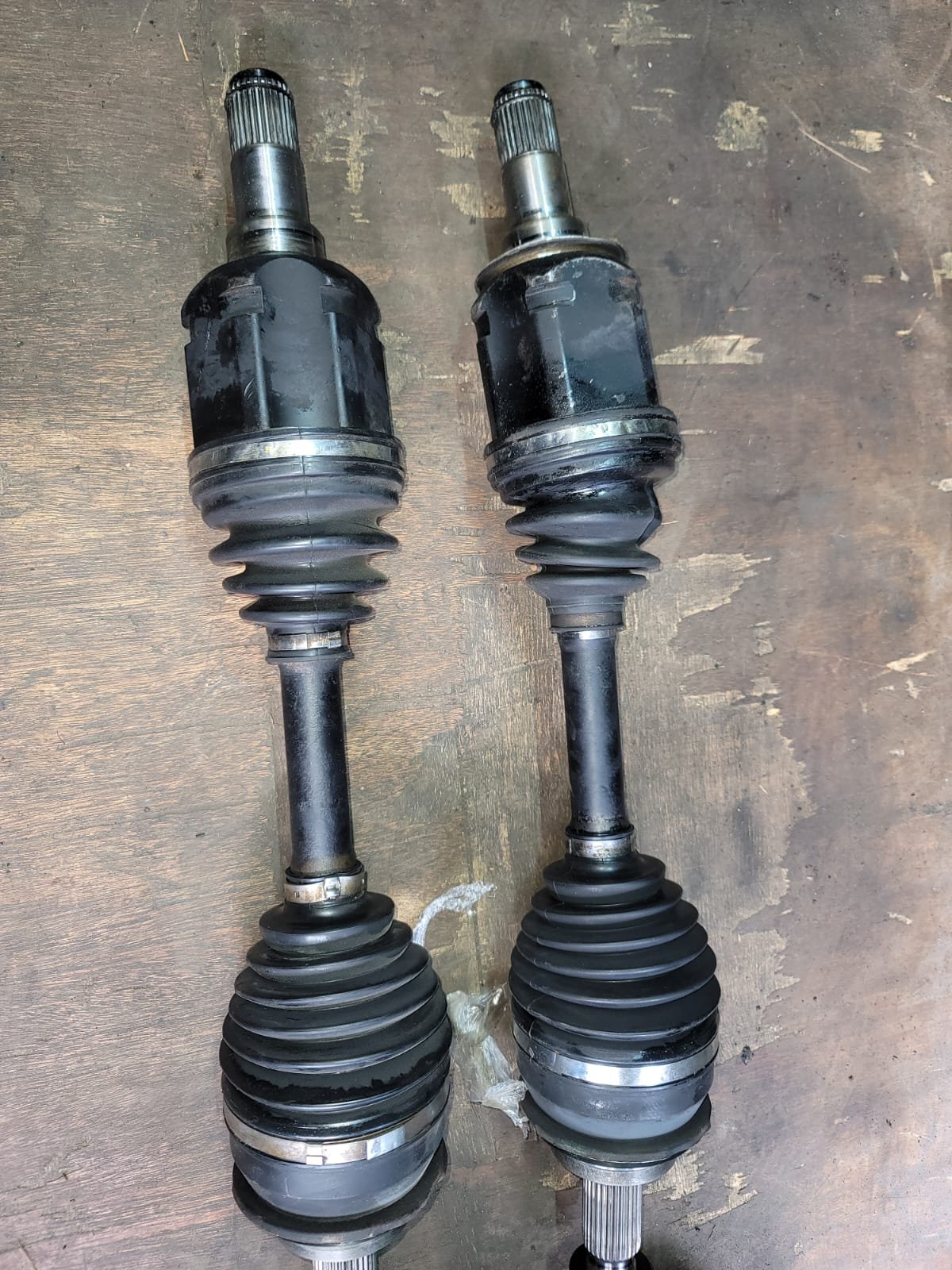
7. Drive Shafts and CV Joints

If you hear a sharp clicking or popping sound when making tight turns, your outer CV joint or drive shaft is worn.

  • Best Choice: Ex-Japan Complete Drive Shaft (for Japanese vehicles) or Tier-1 Aftermarket CV Joint Kits.
  • Why: An entire Ex-Japan drive shaft assembly includes original balanced steel shafts, factory-packed high-temperature grease, and durable OEM neoprene boots—which outlast cheap rubber aftermarket boots by years. If only the outer joint is damaged, replacing just the outer CV joint with a quality Japanese aftermarket unit (like NKN or HDK) is also a reliable, cost-effective fix.

8. Engine Assemblies, Sensors, and Cooling Components

  • Complete Engines & Gearboxes: Ex-Japan is overwhelmingly the gold standard in Kenya for engine replacements, offering low-mileage, tested mechanical assemblies at a fraction of rebuilding costs.
  • Engine Sensors, Spark Plugs & Thermostats: Always buy Genuine or exact OEM-supplier Aftermarket (Denso or NGK for Japanese cars; Bosch for European cars). Modern engines rely on precise voltage readings from oxygen sensors, mass airflow (MAF) sensors, and crankshaft position sensors. Cheap aftermarket sensors frequently cause rough idling, poor fuel economy, and persistent Check Engine lights.
  • Filters (Oil, Air, Fuel, Cabin): Always buy Brand-New Genuine or Tier-1 Aftermarket. Never use second-hand filters.

Japanese vs. European Vehicles in Kenya: Tailoring Your Strategy

The Kenyan vehicle fleet has diversified significantly. Alongside perennial Japanese favorites—Toyota, Nissan, Mazda, Subaru, Honda, and Mitsubishi—Nairobi and major towns have seen rapid growth in European luxury and performance SUVs and sedans, including BMW, Range Rover, Mercedes-Benz, Volkswagen, and Audi.

Your sourcing strategy should reflect the origin of your car:

For Japanese Vehicles (Toyota, Nissan, Mazda, Subaru, Honda)

  • Ex-Japan availability is unmatched. Because Japan’s domestic market mirrors Kenya’s vehicle population, finding clean Ex-Japan shocks, coil springs, drive shafts, steering racks, and body parts is fast and affordable.
  • Tier-1 Japanese Aftermarket brands (KYB, Denso, Aisin, 555, NSK, Koyo, NGK, Advics) are widely stocked in Kenya and deliver true factory reliability.

For European Vehicles (Range Rover, BMW, Mercedes-Benz, VW)

  • Ex-Japan parts are scarcer (though some right-hand-drive European imports from Japan and the UK are dismantled locally).
  • European OEM Aftermarket is your best friend. German and British automakers rely heavily on specialist engineering firms—ZF, Lemförder, Sachs, Bilstein, Bosch, Brembo, Mahle, and Mann-Filter. Purchasing parts made by these OE suppliers gives you genuine European engineering at sensible prices, without risking the electrical gremlins caused by cheap knock-offs.

How to Protect Yourself from Counterfeit Spare Parts in Kenya

One of the biggest risks facing Kenyan car owners is the counterfeit market. Unscrupulous traders import low-grade generic parts and package them in convincingly printed red-and-white “Toyota Genuine Parts” boxes or fake “Nissan” labels. Paying genuine prices for a fake part is the worst possible outcome.

Before you hand over your money, use this 6-point authentication checklist:

  1. Inspect the Packaging Print Quality: Genuine OEM boxes feature crisp, high-resolution typography, accurate color saturation, and clear part numbers. Counterfeit boxes often have slightly blurry text, spelling errors, washed-out reds or blues, or flimsy cardboard.
  2. Verify the Part Number Against Your Chassis (VIN) Number: Every vehicle has a unique 17-character Vehicle Identification Number (VIN) or Japanese chassis code (e.g., NZE141-6045892 or ZRR70-0123456). A reputable spare parts supplier will cross-reference your chassis number against electronic parts catalogs (EPC) to verify the exact OEM part number before selling to you.
  3. Examine the Metal Finish and Welds: Genuine and Tier-1 aftermarket parts exhibit clean CNC machining, uniform welds, smooth casting edges, and laser-etched branding or batch codes directly on the metal. Counterfeits often show rough casting burrs, sloppy weld beads, or ink-stamped logos that wipe off with brake cleaner.
  4. Check Rubber Quality and Smell: Authentic OEM bushings, boots, and mounts are made from dense, supple natural or synthetic rubber compounds that bounce back immediately when pressed. Cheap imitations feel overly hard, plastic-like, or overly spongy, and often emit a sharp chemical/petroleum odor.
  5. Beware of “Too Good to Be True” Pricing: If a dealership quotes KSh 18,000 for a genuine front wheel hub assembly and a random street vendor offers the exact same “brand-new genuine” box for KSh 4,500, it is counterfeit. Authentic OEM manufacturing has a real floor price.
  6. Buy from Transparent, Accountable Suppliers: Avoid buying critical safety parts from anonymous roadside hawkers with no physical premises, no digital footprint, and no return policy. Work with established specialists who clearly distinguish between Genuine, Ex-Japan, and Aftermarket options.

The True Cost Math: Cheap Parts vs. Right-Fit Parts

Many motorists fall into the trap of optimizing solely for the lowest upfront receipt. Let’s look at a real-world example on Kenyan roads: replacing front lower control arm bushings and ball joints.

  • Scenario A: The Budget Imitation Route
    • Cheap generic control arm set: KSh 5,000
    • Mechanic labor + Wheel alignment: KSh 3,500
    • Total Initial Spend: KSh 8,500
    • Outcome: Within 5 months (roughly 8,000 km of Nairobi potholes), the soft rubber bushings tear and the ball joint develops play. Worse, the misalignment causes uneven inner-edge wear on two front tyres (costing KSh 18,000+ to replace early). You now have to buy better control arms and pay labor + alignment all over again. Total 1-year cost: KSh 35,000+.
  • Scenario B: The Tier-1 Aftermarket or Verified Ex-Japan Route
    • Quality OEM-grade control arms (e.g., 555 / Genuine / clean Ex-Japan): KSh 11,000
    • Mechanic labor + Wheel alignment: KSh 3,500
    • Total Initial Spend: KSh 14,500
    • Outcome: The suspension stays tight, quiet, and aligned for 50,000+ km (2.5 to 3+ years), preserving your tyres and keeping your steering crisp. Total 1-year cost: KSh 14,500.

Buying the right part the first time is not an expense—it is the single most effective way to lower your annual cost per kilometer.

5 Questions to Ask Before Ordering Any Car Part Online in Kenya

Whether you are a DIY enthusiast ordering from home, a busy professional coordinating with your mechanic, or a fleet manager maintaining twenty vehicles, run through these five quick checks before confirming any order:

  1. Have I shared my exact Chassis / VIN number or model year? Two cars of the same model—like a 2007 vs. 2012 Toyota Fielder, or a 2WD vs. 4WD Harrier—frequently use completely different shock absorber mounts, brake disc diameters, or axle spline counts. Always confirm fitment before paying.
  2. Which tier is being quoted—Genuine, Ex-Japan, or Aftermarket? Ensure your supplier is transparent about the exact origin and brand of the part so you can compare apples to apples.
  3. Should I replace this part in pairs? Suspension and braking components—specifically shock absorbers, coil springs, brake discs, brake pads, and control arms—should always be replaced in axle pairs (both front left and front right, or both rear left and rear right). Replacing only one side creates uneven damping and dangerous pulling under hard braking.
  4. Are ancillary hardware items included or needed? When replacing shocks, ask about dust boots and strut mounts. When replacing brake discs, replace the pads simultaneously. When replacing timing belts, replace the tensioner and water pump at the same time.
  5. What is the fitment and return policy? Even with careful checking, occasional variations occur on imported cars. Confirm that your supplier supports straightforward exchanges if a part does not match upon inspection at the garage.

For more practical maintenance checklists, troubleshooting guides, and diagnostic tips tailored to Kenyan motorists, explore our latest articles on the Taleon Autospares blog and insights hub.

Frequently Asked Questions (FAQs)

Are Ex-Japan spare parts better than brand-new aftermarket parts in Kenya?

It depends on the component. For coil springs, steering racks, drive shafts, engine assemblies, and body panels, low-mileage Ex-Japan parts are often superior to budget aftermarket parts because they retain original Japanese factory metallurgy and precision. However, for wear-and-tear items with rubber seals or friction surfaces—such as brake pads, filters, engine belts, and sensors—brand-new Genuine or Tier-1 Aftermarket parts are always the better and safer choice.

How can I tell if a shock absorber is still good when buying Ex-Japan?

First, inspect the outer body and upper seal for any signs of leaking hydraulic oil. Second, examine the shiny chrome piston rod—it should be mirror-smooth with zero scratches, rust spots, or pitting (which would tear the oil seal). Third, push the rod down firmly by hand; a healthy gas-charged shock will offer strong, consistent resistance and extend back out smoothly on its own.

What are the most trusted aftermarket spare part brands in Kenya?

For Japanese vehicles (Toyota, Nissan, Mazda, Subaru, Honda), look for KYB (Kayaba) and Tokico for shocks; Denso and NGK for ignition and sensors; Aisin for clutches and water pumps; 555 (Sankei) for ball joints and tie rods; and NSK, NTN, or Koyo for wheel bearings. For European vehicles (BMW, Range Rover, Mercedes-Benz, VW), trust Bilstein, Sachs, Lemförder, Bosch, Brembo, and ZF.

How do I make sure I order the exact part that fits my car?

Locate your vehicle’s Chassis Number (VIN) on your logbook, insurance certificate, or the metal plate inside your engine bay/door frame, and share it with our fitment team along with your car’s make, model, year, and engine capacity. We verify exact compatibility before dispatching your order anywhere in Kenya.

Ready to Find the Exact Fit for Your Vehicle?

Choosing between Genuine, Ex-Japan, and Aftermarket spare parts does not have to be a guessing game. Whether you need heavy-duty Ex-Japan coil springs for your Toyota Fielder, OEM-grade shock absorbers for your Noah or Harrier, precision brake discs, or suspension components for your BMW or Range Rover, getting honest advice and verified fitment makes all the difference.

Explore our complete catalog at Taleon Autospares Kenya, browse parts by category in our online shop, or share your vehicle details and chassis number with our team today for a fast, accurate quotation. Let’s keep you moving safely on every Kenyan road.
Car Overheating? Common Cooling System Parts You Need to Check

Imagine driving along Thika Road during rush hour, or cruising down Mombasa Road on a hot afternoon, when you glance at your dashboard and notice something terrifying: the temperature gauge is climbing steadily into the red zone. A wisp of steam begins to drift from beneath your bonnet. Your heart sinks. Your car is overheating.

Car overheating is one of the most dreaded scenarios for any vehicle owner in Kenya. Whether you drive a reliable Toyota Vitz on your daily commute, a robust Subaru Forester tackling weekend getaways, or a sophisticated European sedan, an overheating engine is a mechanical emergency that demands immediate attention. Ignoring that rising temperature needle for even a few minutes can lead to catastrophic engine failure—warped cylinder heads, blown head gaskets, or a completely seized engine block costing hundreds of thousands of shillings to repair or replace.

The cooling system of a modern car is a finely tuned, pressurized network designed to keep your engine operating within a safe thermal window. When a vehicle overheats, it is rarely due to random bad luck; it is almost always caused by a specific component failure within this vital system.

What are the most common cooling system parts that fail? How do you diagnose them? And where can you source genuine, durable replacement parts engineered to handle punishing East African driving conditions? This comprehensive guide dives deep into the anatomy of your car’s cooling system, common culprits behind overheating, and why trusted specialists like Taleon Spares Kenya are your best line of defense.

Table of Contents

  1. The Anatomy of a Car Cooling System: How It Keeps Your Engine Alive
  2. Why Kenyan Driving Conditions Strain Your Cooling System
  3. Top 7 Cooling System Parts to Check When Your Car Overheats
  4. Warning Signs: Catching an Overheating Issue Before It Destroys Your Engine
  5. Emergency Action: What to Do If Your Car Overheats on the Road
  6. Sourcing Reliability: Why Quality Matters at Taleon Spares Kenya
  7. Conclusion: Protect Your Engine from Thermal Disaster

1. The Anatomy of a Car Cooling System: How It Keeps Your Engine Alive

Inside your car’s engine, thousands of controlled mini-explosions occur every minute, generating intense internal heat. If this heat is not dissipated rapidly, the metal components inside the engine will expand, warp, and weld themselves together.

To prevent this, your car relies on a closed, pressurized liquid cooling loop consisting of several synchronized components:

  • Coolant Fluid: A specialized mixture of water and ethylene glycol antifreeze that absorbs heat from the engine blocks.
  • The Water Pump: A belt-driven pump that continuously circulates coolant through internal engine channels and out to the radiator.
  • The Thermostat: A heat-sensitive valve that acts as a traffic cop, staying closed until the engine reaches its optimal operating temperature, then opening to let hot coolant flow toward the radiator.
  • The Radiator: A large aluminum or brass heat exchanger mounted at the front of the car that uses ambient airflow to cool down the hot fluid passing through its core.
  • Cooling Fans: Electric or mechanical fans that pull air through the radiator when the car is idling or moving slowly in heavy traffic.
  • Hoses and Clamps: Flexible rubber conduits that channel coolant safely between the engine, radiator, and heater core.

When any single link in this chain breaks down, the entire system fails, leading rapidly to dangerous overheating. To stay updated on how to maintain these intricate systems under local operating conditions, motorists regularly explore expert guides on the Taleon Spares Kenya Blog & News.

2. Why Kenyan Driving Conditions Strain Your Cooling System

An automotive cooling system designed for temperate European climates faces an entirely different set of stress factors in Kenya:

  • Relentless Stop-and-Go Urban Traffic: Crawling through bumper-to-bumper gridlock in Nairobi means your car moves slowly or idles for extended periods. Without high-speed ambient airflow rushing through the front grille, your cooling fans and radiator have to work overtime to prevent heat soak.
  • High Ambient Temperatures: Operating under equatorial sun and tropical temperatures raises the baseline thermal load on your engine block from the moment you turn the ignition key.
  • Dust, Mud, and Debris Clogs: Fine red dust, mud splatter during the rainy season, and floating debris accumulate between the delicate fins of your radiator core, blocking airflow and stifling cooling efficiency.

Recognizing these environmental stresses helps you anticipate component wear before it results in a roadside emergency.

3. Top 7 Cooling System Parts to Check When Your Car Overheats

When your temperature gauge spikes, mechanics often look at a few usual suspects. Let us examine the top 7 cooling system parts you must inspect, diagnose, or replace.

1. The Radiator and Radiator Cap

  • The Role: The radiator dissipates heat from the coolant into the outside air. The radiator cap maintains the system’s internal pressure, raising the boiling point of the coolant.
  • Why It Fails: Radiators become clogged internally with mineral scale, rust, and sludge, or externally blocked by mud, dirt, and bent fins. Meanwhile, a failing radiator cap loses its ability to hold pressure, causing coolant to boil at lower temperatures and overflow prematurely into the recovery tank.
  • What to Look For: Visible coolant leaks under the front of the car, green/pink crusty residue around radiator seams, or a damaged rubber seal on the radiator cap.
  • Sourcing Replacements: When replacing clogged or leaking units, ensure you select durable, high-efficiency core structures available in the Taleon Spares Kenya Parts Collection.

2. The Thermostat

  • The Role: Regulates engine temperature by opening and closing in response to coolant heat.
  • Why It Fails: Thermostats typically fail in one of two ways: they get stuck “open” (causing your engine to run too cold) or they get stuck “closed.” When a thermostat is stuck closed, hot coolant is trapped inside the engine block and cannot reach the radiator to cool down. Within minutes, your engine temperature skyrockets.
  • What to Look For: The top radiator hose remains cold or lukewarm even while the engine temperature gauge climbs rapidly into the red zone.

3. The Water Pump

  • The Role: The literal heart of the cooling system, pumping fluid continuously through the engine block and radiator.
  • Why It Fails: Over time, internal impeller blades erode due to cavitation or poor-quality coolant, bearing seals wear out, or the drive belt spinning the pump snaps. If the water pump stops spinning or pumping, coolant circulation halts immediately.
  • What to Look For: A whining or growling noise coming from the water pump pulley area, visible coolant leaks weeping from the pump’s weep hole, or sudden overheating accompanied by zero fluid movement in the radiator.

4. Cooling Fans and Fan Relays/Switches

  • The Role: Pull ambient air through the radiator core when vehicle speed is too low to generate natural airflow (such as idling in Nairobi traffic).
  • Why It Fails: Electric cooling fan motors burn out, fan fuses blow, temperature switches fail to trigger the fan, or relay switches malfunction.
  • What to Look For: Your car remains at a normal temperature while cruising fast on the highway (where natural airflow cools the radiator), but the moment you get stuck in traffic or stop at a traffic light, the temperature needle starts climbing rapidly. This is a classic symptom of a dead cooling fan.

5. Coolant Hoses and Clamps

  • The Role: Flexible upper and lower radiator hoses transport hot coolant to and from the engine.
  • Why It Fails: Under-hood engine heat combined with constant high-pressure fluid cycles causes rubber hoses to dry out, become brittle, swell up (“ballooning”), or crack. A ruptured hose creates an instant coolant blowout.
  • What to Look For: Soft, spongy hoses, visible cracks, bulging sections, or white/colored powdery residue tracking along hose joints where a clamp is leaking.

6. The Cylinder Head Gasket

  • The Role: A high-pressure composite seal sandwiched between the engine block and the cylinder head, sealing combustion chambers while keeping oil and coolant passages separate.
  • Why It Fails: The cylinder head gasket is both a cause and a victim of overheating. If your car overheats severely once, the intense heat warps the metal cylinder head, blowing out the head gasket. Conversely, a blown head gasket allows combustion gases to leak into the cooling system, instantly pressurizing and overheating it.
  • What to Look For: Thick white smoke from the exhaust pipe, “chocolate milkshake” colored engine oil (coolant mixing with oil), sweet-smelling exhaust fumes, or bubbles continuously emerging inside your radiator overflow tank.

7. Engine Coolant (Antifreeze Quality and Levels)

  • The Role: Prevents freezing, raises boiling points, and lubricates internal cooling components.
  • Why It Fails: Many motorists make the dangerous mistake of topping up their systems with plain tap water. Tap water contains minerals that cause rapid internal rusting, scale buildup, and lower boiling thresholds, accelerating engine corrosion and overheating.
  • What to Look For: Low fluid levels in the coolant reservoir or rusty, discolored brown water inside the radiator core.

To explore certified cooling system components and high-grade coolant products, browse the inventory at the Taleon Spares Kenya Shop.

4. Warning Signs: Catching an Overheating Issue Before It Destroys Your Engine

Your car will almost always warn you before suffering a catastrophic thermal breakdown. Pay close attention to these critical warning signs:

  1. Rising Temperature Gauge: The most obvious sign. If your needle creeps past the halfway mark toward the red “H” or warning zone, take action immediately.
  2. Sweet, Syrupy Smell: Ethylene glycol coolant has a distinct, sweet chemical odor. If you smell this inside your cabin or around the engine bay, you have an active coolant leak.
  3. Steam or Smoke from Under the Hood: Never mistake steam for smoke. If vapor billows out from beneath the bonnet, your coolant is boiling over.
  4. Unusual Engine Ticking or Knocking: Extreme heat causes internal engine parts to expand beyond their design tolerances, resulting in abnormal ticking, pinging, or knocking noises.
  5. Sluggish Engine Performance: An overheating engine loses compression and power, making the car feel heavy and unresponsive.

5. Emergency Action: What to Do If Your Car Overheats on the Road

If you are driving along a Kenyan highway or navigating city streets and your car begins to overheat, following these emergency steps can save your engine:

  • Step 1: Turn Off the AC and Turn on the Heater: Switch off your air conditioner immediately to reduce engine load. Turn your cabin heater to maximum heat and blower speed. While uncomfortable for you, the heater core acts as a secondary mini-radiator, drawing heat away from your engine block.
  • Step 2: Pull Over Safely: Safely pull off the road, turn on your hazard lights, and switch off the engine immediately. Do not attempt to “push through” the last two kilometers to your destination.
  • Step 3: Wait Before Opening the Hood: Do not pop the hood immediately. Let the engine cool down for at least 20 to 30 minutes.
  • Step 4: NEVER Open a Hot Radiator Cap: This is the most dangerous mistake a motorist can make. Cooling systems operate under extreme pressure. Opening a hot radiator cap releases boiling coolant instantly, causing severe scalding burns to your hands, face, and chest.
  • Step 5: Inspect and Call for Help: Once the engine is cool, check your coolant reservoir level and inspect for obvious hose leaks. If coolant is completely gone, top it up slowly with water or coolant before driving cautiously to the nearest mechanic, or arrange for a tow.

To understand how company standards prioritize safety and reliability, you can read more on the [Taleon Spares Kenya Story Page](https://taleonspareskenya.co.ke/our-story/ Verdict).

6. Sourcing Reliability: Why Quality Matters at Taleon Spares Kenya

When repairing an overheating cooling system, cutting corners with cheap, unverified aftermarket parts or salvaged scrap parts is a dangerous gamble. A poorly manufactured water pump with weak plastic impellers or a low-grade radiator that clogs within months will land you right back on the side of the road with a damaged engine.

Smart Kenyan motorists rely on dedicated suppliers who curate inventory specifically engineered to withstand local operating challenges. By prioritizing verified quality, transparent pricing, and expert customer support, Taleon Spares Kenya ensures that your vehicle’s cooling system remains bulletproof.

7. Conclusion: Protect Your Engine from Thermal Disaster

An overheating engine is a mechanical crisis, but it is entirely manageable when you understand your cooling system and respond quickly to early warning signs. From thermostats and water pumps to radiators and hoses, every part plays an indispensable role in maintaining thermal balance under Kenya’s demanding driving conditions.

By performing routine maintenance, using quality coolant instead of plain tap water, and replacing worn parts with certified, durable components, you protect your vehicle from costly overhauls and ensure absolute peace of mind on every journey.

Ready to source high-performance cooling system parts for your car? Explore verified options today:

How Often Should You Change Your Car’s Suspension Parts in Kenya?

Driving in Kenya is an exhilarating experience that tests the absolute limits of automotive engineering. Whether you are navigating the heavy morning gridlock along Thika Road in a trusty Toyota Vitz, cruising down Mombasa Road in a sleek executive sedan, or taking a rugged Subaru Forester on weekend adventures upcountry, your vehicle is subjected to an unforgiving driving environment.

From deep, water-filled potholes and severe, unengineered speed bumps (ramps) to fine red dust and rocky murram tracks, Kenyan roads wage a constant war against your vehicle’s structural integrity. While engines get plenty of attention through regular oil changes and spark plug replacements, another critical system absorbs the brunt of this daily punishment: your car’s suspension system.

How long do suspension parts actually last under East African driving conditions? When should you inspect, repair, or replace components like shock absorbers, control arms, ball joints, and stabilizer links? And how can you protect your vehicle from premature wear by sourcing high-durability components? This comprehensive guide dives deep into the lifespan of car suspension parts in Kenya, warning signs of failure, and why trusted specialists like Taleon Spares Kenya are the ultimate partner for keeping your vehicle stable and safe.

Table of Contents

  1. Understanding Your Car’s Suspension: What Makes Up the System?
  2. The Kenyan Factor: Why Suspension Parts Wear Out Twice as Fast Here
  3. General Lifespan Benchmarks: How Long Do Suspension Parts Last?
  4. Key Suspension Components and Their Specific Replacement Intervals
  5. Top 7 Warning Signs Your Suspension Needs Immediate Attention
  6. The Domino Effect: Why Delaying Suspension Repairs Costs You More
  7. OEM vs. Heavy-Duty Aftermarket: Choosing the Right Parts for Kenyan Roads
  8. Sourcing Quality: Why Kenyan Motorists Trust Taleon Spares Kenya
  9. Conclusion: Prioritize Your Ride Comfort and Road Safety

1. Understanding Your Car’s Suspension: What Makes Up the System?

Many drivers view the suspension as a mysterious collection of metal bars and springs beneath the car. In reality, it is a sophisticated network designed to achieve two opposing goals: ride comfort (insulating passengers from jarring road impacts) and handling safety (keeping your tires firmly planted on the road during acceleration, braking, and cornering).

Your vehicle’s suspension system comprises a complex choreography of springs, shock absorbers, linkages, control arms, joints, and rubber bushings. When you drive over a smooth highway, these parts work in harmony to glide over minor imperfections. But when you hit a massive Nairobi pothole at 60 km/h, this entire assembly absorbs a massive shockwave of kinetic energy.

To stay informed about how various vehicle systems respond to local operating conditions, motorists regularly explore educational resources on the Taleon Spares Kenya Blog & News.

2. The Kenyan Factor: Why Suspension Parts Wear Out Twice as Fast Here

If you read an American or European automotive manual, it might suggest that shock absorbers last between 100,000 to 150,000 kilometers, or that control arms can survive up to 160,000 kilometers before needing service.

Throw those manuals out the window when driving in Kenya.

Car manufacturers design their standard suspension systems around pristine, well-paved roads equipped with gradual speed transitions and minimal debris. In contrast, Kenyan motorists face a punishing infrastructure:

  • Severe Potholes and Crater Zones: Sudden drops into jagged, water-filled potholes exert extreme shear stress and vertical impact forces that bend control arms and rupture shock absorber seals.
  • Aggressive Speed Bumps (Ramps): Unmarked, steeply pitched concrete speed bumps found outside schools, residential estates, and highway junctions put brutal compressive shocks on front-end struts and mounting plates.
  • Unpaved Murram and Dust Tracks: Fine red dust penetrates rubber dust boots, mixing with grease to create an abrasive grinding paste that wears out ball joints and steering linkages prematurely.

Because of these harsh realities, suspension components in Kenya typically wear out 30% to 50% faster than their projected global lifespan.

3. General Lifespan Benchmarks: How Long Do Suspension Parts Last?

While exact replacement intervals depend on your driving habits, vehicle weight, and the specific routes you frequent (e.g., urban commuting vs. rural upcountry travel), professional mechanics in Nairobi generally work with these realistic Kenyan replacement benchmarks:

  • Shock Absorbers and Struts: 40,000 to 70,000 km
  • Suspension Bushings (Rubber): 30,000 to 50,000 km
  • Ball Joints: 50,000 to 70,000 km
  • Control Arms: 60,000 to 90,000 km
  • Stabilizer Linkage (Links & Bushes): 30,000 to 50,000 km
  • Wheel Bearings: 60,000 to 100,000 km

Let us break down each of these components to understand what they do, why they fail, and when to swap them out.

4. Key Suspension Components and Their Specific Replacement Intervals

1. Shock Absorbers and Struts

  • Role: Shocks control spring bounce and absorb the impact of bumps, ensuring your tires stay in continuous contact with the road.
  • Kenyan Lifespan: 40,000 – 70,000 km.
  • Why They Fail: Internal hydraulic fluid leaks, worn piston seals, and bent shafts caused by heavy impacts. Once a shock leaks oil, its dampening ability drops to zero, turning your car into an uncontrolled bouncing boat.
  • Replacement Tip: Always replace shock absorbers in axle pairs (both front shocks or both rear shocks together) to maintain balanced handling. You can explore durable replacement struts designed for popular Japanese and European models via the Taleon Spares Kenya Parts Collection.

2. Control Arms and Wishbones

  • Role: The control arm is the sturdy metal hinge connecting your wheel hub to the vehicle’s frame, allowing vertical wheel movement while keeping the wheel aligned.
  • Kenyan Lifespan: 60,000 – 90,000 km.
  • Why They Fail: Direct side impacts against deep potholes or curbs can physically bend the control arm, throwing your wheel alignment completely out of whack.

3. Suspension Bushings (Rubber Mounts)

  • Role: Small rubber or polyurethane cylinders nestled inside control arms and mounting points to absorb vibrations and cushion metal-on-metal contact.
  • Kenyan Lifespan: 30,000 – 50,000 km.
  • Why They Fail: Rubber is sensitive to engine heat, oil leaks, and constant stretching caused by rough roads. In Kenya’s hot and dusty climate, rubber bushings dry out, crack, tear, and eventually disintegrate.
  • Warning Sign: Once bushings tear, metal parts slam against each other, creating a loud clunking noise every time you go over a bump.

4. Ball Joints

  • Role: Acting like a mechanical hip joint, ball joints connect your control arms to the steering knuckles, allowing smooth pivoting when you turn your wheels.
  • Kenyan Lifespan: 50,000 – 70,000 km.
  • Why They Fail: Dust boots crack, allowing abrasive murram grit inside to grind down the metal socket.
  • The Danger: A completely worn ball joint can snap apart while driving, causing the wheel to detach and fold inward—a terrifying scenario at highway speeds on Mombasa Road or Waiyaki Way.

5. Stabilizer Linkage and Sway Bar Bushings

  • Role: Stabilizer links (dog bones) and sway bar bushings connect opposing wheels to reduce body roll when cornering sharply.
  • Kenyan Lifespan: 30,000 – 50,000 km.
  • Why They Fail: They are lightweight components exposed to constant torsional stress. Their rubber joints wear out rapidly on uneven terrain.
  • Warning Sign: A persistent rattling or tapping noise when driving over minor road ripples or uneven driveways.

6. Tie Rod Ends and Steering Racks

  • Role: Tie rod ends link your steering gear box to the front wheels, translating steering wheel rotation into physical wheel turns.
  • Kenyan Lifespan: 50,000 – 80,000 km.
  • Why They Fail: Constant jolts from hitting potholes loosen the ball-and-socket joints inside the tie rod ends.

7. Wheel Bearings and Hub Assemblies

  • Role: Housed inside the wheel hub, bearings allow wheels to spin smoothly with minimal friction.
  • Kenyan Lifespan: 60,000 – 100,000 km.
  • Why They Fail: Heavy side loads from cornering hard around roundabouts and dropping into sharp potholes fracture the internal steel ball bearings.

5. Top 7 Warning Signs Your Suspension Needs Immediate Attention

Your car will always tell you when its suspension is failing long before a catastrophic breakdown occurs. Watch out for these 7 tell-tale warning signs:

1. Excessive Bouncing After Bumps

When you drive over a speed bump, your car should settle down instantly after one smooth bounce. If your car continues bouncing up and down like a loose spring two or three times after clearing a bump, your shock absorbers are completely blown.

2. The Car Pulls to One Side While Driving

If your steering wheel feels like it has a mind of its own and constantly drifts to the left or right on a straight, flat road, your suspension alignment is compromised, often due to worn control arms, loose bushings, or bent tie rods.

3. Nose-Diving When Braking or Squatting When Accelerating

If your car’s front end plunges downward alarmingly every time you step on the brake pedal, or if the rear squats heavily when you accelerate from a traffic light, your shock absorbers and struts have lost their hydraulic dampening control.

4. Clunking, Knocking, or Squeaking Noises Over Bumps

Healthy suspension operates quietly. If you hear loud metallic clunks, dull thuds, or squeaking noises when traversing bumps or turning corners, your rubber bushings, ball joints, or stabilizer links are worn out and crying out for replacement.

5. Uneven Tire Wear Patterns

Inspect your tires regularly. If the inner or outer tread is wearing down much faster than the rest of the tire (cupping or feathering wear), it is a classic indicator that your suspension geometry is ruined and your wheels are misaligned due to worn parts.

6. Steering Wheel Vibration or Loose Handling

A loose, wandering steering wheel with excessive “play” before the wheels actually turn points directly to worn tie rod ends, ball joints, or a failing steering rack.

7. Oily Residue on Shock Absorbers

Look behind your wheels with a flashlight. If you spot wet, oily sludge leaking down the metal body of your shock absorber or strut, the internal hydraulic seal has ruptured, and the part must be replaced immediately.

6. The Domino Effect: Why Delaying Suspension Repairs Costs You More

Some motorists adopt a fatalistic approach to maintenance: “Hii gari bado inaenda,acha tu ikae” (The car is still running, let it stay). Delaying suspension repairs is a classic case of being penny-wise and pound-foolish.

When you ignore a worn-out suspension bushing or a slightly leaking shock absorber, it triggers a destructive domino effect:

  • Destroyed Tires: Worn suspension parts cause uneven wheel alignment and bouncing tires, chewing through expensive rubber tires in a matter of months.
  • Stressed Steering and Braking Systems: When suspension fails, extra mechanical strain is transferred to your steering rack, wheel bearings, and braking assemblies, causing premature failure across multiple systems.
  • Compromised Emergency Handling: A bad suspension drastically increases your stopping distance and makes evasive maneuvers during highway emergencies nearly impossible, putting your life at serious risk.

To explore how structured maintenance prevents these financial traps, review the foundational commitments outlined on the Taleon Spares Kenya Story Page.

7. OEM vs. Heavy-Duty Aftermarket: Choosing the Right Parts for Kenyan Roads

When the time comes to replace your suspension parts, you will face a choice between Original Equipment Manufacturer (OEM) parts and aftermarket alternatives.

On Kenyan roads, standard factory OEM parts (while precise and high quality) are sometimes engineered for smoother European or Asian highway conditions. This is why many savvy motorists and mechanics opt for certified heavy-duty aftermarket suspension parts—engineered by globally respected brands (such as KYB, Lemförder, or Delphi) that feature reinforced steel welding, thicker valve walls, and heavy-duty rubber compounds built specifically to withstand punishing potholes and rough terrain.

To bypass the risk of unverified counterfeit parts and secure genuine, high-performance components, many drivers shop directly through the verified inventory at the Taleon Spares Kenya Shop.

8. Sourcing Quality: Why Kenyan Motorists Trust Taleon Spares Kenya

Finding genuine, durable auto spares in Nairobi can feel like navigating a minefield. The market is saturated with low-grade counterfeit suspension arms and recycled parts disguised as brand-new items that fail within weeks.

Taleon Spares Kenya bridges this gap by establishing rigorous sourcing standards and direct supply chains with verified global manufacturers. Whether you drive a compact hatchback, a heavy-duty 4×4 SUV, or a corporate sedan, Taleon Spares Kenya ensures that every shock absorber, control arm, bushing, and ball joint meets strict quality controls designed to endure Kenyan roads.

9. Conclusion: Prioritize Your Ride Comfort and Road Safety

Your car’s suspension system is the unsung hero of your daily commute, keeping you comfortable, stable, and safe through every pothole, speed bump, and highway curve. Because Kenyan roads place extreme demands on mechanical assemblies, suspension parts wear out much faster here—typically requiring thorough inspections every 30,000 to 50,000 kilometers and replacements well before standard mileage milestones.

By staying vigilant, listening to your car’s warning sounds, and replacing worn components promptly with certified, high-durability parts, you protect your vehicle, save money on costly secondary repairs, and ensure absolute peace of mind behind the wheel.

Ready to restore your vehicle’s smooth ride and handling? Explore verified suspension parts today:

Signs Your Car Needs Immediate Brake Pad Replacement

Navigating the vibrant, fast-paced roads of Kenya is an adventure that requires your full attention. Whether you are battling the legendary morning gridlock along Thika Road in a nimble Toyota Vitz, cruising down Mombasa Road in a corporate sedan, or tackling rugged upcountry murram paths in a Subaru Forester, your car is subjected to intense driving conditions. From sudden, unannounced speed bumps (ramps) and deep, water-filled potholes to erratic matatus darting across lanes, driving in Nairobi demands absolute reliability from one vehicle system above all others: your brakes.

When you press your brake pedal, you expect an immediate, smooth, and predictable response. However, your braking system is a wear-and-tear assembly, and no component wears down faster or requires more vigilant monitoring than your brake pads. Ignoring worn brake pads does not just risk an expensive repair bill—it places your safety, the safety of your passengers, and the lives of other road users in severe jeopardy.

How do you know when your brake pads are crying out for a change? What are the subtle warning signs before complete brake failure occurs? This comprehensive guide dives deep into the top indicators that your car needs an immediate brake pad replacement, how local driving conditions accelerate wear, and where you can source certified, high-performance braking components through trusted specialists like Taleon Spares Kenya.

Table of Contents

  1. The Physics of Braking: How Brake Pads Work
  2. Why Kenyan Roads Accelerate Brake Pad Wear
  3. Sign #1: The High-Pitched Squealing or Screeching Noise
  4. Sign #2: A Harsh Grinding Metal-on-Metal Sound
  5. Sign #3: Vibrations in the Steering Wheel When Braking
  6. Sign #4: A Spongy, Soft, or Low Brake Pedal Feel
  7. Sign #5: Increased Stopping Distance (Car Taking Longer to Stop)
  8. Sign #6: The Vehicle Pulls to One Side When Braking
  9. Sign #7: The Brake Warning Light on Your Dashboard
  10. Sign #8: Visual Inspection: Thin Brake Pads Through Wheel Rims
  11. The Dangers of Buying Cheap or Counterfeit Brake Pads in Nairobi
  12. Sourcing Safety: Why Quality Matters at Taleon Spares Kenya
  13. Conclusion: Never Delay Brake Maintenance

1. The Physics of Braking: How Brake Pads Work

To understand why brake pads fail, it helps to understand what happens every time you press down on your brake pedal. When your foot applies pressure to the pedal, hydraulic brake fluid is forced through brake lines down to the brake calipers at each wheel.

Inside the caliper are two brake pads facing a metal brake disc (rotor) that rotates along with your wheel. As the caliper squeezes, it clamps the brake pads against both sides of the spinning rotor. The resulting friction converts the vehicle’s kinetic energy into thermal heat, slowing down and eventually halting the car.

Because friction is the mechanism doing the work, the friction material on the face of your brake pads is explicitly designed to wear down gradually over thousands of kilometers. Once that friction lining thins out, your braking efficiency plummets.

2. Why Kenyan Roads Accelerate Brake Pad Wear

While brake pads naturally wear out over time regardless of where you drive, several distinct operational factors in Kenya speed up this degradation:

  • Relentless Stop-and-Go Urban Traffic: Navigating Nairobi’s heavy traffic congestion means your foot is constantly resting on or pressing the brake pedal. This frequent thermal cycling heats up the braking system, leading to accelerated pad glazing and wear.
  • Aggressive Driving Dynamics: Swerving around potholes, reacting to sudden pedestrian crossings, and managing aggressive commercial driving styles require abrupt, heavy braking applications.
  • Dust and Gritty Road Conditions: Fine red dust, mud, and sand particles mix with brake dust during dry and rainy seasons. This abrasive slurry gets trapped between the pad and the rotor, acting like sandpaper and accelerating wear on both components.

Recognizing these environmental stresses is vital. For continuous insights into local vehicle maintenance and expert tips, motorists regularly check out resources on the Taleon Spares Kenya Blog & News.

3. Sign #1: The High-Pitched Squealing or Screeching Noise

If you roll down your window while slowing down in traffic and hear a distinct high-pitched squeal or metallic chirp, your car is talking to you.

  • The Cause: Most modern brake pads are engineered with a built-in mechanical wear indicator known as a “feeder tab” or “indicator shim.” This is a small metal tab attached to the pad backing plate. When your brake pad friction material wears down to a dangerously thin safety threshold (usually around 2 to 3 millimeters), this tab begins scraping directly against the metal brake rotor, producing a sharp, piercing squeal.
  • What You Should Do: Treat this sound as an early warning alarm. You still have a small window of safety left, but you need to schedule an immediate replacement before the friction material wears away completely.
  • Where to Find Replacements: To browse certified, high-friction replacement pads engineered for Japanese and European vehicles, explore the comprehensive Taleon Spares Kenya Parts Collection.

4. Sign #2: A Harsh Grinding Metal-on-Metal Sound

If you ignored the high-pitched squealing warning sign for weeks, the situation has escalated from a warning to an emergency.

  • The Cause: The friction material on your brake pads has worn away entirely. Now, the bare steel backing plate of the brake pad is grinding directly against the steel brake rotor every time you apply the brakes.
  • The Danger: This metal-on-metal friction destroys your brake rotors instantly, gouging deep circular grooves into them, generating excessive heat, and causing a massive drop in braking power. What could have been an affordable pad replacement now turns into a costly double-repair requiring both new pads and new rotors.
  • What You Should Do: Stop driving immediately and arrange for professional replacement parts. You can secure premium braking components quickly through the Taleon Spares Kenya Shop.

5. Sign #3: Vibrations in the Steering Wheel When Braking

Are you speeding down Waiyaki Way or the Nairobi Expressway, and when you step on the brakes, your steering wheel begins to shake or pulsate violently?

  • The Cause: This symptom usually indicates warped brake rotors. When brake pads wear down unevenly or are subjected to intense thermal stress from constant braking, the heat warps the flat surface of the metal rotor. When the brake pads clamp down on an uneven, undulating rotor surface, the pulsation travels straight up through the steering knuckle into your hands.
  • What You Should Do: Have your mechanic inspect both your brake pads and rotors. Replacing thin pads is mandatory, and warped rotors will either need professional machining (resurfacing) or total replacement.

6. Sign #4: A Spongy, Soft, or Low Brake Pedal Feel

When you step on your brake pedal, it should feel firm and offer progressive resistance. If your brake pedal feels unusually soft, mushy, or sinks almost all the way to the floorboard before the car actually begins to slow down, something is critically wrong.

  • The Cause: Extremely worn-out brake pads require the brake caliper pistons to travel a much greater distance to clamp down on the rotors. Alternatively, thin pads paired with boiling brake fluid (caused by excessive heat buildup) introduce air bubbles into the hydraulic lines, creating a spongy pedal feel.
  • What You Should Do: A spongy pedal is a severe safety hazard. Do not attempt long-distance travel or high-speed driving until your braking system has been thoroughly inspected and bled by a professional.

7. Sign #5: Increased Stopping Distance (Car Taking Longer to Stop)

Have you noticed that your car feels like it is taking longer to halt than it used to? If you find yourself pressing harder and harder on the pedal to stop at traffic lights, your braking efficiency has degraded.

  • The Cause: Worn brake pads lose their friction coefficient. Furthermore, if brake dust, oil contamination, or excessive glazing has compromised the pad surface, the friction grip against the rotor is severely diminished.
  • The Danger: In emergency braking scenarios—such as a pedestrian suddenly stepping onto Mombasa Road—every extra meter of stopping distance makes the difference between a safe stop and a severe collision.

8. Sign #6: The Vehicle Pulls to One Side When Braking

When you apply the brakes, your car should glide smoothly in a straight line. If your vehicle suddenly yanks or swerves to the left or right when you brake, you have an imbalance in your braking system.

  • The Cause: Brake pads do not always wear down at the exact same rate on both sides of the car. A stuck brake caliper slide pin, a collapsed hydraulic hose, or uneven pad wear can cause one side of the car to apply heavy braking force while the other side lags behind.
  • What You Should Do: This erratic pulling can cause you to lose control, especially on wet roads. Have your mechanic inspect your calipers, slide pins, and replace your brake pads as a balanced axle set (always replacing both left and right pads simultaneously).

9. Sign #7: The Brake Warning Light on Your Dashboard

Modern vehicles are equipped with electronic sensors designed to take the guesswork out of maintenance.

  • The Cause: Many cars feature brake pad wear sensors. When the friction material wears down to a critical level, the sensor wire is severed, completing an electrical circuit that triggers a dedicated warning light on your dashboard (often displayed as an enclosed circle with dashed parentheses or the word BRAKE).
  • What You Should Do: Never ignore dashboard warning lights. Check your brake fluid level and inspect your brake pads immediately. To understand how reliable companies ensure top-tier quality standards, read more about operational ethics on the Taleon Spares Kenya Story Page.

10. Sign #8: Visual Inspection: Thin Brake Pads Through Wheel Rims Depending on the design of your alloy or steel wheel rims, you can often inspect your brake pads visually without removing the wheel entirely.

  • How to Check: Shine a flashlight through the spokes of your wheel rim. Look inside the brake caliper housing. You should be able to see the outer brake pad pressed against the metal rotor. The friction material should look thick and substantial (at least 5 to 6 millimeters). If the pad material looks paper-thin (less than 3 millimeters) or matches the thickness of a few coins stacked together, it is time for an immediate replacement.

The Dangers of Buying Cheap or Counterfeit Brake Pads in Nairobi

When faced with the cost of maintenance, some motorists search for the cheapest brake pads available in open-air markets. In the braking category, buying unbranded or counterfeit spares is a fatal mistake.

Counterfeit brake pads are often manufactured using low-grade resin, compressed cardboard, or recycled scrap metal mixed with abrasive grit. Under high frictional heat—such as descending a steep hill or driving through heavy traffic—these fake pads glaze over, crumble, or lose their stopping power entirely. When you need brakes the most, they fail.

Sourcing Safety: Why Quality Matters at Taleon Spares Kenya

Your safety on Kenyan roads depends entirely on the integrity of your vehicle’s components. Sourcing genuine, high-friction, certified brake pads from a reputable supplier ensures consistent stopping power, longer rotor life, and absolute peace of mind.

At Taleon Spares Kenya, every braking component is vetted to withstand local driving demands. Whether you drive a popular Japanese hatchback or a European executive SUV, getting the right parts delivered safely is seamless.

Conclusion: Never Delay Brake Maintenance

Your car’s brakes are not a component where you can afford to procrastinate. From high-pitched squealing and steering wheel vibrations to increased stopping distances, your vehicle will always give you warning signs before total brake failure occurs. Listening to these signs and replacing your brake pads promptly safeguards your car, your wallet, and your life.

Ready to secure certified, high-performance brake pads for your vehicle? Take action today:

Top 10 Car Spare Parts That Wear Out Fastest on Kenyan Roads

Driving in Kenya is an adventure, a daily hustle, and an endurance test rolled into one. Whether you are navigating the heavy morning gridlock along Thika Road in a trusty Toyota Vitz, cruising down Mombasa Road in a sleek European sedan, or tackling rugged upcountry murram tracks in a Subaru Forester, your vehicle takes a relentless pounding.

Kenya’s driving environment is notoriously punishing. From deep, water-filled craters masquerading as potholes and unengineered speed bumps (ramps) to fine red dust and abrasive mud during rainy seasons, local roads subject your vehicle’s mechanical assemblies to forces that engineers in Tokyo or Stuttgart rarely account for in standard test cycles.

As a result, certain car parts wear out significantly faster in East Africa than they would on smooth European autobahns or American interstate highways. Understanding which components fail most frequently—and why—is the key to proactive maintenance, avoiding sudden highway breakdowns, and protecting your hard-earned money.

In this comprehensive guide, we examine the Top 10 Car Spare Parts That Wear Out Fastest on Kenyan Roads, explaining the mechanics behind their rapid degradation and how you can source high-performance replacements through trusted specialists like Taleon Spares Kenya.

Table of Contents

  1. The Reality of Driving Conditions in Kenya
  2. 1. Shock Absorbers and Struts
  3. 2. Brake Pads and Brake Discs
  4. 3. Control Arms, Bushings, and Ball Joints
  5. 4. Air, Oil, and Fuel Filters
  6. 5. Steering Racks and Tie Rod Ends
  7. 6. Wheel Bearings and Hub Assemblies
  8. 7. Clutch Kits (Manual Transmission)
  9. 8. Spark Plugs and Ignition Coils
  10. 9. Drive Belts and Timing Components
  11. 10. Engine Mounts and Gearbox Mounts
  12. Sourcing Durability: Why Quality Matters on Local Roads
  13. Conclusion: Stay Ahead of Wear and Tear

The Reality of Driving Conditions in Kenya

Before diving into the top-wearing components, it helps to understand why vehicles age faster in Kenya. When a car hits an unmarked speed bump at 50 km/h or drops into a jagged pothole filled with rainwater, the kinetic energy is not absorbed entirely by the tires. Instead, massive shockwaves travel upward through the suspension, steering knuckles, chassis frame, and engine mounts.

Combine these physical impacts with heavy stop-and-go urban traffic—where your brakes and clutch are engaged continuously—and fine abrasive dust that sneaks past cheap filters, and you have a recipe for accelerated component wear. Keeping track of these high-wear parts through regular check-ups is essential. For continuous insights into local vehicle maintenance, motorists regularly consult the expert resources found on the Taleon Spares Kenya Blog & News.

1. Shock Absorbers and Struts

Topping the list of fast-wearing parts are shock absorbers and suspension struts.

  • Why They Wear Out Fast: Shocks are designed to control spring oscillation and keep your tires firmly planted on the road. On Kenyan roads, however, they do double duty as primary impact absorbers. Continuous slamming against deep potholes causes hydraulic fluid to leak, seals to blow out, and internal valves to warp.
  • Symptoms of Failure: A floating, bouncy ride, excessive nose-dive when braking, swaying when cornering, and oily residue visible on the shock body.
  • The Solution: Replacing worn shocks restores vehicle stability and stopping efficiency. Explore durable, heavy-duty suspension replacement options tailored for popular models via the Taleon Spares Kenya Parts Collection.

2. Brake Pads and Brake Discs

The constant cycle of accelerating and heavy braking in Nairobi’s congested traffic—combined with sudden emergency stops for erratic matatus and pedestrians—places extreme thermal and mechanical stress on your braking system.

  • Why They Wear Out Fast: Friction creates intense heat. When low-quality brake pads are paired with gritty road dust, they act like sandpaper against your brake rotors, causing premature scoring, thinning, and warping steering vibration during deceleration.
  • Symptoms of Failure: Squealing or grinding noises when pressing the brake pedal, a spongy pedal feel, or vibration through the steering wheel at highway speeds.
  • The Solution: Never compromise on braking components. Sourcing certified high-friction brake pads and precision rotors from a trusted supplier ensures safety in every traffic scenario. Browse verified options directly at the Taleon Spares Kenya Shop.

3. Control Arms, Bushings, and Ball Joints

Your vehicle’s front suspension relies on control arms, rubber bushings, and ball joints to allow smooth vertical movement while keeping the wheels correctly aligned.

  • Why They Wear Out Fast: Every time you drive over unpaved murram roads or hit a pothole sideways, lateral and shear forces tear at the rubber bushings. Once the rubber cracks or disintegrates, metal grinds against metal, wearing out the ball joints rapidly.
  • Symptoms of Failure: Clunking or popping noises when turning the steering wheel or driving over bumps, uneven front tire wear, and a wandering steering wheel that pulls to one side.
  • The Solution: Replacing ruined control arms and worn rubber bushings restores tight factory handling. You can learn more about how quality parts are selected and vetted by reading the Taleon Spares Kenya Story Page.

4. Air, Oil, and Fuel Filters

Filters are the unsung heroes of your engine, designed to trap dirt, carbon particles, and metallic debris before they can cause internal damage.

  • Why They Wear Out Fast: Kenya’s dry seasons kick up immense red dust and fine particulate matter, while rainy seasons bring high humidity and muddy debris. Air filters choke up remarkably fast under these conditions, restricting airflow and suffocating engine efficiency.
  • Symptoms of Failure: Reduced fuel economy, sluggish acceleration, a dark exhaust puff upon startup, or a check-engine light.
  • The Solution: Changing your filters during every routine service is non-negotiable. Always insist on high-efficiency filtering media rather than cheap, porous counterfeit alternatives.

5. Steering Racks and Tie Rod Ends

The steering rack translates the rotational movement of your steering wheel into side-to-side motion for your front wheels.

  • Why They Wear Out Fast: Direct impact from hitting curbs, driving through massive potholes, or aggressively turning wheels while stationary (“dry steering”) destroys the internal gear teeth, seals, and outer/inner tie rod ends of the steering rack.
  • Symptoms of Failure: Loose or “play” in the steering wheel, fluid leaks beneath the power steering reservoir, whining noises when turning, and persistent steering vibration.
  • The Solution: A failing steering rack compromises total vehicle control and must be replaced or professionally overhauled immediately using high-grade components.

6. Wheel Bearings and Hub Assemblies

Wheel bearings allow your wheels to spin freely with minimum friction. Housed inside the wheel hub assembly, they support the entire weight of the car.

  • Why They Wear Out Fast: The heavy side-loads imposed by cornering hard around rough roundabouts and dropping into sharp potholes fracture the microscopic ball bearings and races inside the hub assembly.
  • Symptoms of Failure: A characteristic low-pitched humming, roaring, or growling noise from the wheels that gets louder as your vehicle accelerates.
  • The Solution: Ignoring a failing wheel bearing can lead to catastrophic wheel seizure or detachment at high speeds. Sourcing durable, low-friction replacement hub assemblies is essential.

7. Clutch Kits (Manual Transmission)

For commercial taxi drivers, delivery vans, and private motorists navigating bumper-to-bumper urban gridlock in Nairobi every morning and evening, manual transmissions take a severe beating.

  • Why They Wear Out Fast: Constant half-clutching (teasing the clutch) in traffic jams overheats the pressure plate, wears down the friction disc lining, and degrades the release bearing prematurely.
  • Symptoms of Failure: A high clutch pedal biting point, engine revs increasing without a corresponding increase in speed (clutch slipping), or difficulty shifting into gear.
  • The Solution: Upgrading to robust clutch kits built to withstand heavy urban duty prevents unexpected breakdowns on busy highways.

8. Spark Plugs and Ignition Coils

Spark plugs deliver the electrical current that ignites the air-fuel mixture inside your engine cylinders.

  • Why They Wear Out Fast: Poor fuel quality, adulterated petrol, and heavy carbon buildup from stop-and-go idling foul the spark plug tips, eroding the electrode gap and forcing ignition coils to work twice as hard.
  • Symptoms of Failure: Engine misfires, rough idling at traffic lights, severe loss of power when climbing hills, and plummeting fuel efficiency.
  • The Solution: Regularly inspecting and replacing spark plugs with genuine, heat-rated variants ensures smooth combustion and protects your catalytic converter.

9. Drive Belts and Timing Components

Accessory drive belts (alternator belts, power steering belts, AC belts) and engine timing belts/chains keep your engine’s auxiliary components and valve train operating in perfect synchronization.

  • Why They Wear Out Fast: Under-hood engine heat combined with airborne dust and grit causes rubber drive belts to dry out, crack, and fray prematurely.
  • Symptoms of Failure: A high-pitched squealing noise from under the bonnet upon startup or acceleration, visible cracks on the belt ribs, or sudden engine shutdown if a timing belt snaps.
  • The Solution: Routine preventative replacement before mileage limits are reached is vital, especially when operating in dusty tropical climates.

10. Engine Mounts and Gearbox Mounts

Engine and transmission mounts consist of heavy-duty rubber and steel brackets designed to secure your engine to the vehicle chassis while absorbing vibrations.

  • Why They Wear Out Fast: The constant torque of acceleration, combined with violent vibrations transmitted from rough potholes and speed bumps, causes the rubber dampening material inside the mounts to tear and collapse.
  • Symptoms of Failure: Excessive engine vibration shaking the cabin when idling, a clunking thud when shifting gears or accelerating, and visible engine shifting under the hood.
  • The Solution: Replacing collapsed mounts restores cabin refinement and protects surrounding exhaust and wiring systems from stress fractures.

Sourcing Durability: Why Quality Matters on Local Roads

When dealing with these high-wear components, choosing cheap, unverified counterfeit parts is a false economy. A low-grade suspension arm or a fake filter might save you a few hundred shillings initially, but it will fail within weeks, doubling your labor costs and risking your safety.

Smart Kenyan motorists rely on dedicated suppliers who curate inventory specifically engineered to withstand local road challenges. By prioritizing verified quality, transparent pricing, and expert customer support, you eliminate guesswork from vehicle maintenance.

Conclusion: Stay Ahead of Wear and Tear

Kenyan roads will remain demanding, but your vehicle doesn’t have to suffer prematurely. By recognizing which parts wear out fastest and replacing them with durable, certified components at the first sign of fatigue, you can enjoy smooth, safe, and worry-free motoring across the country.

Ready to source high-performance replacement parts for your car? Explore verified options today:

The Ultimate Checklist for Buying Affordable Car Spares Online in Kenya

The automotive scene in Kenya is vibrant, fast-moving, and deeply demanding. Whether you are navigating the morning gridlock on Thika Road in a trusty Toyota Vitz, managing a fleet of commercial delivery vans down Mombasa Road, or taking a rugged Subaru Forester on weekend adventures upcountry, your vehicle faces intense operating conditions. Potholes, unpaved murram tracks, sudden speed bumps, and heavy urban stop-and-go traffic place immense strain on your car’s mechanical parts.

When components eventually wear out, vehicle owners face a familiar dilemma: finding replacement parts that balance affordability with uncompromised quality. Traditionally, this meant driving down to the chaotic open-air stalls of Kirinyaga Road or River Road, battling traffic, and haggling with roadside brokers. Today, however, a digital transformation is underway. More Kenyan motorists are discovering the immense convenience of sourcing components online.

Yet, buying car spares online requires more than just clicking “Add to Cart.” To help you secure the best deals without falling victim to counterfeits or incompatible parts, we have put together the ultimate buyer’s checklist.

Table of Contents

  1. The Shift to E-Commerce: Why Buying Spares Online Makes Sense in Kenya
  2. Checklist Item #1: Know Your Vehicle’s Exact Specifications (VIN and Engine Codes)
  3. Checklist Item #2: Verify Supplier Credibility and Sourcing Standards
  4. Checklist Item #3: Balance Cost and Quality (OEM vs. Certified Aftermarket)
  5. Checklist Item #4: Scrutinize Compatibility and Part Descriptions
  6. Checklist Item #5: Confirm Delivery Networks and Return Policies
  7. Why Kenyan Motorists Trust Taleon Spares Kenya for Online Purchases
  8. Conclusion: Drive Smarter with Safe Online Sourcing

1. The Shift to E-Commerce: Why Buying Spares Online Makes Sense in Kenya

The digital marketplace in Kenya has matured remarkably. From mobile money integration via M-Pesa to reliable logistics networks reaching every major town, buying products online is no longer a novelty—it is a lifestyle upgrade.

When applied to automotive maintenance, digital shopping offers distinct advantages over physical brick-and-mortar storefronts:

  • Time and Fuel Savings: Bypassing Nairobi traffic, parking fees, and hours spent walking through congested spare parts districts saves both time and money.
  • Transparent Comparison: Online storefronts allow you to review pricing, specifications, and alternative options side-by-side without pressure from aggressive salespeople.
  • Access to Specialized Catalogs: Digital platforms can host vast inventories that would take physical shops weeks to organize, making it easier to find model-specific components.

To make the most of this digital shift, you need a systematic approach. Let us walk through the ultimate checklist for buying affordable car spares online in Kenya.

2. Checklist Item #1: Know Your Vehicle’s Exact Specifications (VIN and Engine Codes)

The most common mistake online shoppers make is searching for parts based solely on broad names (e.g., “Toyota Fielder shock absorbers” or “Mazda Demio wheel hub”). Japanese and European vehicle manufacturers frequently introduce minor design updates across different production years, changing bolt patterns, sensor placements, and internal dimensions.

How to Check This Off Your List:

  • Locate Your Vehicle Identification Number (VIN): Also known as the chassis number, this 17-character code is found on your logbook, insurance papers, or stamped near the base of your windshield. It holds the exact blueprint of your car.
  • Identify Your Engine Code: Know whether your vehicle runs on a 1NZ-FE, 2ZR-FE, QR25, or FB20 engine.
  • Match Year and Generation: Ensure the online listing explicitly matches your car’s manufacturing year and body generation code (e.g., NZE141 vs. NZE161).

To explore model-specific categories tailored to these precise engineering requirements, browse through the comprehensive Taleon Spares Kenya Parts Collection.

3. Checklist Item #2: Verify Supplier Credibility and Sourcing Standards

The internet is open to anyone, meaning unverified online vendors and social media classifieds can sometimes market substandard or counterfeit components packaged in fake branded boxes.

How to Check This Off Your List:

  • Look for Physical Roots and Transparency: A credible online auto parts store is backed by a physical operational presence and transparent company background.
  • Check Customer Support Channels: Can you easily call a phone number, chat via WhatsApp, or email a support team for technical help?
  • Read Up on Industry Insights: Reliable sellers often maintain educational blogs to help car owners understand maintenance requirements and avoid common pitfalls.

For an inside look at how industry standards and customer commitments are maintained locally, read through the foundational principles outlined on the Taleon Spares Kenya Story Page.

4. Checklist Item #3: Balance Cost and Quality (OEM vs. Certified Aftermarket)

Affordability should never mean buying the absolute cheapest part on the market. In automotive care, ultra-low-priced components often use substandard metallurgy, weak rubber compounds, or fake filtration media that fail prematurely and destroy surrounding engine assemblies.

How to Check This Off Your List:

  • Evaluate OEM vs. Aftermarket: Decide whether your repair calls for a factory Original Equipment Manufacturer (OEM) part or a certified, high-tier aftermarket alternative from globally recognized brands (such as KYB, Denso, Bosch, or Brembo).
  • Beware of “Too Good to Be True” Pricing: If a branded set of heavy-duty shock absorbers or iridium spark plugs is priced at 60% below standard market value, exercise extreme caution.

When you want affordable pricing backed by guaranteed product integrity, explore the curated selections available directly at the Taleon Spares Kenya Shop.

5. Checklist Item #4: Scrutinize Compatibility and Part Descriptions

Before hitting checkout, read the product description with a fine-tooth comb. A reliable online auto parts store provides detailed technical specifications for every item.

How to Check This Off Your List:

  • Check Fitting Positions: Does the part specify whether it is for the Front Left (FL), Front Right (FR), or Rear axle? Suspension and braking components are rarely universal across sides.
  • Verify Included Accessories: Does a shock absorber listing include the top mount and coil spring, or is it bare? Knowing what is included prevents unexpected surprises at your mechanic’s garage.
  • Consult When in Doubt: If a listing leaves room for ambiguity, use the supplier’s direct contact channels to confirm compatibility before paying.

To stay updated on how to read part numbers and diagnose common automotive issues, regularly check out expert guides on the Taleon Spares Kenya Blog & News.

6. Checklist Item #5: Confirm Delivery Networks and Return Policies

When your car is sitting immobilized at a garage, shipping speed is everything. A great online purchase experience depends heavily on efficient logistics and flexible customer protection.

How to Check This Off Your List:

  • Nationwide Logistics: Ensure the supplier offers reliable delivery options—whether you need the part dispatched urgently to a garage in Westlands, Industrial Area, Karen, or shipped securely upcountry to Nakuru, Mombasa, Kisumu, or Eldoret.
  • Clear Return and Warranty Policies: Reputable auto spare dealers stand by their inventory. Confirm what happens if a part turns out to be incompatible due to a rare factory variation in your vehicle import.

7. Why Kenyan Motorists Trust Taleon Spares Kenya for Online Purchases

Navigating online auto parts shopping is effortless when you partner with a trusted industry leader. Taleon Spares Kenya was built from the ground up to solve the challenges of sourcing authentic, affordable, and durable auto spares in East Africa.

  • Rigorous Vetting: Every component—from steering racks and wheel hubs to brake discs and suspension struts—is inspected to ensure it handles Kenyan road conditions.
  • User-Friendly Digital Ecosystem: Finding and ordering your required component takes just a few clicks through an intuitive online catalog.
  • Dedicated Support: Professional customer service representatives are always ready to help you verify VIN compatibility and answer technical inquiries.

8. Conclusion: Drive Smarter with Safe Online Sourcing

Buying car spares online in Kenya is the smartest way to save time, avoid traffic hassles, and secure competitive pricing—provided you follow a structured checklist. By knowing your vehicle’s exact specifications, verifying supplier credibility, balancing cost with quality, and confirming delivery terms, you can maintain your car with absolute confidence.

Ready to experience seamless, affordable, and reliable online auto spare shopping? Take action today:

OEM vs. Aftermarket Car Parts: Which is Best for Kenyan Roads?

Every single day across Kenya, thousands of motorists navigate a demanding driving landscape. Whether you are battling the legendary morning gridlock along Thika Road in a trusty Toyota Vitz, cruising down Mombasa Road in a sleek European sedan, or tackling rugged upcountry terrain in a heavy-duty Subaru Forester, your vehicle is subjected to relentless punishment. From sudden potholes and severe speed bumps to red dust and uneven unpaved surfaces, Kenyan roads are notoriously unforgiving on mechanical components.

When something inevitably wears out—be it a suspension arm, a brake pad, or a water pump—car owners reach a critical crossroads at the mechanic’s workshop. You are faced with a classic debate that has sparked countless discussions across garages in Nairobi: Should you buy Original Equipment Manufacturer (OEM) parts, or is a certified aftermarket alternative better suited for your car?

Making the wrong choice can lead to premature mechanical failure, wasted repair budgets, and compromised safety. To help you make an informed decision tailored specifically to East African driving conditions, this comprehensive guide breaks down the true differences between OEM and aftermarket car parts, how they perform on Kenyan roads, and where you can source reliable, high-grade components through trusted platforms like Taleon Spares Kenya.

Table of Contents

  1. Decoding the Jargon: What Are OEM and Aftermarket Parts?
  2. The Ultimate Test: How Kenyan Roads Punish Car Parts
  3. OEM Car Parts: The Factory-Approved Standard
  4. Aftermarket Car Parts: Variety, Innovation, and Value
  5. Head-to-Head Comparison: Cost, Durability, and Performance
  6. The “Mitumba” Dilemma: Where Used Japanese Parts Fit In
  7. Making the Right Choice: Which Parts Require OEM vs. Aftermarket?
  8. Sourcing Safely: Why Quality Control Matters at Taleon Spares Kenya
  9. Conclusion: Protecting Your Investment on Kenyan Asphalt

1. Decoding the Jargon: What Are OEM and Aftermarket Parts?

Before diving into performance metrics on local roads, it is essential to establish a clear technical baseline regarding what these terms actually mean.

  • OEM (Original Equipment Manufacturer) Parts: These are components built by the exact company that manufactured your vehicle (such as Toyota, Nissan, Mazda, Subaru, or Volkswagen), or built by a contracted factory supplier that produces the parts to exact factory blueprints. When you open an OEM box, the part usually bears the carmaker’s official logo and carries strict factory guarantees.
  • Aftermarket Parts: These are produced by third-party manufacturing companies independent of the original vehicle maker. While some aftermarket manufacturers produce cheap, unbranded generic items, many top-tier global brands (such as KYB, Denso, Bosch, Brembo, and Aisin) engineer aftermarket parts that match or even exceed original factory specifications.

Navigating these choices can be daunting, but understanding their practical implications ensures you never buy blindly. For continuous insights into local vehicle maintenance trends, drivers frequently reference the educational guides on the Taleon Spares Kenya Blog & News.

2. The Ultimate Test: How Kenyan Roads Punish Car Parts

An automotive part designed for smooth, pristine European autobahns or American interstate highways does not always experience the same lifespan when dropped into a vehicle operating in East Africa. Kenyan motorists deal with distinct environmental and infrastructural realities:

  • Aggressive Potholes and Crater Zones: Unavoidable deep potholes exert extreme shear stress on control arms, ball joints, shock absorbers, and wheel bearings.
  • Massive Speed Bumps: Unmarked, poorly engineered speed bumps put sudden, brutal compressive shocks on front-end suspension assemblies.
  • Dust and Particulate Matter: Fine red dust and murram particles penetrate poorly sealed engine bays, choking low-quality air filters and wearing down cylinder rings prematurely.
  • Stop-and-Go Urban Traffic: Constant idling and heavy braking in Nairobi traffic cycles heat up braking systems and strain transmission fluids.

Because of these punishing factors, durability and material integrity are paramount when selecting replacement components from any comprehensive Taleon Spares Kenya Parts Collection.

3. OEM Car Parts: The Factory-Approved Standard

OEM parts represent the path of least resistance when your car needs a fix. They are engineered specifically for your exact vehicle make, model, and year of manufacture.

The Pros of OEM Parts:

  • Guaranteed Precision Fit: Because they are exact replicas of the factory original, OEM components slide, bolt, or plug into place seamlessly without requiring modification or forceful adjustments by your mechanic.
  • Uncompromised Quality Assurance: You receive the exact metallurgical composition and material grading specified by the vehicle manufacturer.
  • Warranty Protection: Installing genuine OEM parts often preserves factory warranties, making them ideal for newer or imported franchise vehicles.
  • Resale Value: Maintaining a service history filled with genuine OEM replacements boosts buyer confidence if you decide to resell your vehicle.

The Cons of OEM Parts:

  • Higher Cost: You pay a distinct premium for the brand packaging and guaranteed dealership specifications.
  • Limited Availability for Older Models: Finding brand new OEM parts for older, discontinued vehicle imports can occasionally involve frustrating importation delays.

4. Aftermarket Car Parts: Variety, Innovation, and Value

The aftermarket sector is vast, accounting for the majority of routine automotive maintenance parts sold globally and across Kenya. However, aftermarket parts are not a monolith; they range from cheap, unbranded budget replicas to world-class engineering marvels.

The Pros of High-Grade Aftermarket Parts:

  • Exceptional Cost-Savings: High-tier aftermarket parts offer comparable durability to OEM options at a significantly lower financial investment.
  • Upgraded Performance: Many aftermarket manufacturers actively improve upon factory flaws. For instance, an aftermarket heavy-duty shock absorber might feature reinforced valving specifically designed to withstand rough road conditions better than the factory original.
  • Vast Availability: Because multiple independent brands produce them, finding common replacement parts in Nairobi is fast and straightforward.

The Cons of Aftermarket Parts:

  • The Quality Minefield: The aftermarket space is heavily saturated with cheap, low-grade counterfeit items that fail within weeks. Knowing which independent brands to trust is critical.
  • Inconsistent Fitment: Poorly manufactured budget aftermarket parts may require minor modifications by your mechanic during installation.

To bypass the risks associated with unverified aftermarket goods, many savvy car owners source their components directly through the verified inventory at the Taleon Spares Kenya Shop.

5. Head-to-Head Comparison: Cost, Durability, and Performance

To determine which option wins for Kenyan roads, let us evaluate OEM and quality aftermarket parts across three critical pillars:

  • Pricing and Value:
    • OEM: Expensive due to branded dealership markups.
    • Aftermarket: Highly competitive, giving motorists maximum value for money when choosing reputable global brands.
  • Durability under Potholes:
    • OEM: Standard factory durability, optimized for general global conditions.
    • Aftermarket: Premium aftermarket brands often utilize heavy-duty reinforced steel or upgraded rubber compounds that frequently outperform standard factory parts on rough Kenyan roads.
  • Ease of Sourcing in Nairobi:
    • OEM: Can require specialized orders or visits to designated franchise distributors.
    • Aftermarket: Readily accessible across professional suppliers and digital platforms.

6. The “Mitumba” Dilemma: Where Used Japanese Parts Fit In

In the Kenyan auto market, any discussion about spare parts must address used Japanese scrap imports, commonly known locally as mitumba spares found in yards across Nairobi.

  • The Appeal: They are genuine OEM parts stripped from de-registered vehicles overseas, making them surprisingly affordable for complex electronic control units (ECUs), rare body panels, or intricate gearbox assemblies.
  • The Hidden Trap: Buying used mechanical wear-and-tear parts (such as brake calipers, suspension bushes, or water pumps) is a major gamble because their internal lifespan is already heavily depleted. Whenever possible, safety-critical parts should be purchased brand new—either OEM or certified aftermarket.

To understand how industry leaders vet their inventory for safety and longevity, you can read more about company standards on the Taleon Spares Kenya Story Page.

7. Making the Right Choice: Which Parts Require OEM vs. Aftermarket?

You do not need to stick rigidly to one category for your entire car. A smart maintenance strategy mixes OEM and premium aftermarket parts depending on the specific vehicle system:

  • When to Choose OEM: Critical electronic sensors, complex wiring harnesses, specialized engine gaskets, and specific body panels where exact fitment is non-negotiable.
  • When to Choose Quality Aftermarket: Routine service consumables (oil filters, air filters, cabin filters), braking components (pads and rotors from trusted global makers like Brembo or Bosch), and heavy-duty suspension kits (such as KYB shock absorbers built to handle rough terrain).

8. Sourcing Safely: Why Quality Control Matters at Taleon Spares Kenya

The debate between OEM and aftermarket ultimately boils down to supplier trustworthiness. A high-grade aftermarket part from a reputable global manufacturer will always outperform a cheap, unbranded imitation sold as “OEM.”

This is where specialized providers bridge the gap for Kenyan motorists. By establishing rigorous quality checks and vetting every manufacturer in their inventory, companies like Taleon Spares Kenya ensure that vehicle owners receive components engineered for endurance, safety, and peak performance on local roads.

9. Conclusion: Protecting Your Investment on Kenyan Asphalt

Maintaining a vehicle in Kenya requires smart financial planning and a commitment to quality. Whether you prefer the absolute factory peace-of-mind offered by OEM parts or the cost-effective, high-performance engineering found in top-tier aftermarket components, avoiding substandard counterfeits is your ultimate priority.

By balancing your budget, understanding your car’s exact mechanical needs, and partnering with verified suppliers, you can keep your vehicle running smoothly through every pothole and highway cruise.

Ready to find the perfect parts for your car model? Explore verified options today:

The Ultimate Guide to Sourcing Genuine Autospares in Kenya (2026): Why Taleon is Nairobi’s #1 Choice

In 2026, the Kenyan automotive landscape is more diverse than ever. From the fuel-efficient Toyota Vitz and Mazda Demio dominating Nairobi’s streets to the rugged Isuzu D-Max and Toyota Hilux tackling the rough terrains of Narok and Rift Valley, one thing remains constant: the need for high-quality, reliable spare parts.

Please select your product
Product has been added to your cart
Compare (0)