Genuine vs. Ex-Japan vs. Aftermarket Spare Parts in Kenya: How to Choose the Right Fit
Every Kenyan motorist eventually faces the exact same crossroads. Your mechanic wipes grease off their hands, points underneath your vehicle, and tells you that a critical component needs replacement. Maybe it is a leaking front shock absorber after an unavoidable encounter with a crater on Mombasa Road, a worn-out control arm bushing rattling over the speed bumps of Kiambu Road, or a humming wheel hub bearing that started singing halfway through an upcountry trip to Nakuru.
Once you get past the initial sigh of an unplanned repair bill, the real question begins: What kind of spare part should you buy?
Walk down Kirinyaga Road, Grogan, Industrial Area, or browse online auto stores in Nairobi, and you will immediately be presented with three distinct options at three wildly different price points: Genuine (OEM), Ex-Japan (used original), and Aftermarket (brand-new third-party). Pick the right one, and your car drives like it just rolled off the assembly line, saving you thousands of shillings over the next several years. Pick the wrong one—or fall victim to a counterfeit packaged as “original”—and you will find yourself paying for the same repair twice, stranded on the highway, or compromising your family’s safety.
At Taleon Autospares Kenya, we speak to daily commuters, Uber and Bolt drivers, upcountry travelers, professional mechanics, and commercial fleet managers every single day. Because our core mission—as detailed in our story—is helping Kenyan motorists keep their vehicles on the road longer and safer, we believe an informed driver makes the smartest purchasing decisions.
In this comprehensive guide, we break down the exact differences between Genuine, Ex-Japan, and Aftermarket spare parts in Kenya, explain how each performs under local road and climate conditions, reveal how to spot counterfeits, and give you a clear, component-by-component framework for choosing the right fit every time.
Understanding the Three Tiers of Spare Parts in Kenya
Before deciding where to spend your money, it helps to strip away the street jargon used in Nairobi’s spare parts markets. Words like “original,” “Taiwan,” “Japan,” “genuine,” and “commercial” are often thrown around loosely. Technically, every replacement component available in Kenya falls into one of three categories.
1. Genuine Parts (OEM – Original Equipment Manufacturer)
Genuine parts are brand-new components made by—or directly under contract for—the automaker that built your car (such as Toyota, Nissan, Mazda, Subaru, BMW, or Land Rover). They come sealed in the vehicle manufacturer’s official branded packaging, complete with authentic part numbers, holograms, and factory barcodes.
- Who makes them? Automakers rarely manufacture every single bolt, shock absorber, or brake disc in-house. Instead, they partner with tier-one engineering giants—such as KYB (Kayaba), Denso, Aisin, Tokico, NGK, Bosch, Brembo, or ZF—to produce parts to the automaker’s exact blueprints and strict metallurgical tolerances. When that part is boxed with a Toyota or BMW logo, it is sold as Genuine.
- Quality & Fitment: Guaranteed 100% factory specification. Bolt holes align effortlessly, rubber compounds match factory durometer ratings, and electronic sensors communicate seamlessly with your car’s ECU.
- The Catch: Price and availability. Genuine parts carry the highest price tag due to automaker branding, import duties, and dealership markups. Furthermore, for older imported vehicles (such as a 2008 Toyota Noah or 2005 Corolla Fielder), waiting for a brand-new genuine part from an official dealer can sometimes take weeks if it is not a fast-moving service item.
2. Ex-Japan Parts (Used OEM / Salvage Parts)
Because over 80% of private passenger vehicles on Kenyan roads are pre-owned imports from Japan (with smaller shares from the UK, UAE, and South Africa), a massive secondary market exists for Ex-Japan spare parts.
- Where do they come from? Japan enforces strict, expensive periodic vehicle safety inspections (known as Shaken) alongside high taxes on aging vehicles. Consequently, Japanese owners frequently retire or trade in vehicles with relatively low mileage (often between 40,000 km and 90,000 km) that have spent their entire lives driving on smooth, well-maintained Japanese asphalt. Specialized dismantling yards in Japan strip these vehicles down—removing engines, gearboxes, shock absorbers, coil springs, steering racks, and body panels—and ship them in containers to Kenya.
- Quality & Fitment: Because an Ex-Japan part was installed on the car at the factory in Japan, it is 100% original factory quality. When sourced from a reputable dealer, an Ex-Japan component often outlasts a cheap brand-new imitation part by tens of thousands of kilometers.
- The Catch: You are buying a used component with an unknown exact service history. While metal components like heavy-duty coil springs, drive shafts, and engine blocks hold up remarkably well, parts that rely on internal seals, rubber, or friction materials—such as shock absorber oil seals or used brake pads—have already experienced partial wear and aging.
3. Aftermarket Parts (Brand-New Third-Party Replacements)
Aftermarket parts are brand-new components manufactured by independent companies that are not affiliated with the original carmaker. When you browse a comprehensive parts collection in Kenya, aftermarket options represent the widest range of choices—and the widest gap in quality.
Crucially, not all aftermarket parts are created equal. In Kenya, you must distinguish between two sub-tiers:
- Tier-1 OEM-Grade Aftermarket: These are made by the exact same global suppliers that build parts for car factories (e.g., KYB shocks, Denso spark plugs, Brembo or Bosch brake discs, 555 Sankei suspension ball joints, Febest bushings). They meet or exceed factory specifications, come brand-new in the supplier’s own box, and typically cost 25% to 50% less than dealer-branded Genuine parts.
- Budget / Economy Aftermarket: Manufactured by lower-cost factories (often targeting price-sensitive developing markets) using thinner steel, softer rubber bushings, or inferior friction compounds. While they look identical out of the box, they wear out rapidly on rough Kenyan roads.
(Note: A fourth category—Counterfeit / Fake Parts—masquerades as Genuine or Tier-1 Aftermarket using forged Toyota or Nissan stickers. We will cover how to spot and avoid these later in this guide.)
Side-by-Side Comparison: Genuine vs. Ex-Japan vs. Aftermarket
To see how these three categories stack up for Kenyan vehicle owners, look at how they compare across the six factors that matter most at the workshop:
| Evaluation Factor | Genuine (Dealer OEM) | Ex-Japan (Used OEM) | Tier-1 Aftermarket | Budget Aftermarket |
| Condition | Brand New | Used (Low-Mileage Salvage) | Brand New | Brand New |
| Upfront Cost (KSh) | Highest ($$$) \vert{} Low to Moderate ($) \vert{} Moderate ($$) | Lowest ($) | ||
| Fitment Accuracy | 100% Exact | 100% Exact | 98%–100% Exact | Hit-or-Miss |
| Lifespan on Kenyan Roads | Maximum | Moderate to High (Part-dependent) | High (Equal to OEM) | Very Short |
| Availability in Nairobi | Limited to fast-movers; special order for older models | Very high for Japanese cars (Toyota, Nissan, Mazda, Subaru) | High across all makes (Japanese & European) | Very High |
| Warranty / Return Support | Manufacturer warranty (if dealer-fitted) | Short testing/exchange guarantee (e.g., 7–14 days) | Seller/brand defect warranty | Rarely guaranteed |
Why Kenyan Driving Conditions Change the Rules
If you lived in Tokyo, Munich, or Singapore, choosing spare parts would be a straightforward calculation based on mileage intervals. In Kenya, however, our physical environment subjects vehicles to mechanical stresses that factory engineers rarely anticipate. When evaluating parts in our online auto shop, you have to factor in four local realities:
1. Speed Bumps and Sudden Potholes
From unmarked rumble strips on major highways to massive residential speed bumps in Nairobi suburbs and sudden potholes during rainy seasons, Kenyan suspension systems endure extreme vertical impact loads. A budget aftermarket control arm made with soft stamped steel can bend on a single deep pothole, throwing your wheel alignment out and ruining a brand-new set of tyres within weeks.
2. Heavy Passenger and Cargo Loads
Many popular Kenyan family cars and commercial workhorses—such as the Toyota Fielder, Axio, Probox, Succeed, Noah, and Voxy—regularly carry five adults plus luggage, agricultural produce, or business supplies over uneven upcountry terrain. Standard Japanese-market coil springs are tuned for smooth roads and lighter loads, which is why sagging rear suspension is so common here.
3. Dust, Mud, and Murram Roads
Fine red murram dust and standing rainwater are lethal to exposed mechanical joints. If the rubber dust boot on a steering rack, CV joint, or ball joint cracks prematurely because of inferior aftermarket rubber, grit mixes with the internal grease to form an abrasive grinding paste—destroying the metal joint in months.
4. Stop-and-Go Traffic and Steep Escarpments
Nairobi’s heavy traffic keeps automatic transmissions and braking systems running hot at low airflow, while highway descents down the Rift Valley escarpment, Limuru Road, or Kericho hills demand massive thermal dissipation from brake discs and pads. Cheap brake discs warp under sudden thermal shock, causing steering wheel judder when braking at high speeds.
Component-by-Component Guide: Which Option Should You Buy?
The secret to smart car maintenance in Kenya is never taking a one-size-fits-all approach. A seasoned mechanic or fleet manager does not buy 100% Genuine parts for everything, nor do they buy 100% Ex-Japan parts. Instead, they match the part category to the mechanical function and wear profile of the specific component.
Here is the definitive breakdown across the eight most critical systems on your vehicle.
1. Shock Absorbers (Struts)
Shock absorbers control spring oscillation, keep your tyres planted on bumpy roads, and prevent nose-diving when you brake.
- Best Choice: Tier-1 Aftermarket (e.g., KYB, Tokico, Bilstein) or Genuine.
- When Ex-Japan Makes Sense: If you are on a tight budget and need an immediate replacement for a popular Japanese car—such as a Toyota Noah, Voxy, Harrier, or Nissan B15—a clean, tested Ex-Japan shock absorber (typically priced around KSh 3,000 to KSh 5,000 depending on the model) offers authentic factory valving at a fraction of dealer cost.
- What to Watch Out For: Avoid cheap unknown brand-new shocks; their internal seals blow out quickly over speed bumps. If buying Ex-Japan shocks, always inspect the chrome piston rod for rust pitting or oil weeping, and verify that the gas pressure pushes the rod back smoothly when compressed.
2. Coil Springs (Standard & Heavy-Duty)
Unlike shock absorbers, steel coil springs do not contain oil or rubber seals that degrade sitting on a shelf.
- Best Choice: Ex-Japan Heavy-Duty Springs or Tier-1 Aftermarket.
- Why Ex-Japan Excels Here: High-grade Japanese spring steel retains its tensile strength for decades. In Kenya, upgrading to Ex-Japan heavy-duty coil springs—particularly for vehicles like the Toyota Fielder (2005–2012+ models) and Toyota Axio—is one of the smartest investments you can make. They provide extra ground clearance, prevent the rear end from bottoming out over speed bumps when loaded, and eliminate the need for temporary rubber spring buffers.
3. Brake Discs (Rotors) and Brake Pads
Your braking system is your primary life-saving mechanism. Never compromise here.
- Best Choice: Genuine or Tier-1 Aftermarket (e.g., Brembo, Bosch, Akebono, TRW).
- Avoid Ex-Japan for Pads; Be Cautious with Discs: Never buy used Ex-Japan brake pads—friction material hardens with age and heat cycles, and you have no idea how much lifespan remains. While low-wear Ex-Japan brake discs can sometimes be used if measured with a micrometer for minimum thickness, brand-new Tier-1 aftermarket brake discs and pads give you guaranteed metallurgy, even heat dissipation, and zero warping.
4. Control Arms, Ball Joints, and Bushings
Control arms connect your wheel hubs to the vehicle chassis, absorbing every lateral and vertical shock from the road.
- Best Choice: Tier-1 Aftermarket (such as 555 Sankei for Japanese cars, or Lemförder / Meyle for European cars) or Genuine.
- Ex-Japan Caveat: Buying a complete Ex-Japan control arm works well if the rubber bushings show zero dry-rot cracking and the ball joint is still tight. However, because rubber degrades over time regardless of mileage, pressing brand-new Tier-1 bushings into an original arm—or buying a complete OEM-grade replacement arm—often delivers better longevity.
5. Steering Racks (Hydraulic & Electric Power Steering)
A failing steering rack causes clunking noises, steering play, fluid leaks, or heavy steering. Because a brand-new Genuine steering rack from a dealership can easily cost upwards of KSh 80,000 to KSh 180,000+ (especially for modern Electric Power Steering / EPS units), this is where Ex-Japan shines.
- Best Choice: Ex-Japan (Low-Mileage) or Genuine.
- Why Ex-Japan Wins: An Ex-Japan steering rack gives you authentic Japanese factory engineering, tight internal gears, and intact torque sensors at roughly 25% to 40% of the new dealer price. Just ensure your mechanic checks the tie-rod ends and installs fresh rubber boots before fitting.
6. Wheel Hubs and Bearings
A bad wheel hub bearing produces a distinct humming, roaring, or growling noise that increases with vehicle speed. Modern vehicles feature integrated hub assemblies with built-in ABS speed sensors.
- Best Choice: Tier-1 Aftermarket (e.g., NTN, NSK, Koyo, SKF, Timken) or Genuine.
- Pro Tip: Japanese automakers literally use NSK, NTN, and Koyo bearings on their assembly lines. Buying an NSK or Koyo wheel hub in an aftermarket box gives you the exact same bearing as the dealership part without the automaker’s markup. Avoid cheap generic wheel hubs—their ABS sensors frequently trigger dashboard warning lights immediately after installation.
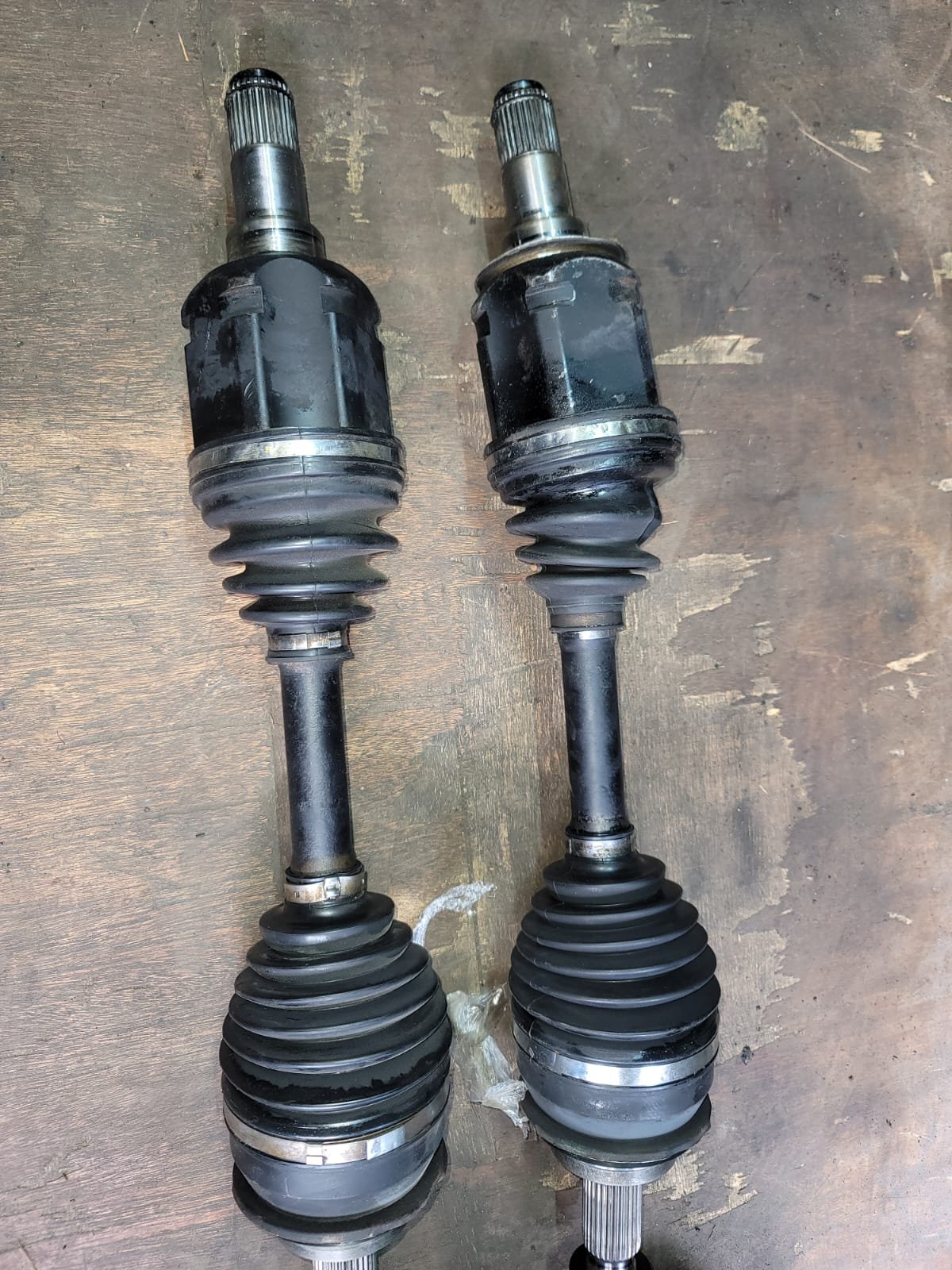
7. Drive Shafts and CV Joints
If you hear a sharp clicking or popping sound when making tight turns, your outer CV joint or drive shaft is worn.
- Best Choice: Ex-Japan Complete Drive Shaft (for Japanese vehicles) or Tier-1 Aftermarket CV Joint Kits.
- Why: An entire Ex-Japan drive shaft assembly includes original balanced steel shafts, factory-packed high-temperature grease, and durable OEM neoprene boots—which outlast cheap rubber aftermarket boots by years. If only the outer joint is damaged, replacing just the outer CV joint with a quality Japanese aftermarket unit (like NKN or HDK) is also a reliable, cost-effective fix.
8. Engine Assemblies, Sensors, and Cooling Components
- Complete Engines & Gearboxes: Ex-Japan is overwhelmingly the gold standard in Kenya for engine replacements, offering low-mileage, tested mechanical assemblies at a fraction of rebuilding costs.
- Engine Sensors, Spark Plugs & Thermostats: Always buy Genuine or exact OEM-supplier Aftermarket (Denso or NGK for Japanese cars; Bosch for European cars). Modern engines rely on precise voltage readings from oxygen sensors, mass airflow (MAF) sensors, and crankshaft position sensors. Cheap aftermarket sensors frequently cause rough idling, poor fuel economy, and persistent Check Engine lights.
- Filters (Oil, Air, Fuel, Cabin): Always buy Brand-New Genuine or Tier-1 Aftermarket. Never use second-hand filters.
Japanese vs. European Vehicles in Kenya: Tailoring Your Strategy
The Kenyan vehicle fleet has diversified significantly. Alongside perennial Japanese favorites—Toyota, Nissan, Mazda, Subaru, Honda, and Mitsubishi—Nairobi and major towns have seen rapid growth in European luxury and performance SUVs and sedans, including BMW, Range Rover, Mercedes-Benz, Volkswagen, and Audi.
Your sourcing strategy should reflect the origin of your car:
For Japanese Vehicles (Toyota, Nissan, Mazda, Subaru, Honda)
- Ex-Japan availability is unmatched. Because Japan’s domestic market mirrors Kenya’s vehicle population, finding clean Ex-Japan shocks, coil springs, drive shafts, steering racks, and body parts is fast and affordable.
- Tier-1 Japanese Aftermarket brands (KYB, Denso, Aisin, 555, NSK, Koyo, NGK, Advics) are widely stocked in Kenya and deliver true factory reliability.
For European Vehicles (Range Rover, BMW, Mercedes-Benz, VW)
- Ex-Japan parts are scarcer (though some right-hand-drive European imports from Japan and the UK are dismantled locally).
- European OEM Aftermarket is your best friend. German and British automakers rely heavily on specialist engineering firms—ZF, Lemförder, Sachs, Bilstein, Bosch, Brembo, Mahle, and Mann-Filter. Purchasing parts made by these OE suppliers gives you genuine European engineering at sensible prices, without risking the electrical gremlins caused by cheap knock-offs.
How to Protect Yourself from Counterfeit Spare Parts in Kenya
One of the biggest risks facing Kenyan car owners is the counterfeit market. Unscrupulous traders import low-grade generic parts and package them in convincingly printed red-and-white “Toyota Genuine Parts” boxes or fake “Nissan” labels. Paying genuine prices for a fake part is the worst possible outcome.
Before you hand over your money, use this 6-point authentication checklist:
- Inspect the Packaging Print Quality: Genuine OEM boxes feature crisp, high-resolution typography, accurate color saturation, and clear part numbers. Counterfeit boxes often have slightly blurry text, spelling errors, washed-out reds or blues, or flimsy cardboard.
- Verify the Part Number Against Your Chassis (VIN) Number: Every vehicle has a unique 17-character Vehicle Identification Number (VIN) or Japanese chassis code (e.g., NZE141-6045892 or ZRR70-0123456). A reputable spare parts supplier will cross-reference your chassis number against electronic parts catalogs (EPC) to verify the exact OEM part number before selling to you.
- Examine the Metal Finish and Welds: Genuine and Tier-1 aftermarket parts exhibit clean CNC machining, uniform welds, smooth casting edges, and laser-etched branding or batch codes directly on the metal. Counterfeits often show rough casting burrs, sloppy weld beads, or ink-stamped logos that wipe off with brake cleaner.
- Check Rubber Quality and Smell: Authentic OEM bushings, boots, and mounts are made from dense, supple natural or synthetic rubber compounds that bounce back immediately when pressed. Cheap imitations feel overly hard, plastic-like, or overly spongy, and often emit a sharp chemical/petroleum odor.
- Beware of “Too Good to Be True” Pricing: If a dealership quotes KSh 18,000 for a genuine front wheel hub assembly and a random street vendor offers the exact same “brand-new genuine” box for KSh 4,500, it is counterfeit. Authentic OEM manufacturing has a real floor price.
- Buy from Transparent, Accountable Suppliers: Avoid buying critical safety parts from anonymous roadside hawkers with no physical premises, no digital footprint, and no return policy. Work with established specialists who clearly distinguish between Genuine, Ex-Japan, and Aftermarket options.
The True Cost Math: Cheap Parts vs. Right-Fit Parts
Many motorists fall into the trap of optimizing solely for the lowest upfront receipt. Let’s look at a real-world example on Kenyan roads: replacing front lower control arm bushings and ball joints.
- Scenario A: The Budget Imitation Route
- Cheap generic control arm set: KSh 5,000
- Mechanic labor + Wheel alignment: KSh 3,500
- Total Initial Spend: KSh 8,500
- Outcome: Within 5 months (roughly 8,000 km of Nairobi potholes), the soft rubber bushings tear and the ball joint develops play. Worse, the misalignment causes uneven inner-edge wear on two front tyres (costing KSh 18,000+ to replace early). You now have to buy better control arms and pay labor + alignment all over again. Total 1-year cost: KSh 35,000+.
- Scenario B: The Tier-1 Aftermarket or Verified Ex-Japan Route
- Quality OEM-grade control arms (e.g., 555 / Genuine / clean Ex-Japan): KSh 11,000
- Mechanic labor + Wheel alignment: KSh 3,500
- Total Initial Spend: KSh 14,500
- Outcome: The suspension stays tight, quiet, and aligned for 50,000+ km (2.5 to 3+ years), preserving your tyres and keeping your steering crisp. Total 1-year cost: KSh 14,500.
Buying the right part the first time is not an expense—it is the single most effective way to lower your annual cost per kilometer.
5 Questions to Ask Before Ordering Any Car Part Online in Kenya
Whether you are a DIY enthusiast ordering from home, a busy professional coordinating with your mechanic, or a fleet manager maintaining twenty vehicles, run through these five quick checks before confirming any order:
- Have I shared my exact Chassis / VIN number or model year? Two cars of the same model—like a 2007 vs. 2012 Toyota Fielder, or a 2WD vs. 4WD Harrier—frequently use completely different shock absorber mounts, brake disc diameters, or axle spline counts. Always confirm fitment before paying.
- Which tier is being quoted—Genuine, Ex-Japan, or Aftermarket? Ensure your supplier is transparent about the exact origin and brand of the part so you can compare apples to apples.
- Should I replace this part in pairs? Suspension and braking components—specifically shock absorbers, coil springs, brake discs, brake pads, and control arms—should always be replaced in axle pairs (both front left and front right, or both rear left and rear right). Replacing only one side creates uneven damping and dangerous pulling under hard braking.
- Are ancillary hardware items included or needed? When replacing shocks, ask about dust boots and strut mounts. When replacing brake discs, replace the pads simultaneously. When replacing timing belts, replace the tensioner and water pump at the same time.
- What is the fitment and return policy? Even with careful checking, occasional variations occur on imported cars. Confirm that your supplier supports straightforward exchanges if a part does not match upon inspection at the garage.
For more practical maintenance checklists, troubleshooting guides, and diagnostic tips tailored to Kenyan motorists, explore our latest articles on the Taleon Autospares blog and insights hub.
Frequently Asked Questions (FAQs)
Are Ex-Japan spare parts better than brand-new aftermarket parts in Kenya?
It depends on the component. For coil springs, steering racks, drive shafts, engine assemblies, and body panels, low-mileage Ex-Japan parts are often superior to budget aftermarket parts because they retain original Japanese factory metallurgy and precision. However, for wear-and-tear items with rubber seals or friction surfaces—such as brake pads, filters, engine belts, and sensors—brand-new Genuine or Tier-1 Aftermarket parts are always the better and safer choice.
How can I tell if a shock absorber is still good when buying Ex-Japan?
First, inspect the outer body and upper seal for any signs of leaking hydraulic oil. Second, examine the shiny chrome piston rod—it should be mirror-smooth with zero scratches, rust spots, or pitting (which would tear the oil seal). Third, push the rod down firmly by hand; a healthy gas-charged shock will offer strong, consistent resistance and extend back out smoothly on its own.
What are the most trusted aftermarket spare part brands in Kenya?
For Japanese vehicles (Toyota, Nissan, Mazda, Subaru, Honda), look for KYB (Kayaba) and Tokico for shocks; Denso and NGK for ignition and sensors; Aisin for clutches and water pumps; 555 (Sankei) for ball joints and tie rods; and NSK, NTN, or Koyo for wheel bearings. For European vehicles (BMW, Range Rover, Mercedes-Benz, VW), trust Bilstein, Sachs, Lemförder, Bosch, Brembo, and ZF.
How do I make sure I order the exact part that fits my car?
Locate your vehicle’s Chassis Number (VIN) on your logbook, insurance certificate, or the metal plate inside your engine bay/door frame, and share it with our fitment team along with your car’s make, model, year, and engine capacity. We verify exact compatibility before dispatching your order anywhere in Kenya.
Ready to Find the Exact Fit for Your Vehicle?
Choosing between Genuine, Ex-Japan, and Aftermarket spare parts does not have to be a guessing game. Whether you need heavy-duty Ex-Japan coil springs for your Toyota Fielder, OEM-grade shock absorbers for your Noah or Harrier, precision brake discs, or suspension components for your BMW or Range Rover, getting honest advice and verified fitment makes all the difference.
Explore our complete catalog at Taleon Autospares Kenya, browse parts by category in our online shop, or share your vehicle details and chassis number with our team today for a fast, accurate quotation. Let’s keep you moving safely on every Kenyan road.