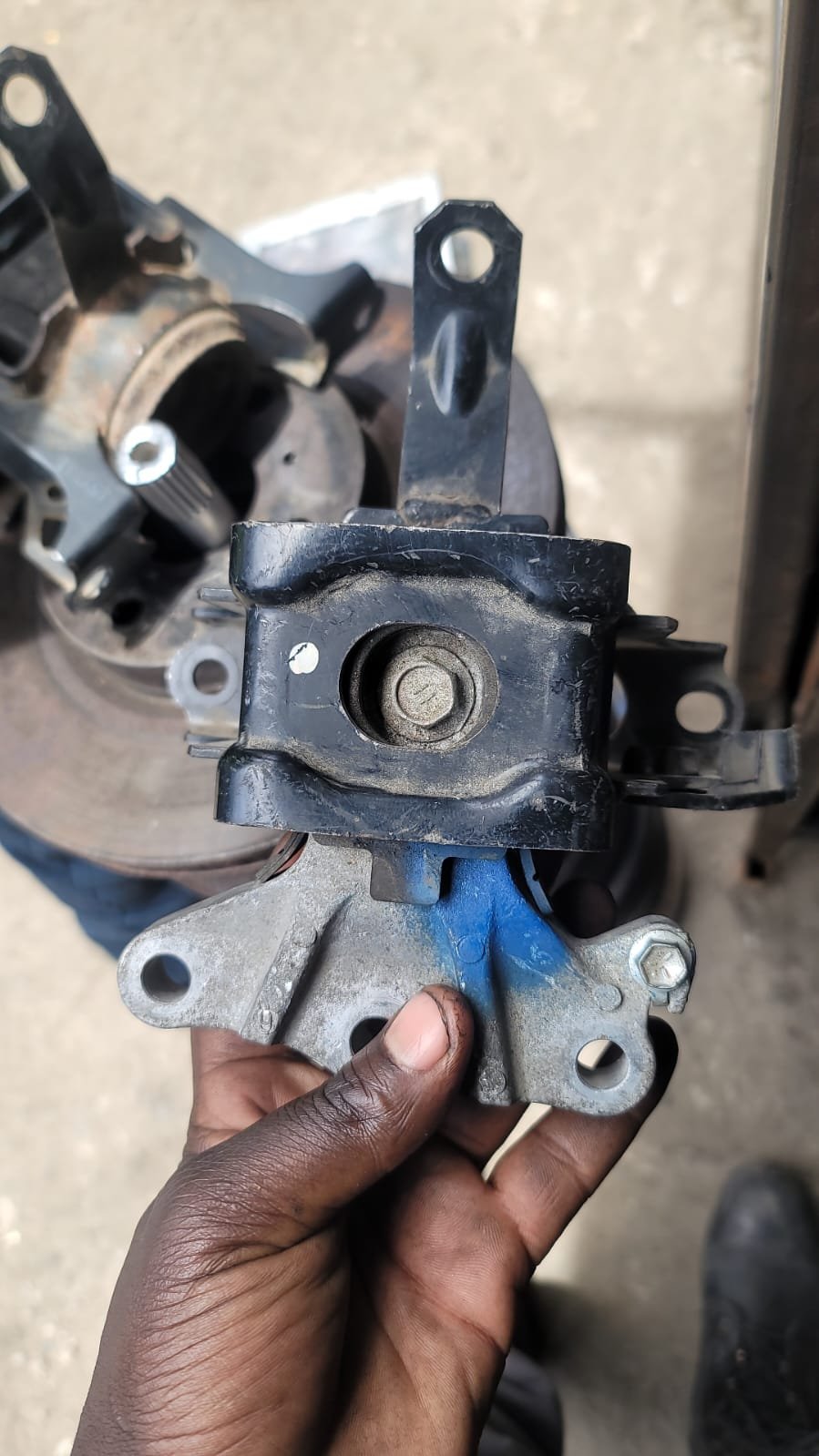

Description
Product Overview
The Engine Mount is a critical structural assembly designed to firmly anchor the Daihatsu Mira’s lightweight engine block to the vehicle’s frame or subframe. Because light-displacement 3-cylinder engines naturally generate distinct micro-vibrations, the engine mount uses a precise combination of high-tensile metal brackets and high-density vulcanized rubber (or hydraulic fluid dampening on specific positions) to isolate those vibrations and prevent them from transferring into the cabin.
Common Positions in a Daihatsu Mira Setup
A full replacement set usually consists of three distinct positions. Depending on which mount you are looking for, characteristics include:
-
Right-Side / Front-Right Mount (Often Hydro-Mount): Manages the primary weight load of the engine block and dampens high-frequency idling vibrations.
-
Left-Side / Transmission Mount: Secures the gearbox side and controls torque reaction when shifting gears or accelerating.
-
Rear / Lower Torque Strut Mount: Limits front-to-back engine rocking during acceleration and deceleration.
Key Technical Specifications & Build Quality
-
Material Composition: High-grade structural steel/aluminum brackets bonded with tear-resistant, oil-resistant industrial rubber.
-
Mounting Type: Solid rubber bushing or hydraulic-filled design (depending on position).
-
Design Engineering: Custom-molded to match OE clearance limits, ensuring the compact engine and exhaust manifold do not strike the vehicle body under heavy load.
Common OEM / Reference Part Numbers
-
Daihatsu OEM Examples:
-
Right/Front-Right Mount:
12305-B2210/12305-97210 -
Transmission/Left or Rear Mount variants map to series like
12361-87306or12361-B4020
-
-
Popular Aftermarket Brands: Kavo Parts, Febest, NTY, and Japanparts.
Signs of a Failing Daihatsu Mira Engine Mount
Because compact cars like the Mira have small engine bays, a degraded or torn mount becomes noticeable very quickly:
-
Excessive Idling Vibration: A sharp buzzing or humming vibration felt heavily through the steering wheel, dashboard, or seats when the car is stopped in Drive (AT) or idling.
-
Thumping or Clunking Noises: A sharp knock or “thud” sound heard when shifting from Park to Drive/Reverse, or when stepping sharply on the gas pedal.
-
Engine Rocking: Visible shifting or excessive movement of the engine block when revved manually under an open hood.
There are no reviews yet.