
Description
Product Overview
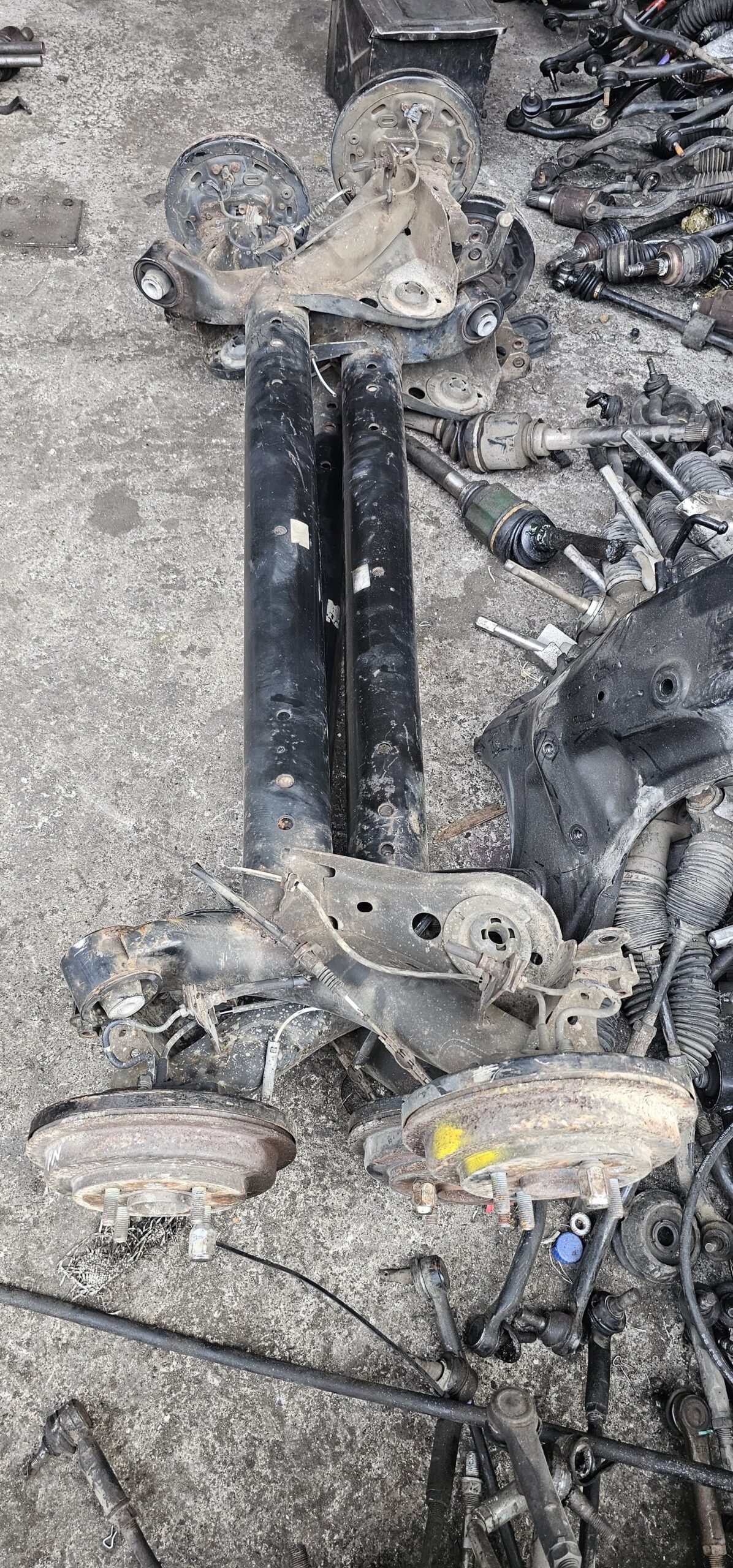
The Rear Axle Beam Assembly (torsion beam axle) is the primary structural rear suspension and alignment foundation for the fourth-generation Mazda Demio (DJ platform). Engineered as a semi-independent suspension member, this robust tubular steel beam connects the rear left and right wheel hubs while housing the coil spring seats, lower shock absorber mounting points, and trailing arm bushings. It is custom-designed for Mazda’s lightweight subcompact hatchback to provide stable rear tracking, predictable cornering compliance, and efficient packaging efficiency for cargo space.
Key Technical Specifications
(Standard specifications for the 2014 Mazda Demio DJ rear axle beam):
-
Fitting Position: Rear Axle (Spans horizontally across the rear undercarriage, anchored to the chassis via two main trailing arm pivot bushings and supporting the rear coil springs and dampers).
-
Compatibility: Fits Mazda Demio DJ-generation models (DJ3FS, DJ5FS, DJLFS platforms, model year 2014, powered by 1.3L [P3-VPS], 1.5L [P5-VPS] petrol, or 1.5L [S5-DPTS] diesel engines, paired with manual or automatic transmissions, in both Front-Wheel Drive [FWD] and regional All-Wheel Drive [AWD] layouts).
-
Design Type: Tubular torsion beam axle assembly featuring welded trailing arm brackets, integrated stabilizer bar (on select trims), coil spring perches, and factory-pressed rubber pivot bushings.
Material & Build Quality
-
Beam Construction: Fabricated from high-strength, cold-rolled structural steel tubing engineered to resist torsional twisting under lateral cornering loads while providing vertical compliance for ride comfort.
-
Bushings & Mounts: Equipped with heavy-duty vulcanized rubber trailing arm bushings designed to absorb high-frequency road harshness and isolate suspension noise from the cabin.
-
Corrosion Protection: Finished with an industrial-grade cathodic electrodeposition coating (EDP) and durable anti-chip paint to protect against moisture, road salt, mud, and flying debris.
OEM & Cross-Reference Part Numbers
-
Mazda OEM Reference Numbers:
-
D10Y-28-100,D10Y-28-100A,D350-28-100(or platform-specific regional JDM variants)
-
-
Popular Aftermarket Brands: Febest, GSP, NTY, and genuine Mazda OE assemblies.
Function & Importance
-
Structural Alignment: Maintains precise geometry and alignment for the rear wheels, ensuring straight-line tracking and stability.
-
Semi-Independent Dampening: Allows each rear wheel to react independently to minor bumps while using the rigid cross-beam to control body roll during cornering.
-
Load Anchorage: Serves as the primary structural carrier for the rear springs, shock absorbers, and wheel hub assemblies, safely supporting passenger and cargo loads.
Common Signs of a Worn or Damaged Axle Beam on a 2014 Mazda Demio
While torsion beams are exceptionally durable and rarely fail under normal conditions unless subjected to a severe rear-end collision or deep pothole impact, the attached bushings or the beam itself can show failure indicators:
-
Rear-End Clunking or Thudding: A dull metallic thump or creaking noise originating from the back of the car when driving over speed bumps, potholes, or uneven road surfaces.
-
Persistent Rear Misalignment or “Dog-Tracking”: The vehicle tracks slightly sideways while driving straight, or rear tires exhibit premature, uneven edge wear due to a bent beam or collapsed pivot bushings.
-
Excessive Rear Sway or Loose Handling: The rear end feels unstable, floating, or “loose” during high-speed lane changes or sharp cornering maneuvers.
-
Visible Structural Damage or Bushing Degradation: Cracks, severe rust distortion on the beam body, or rubber tearing and separation visible on the main trailing arm pivot bushings.
There are no reviews yet.