
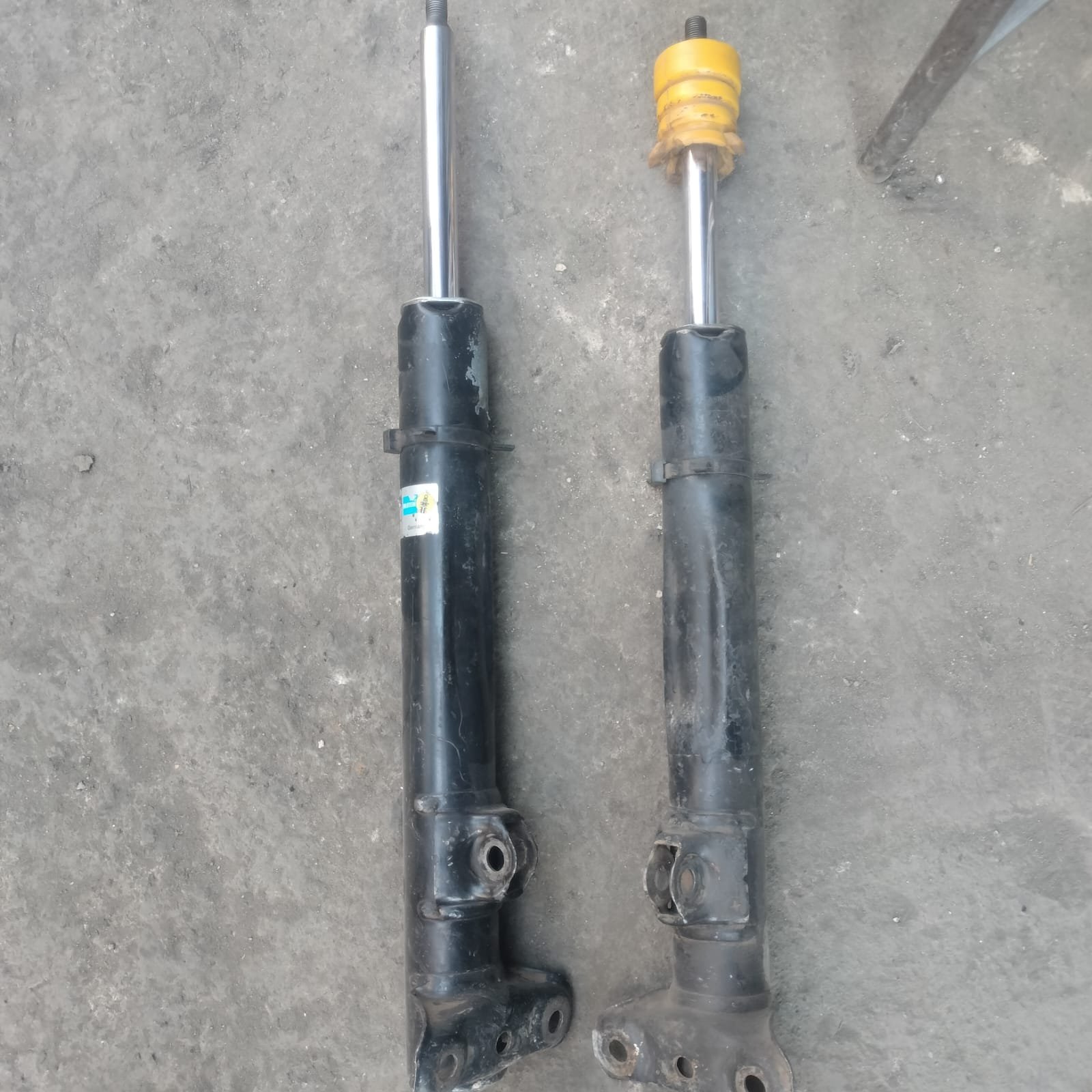

Description
The W124 was built in an era where Mercedes-Benz prioritized quality above all else. Its rear suspension is a complex 5-link multi-link setup the first of its kind. The shock absorber in this system is a “damper only” unit (it doesn’t carry the spring), which is why an original Ex-Japan part is so highly valued.
Why Ex-Japan
-
Autobahn Valving: These shocks (originally made by Sachs or Bilstein) are valved to provide soft damping over small bumps but become firm during hard cornering. Cheap new aftermarket shocks often feel “bouncy” or “stiff” because they lack this sophisticated internal valving.
-
Hydraulic Integrity: Even at 30 years old, a Grade-A Japanese shock often performs better than a brand-new “budget” shock. The internal seals on Mercedes OEM shocks were designed to last decades, and Japan’s smooth roads mean the internal pistons have very little wear.
-
Corrosion Free: Parts from Japan typically have zero rust on the mounting pins and lower eyes, ensuring they won’t seize during installation.
Key Compatibility Check
-
Sedan vs. Wagon (S124): If you have the Station Wagon (Variant/Estate), it likely has Self-Leveling Suspension (SLS). These hydraulic “struts” are much more expensive and are not interchangeable with the standard 6,500/- shock.
-
Sportline Models: If your car is a “Sportline” trim, the shocks are slightly shorter and stiffer. A standard shock will fit, but it will slightly change the car’s ride height and handling.
Performance Benefits
-
No More “Nose-Up”: Worn rear shocks cause the car to “squat” during acceleration. Fresh OEM dampers keep the car level.
-
Silent Rear End: Most “thumping” sounds from the rear of a W124 are caused by the rubber bushings at the bottom of the shock failing. Grade-A units come with healthy, original German rubber.
-
Tire Longevity: Proper damping prevents the rear tires from “scalloping” or developing flat spots, which is common on heavy Mercedes sedans with dead shocks.
There are no reviews yet.