
Power Steering Fluid Leaks: Is it Your Rack or a Loose Hose?
One morning, you move your car from your parking spot and notice a small, reddish puddle on the ground near the front tires. You dip your finger in it—it’s oily and has a distinct smell. Your heart sinks because you know what it is: Power Steering Fluid.
A leak in your power steering system is more than just a mess on your driveway; it’s a safety hazard. If the fluid runs too low, your steering will become “heavy,” your pump will start to whine, and eventually, you could lose control of the car entirely.
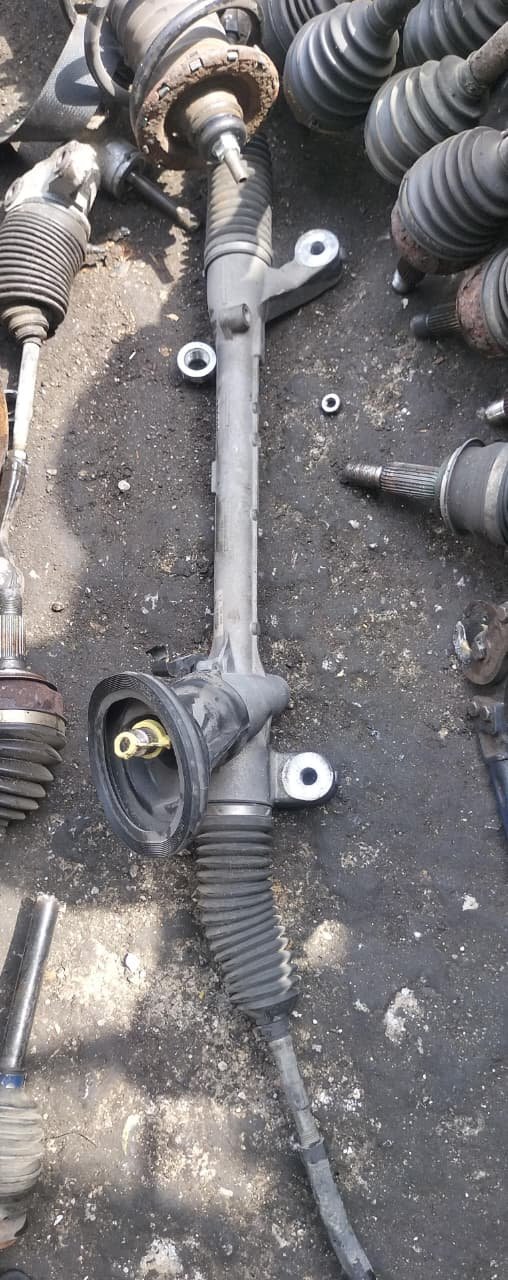
But before you panic and assume you need an expensive new steering rack from Taleon Spares Kenya, you need to play detective. Not all leaks are created equal. In this guide, we help you identify if your leak is a simple hose fix or a major rack replacement.
1. How to Identify Power Steering Fluid
Before diagnosing the leak, ensure it’s actually power steering fluid.
- Color: Usually red or pink (if using ATF/Dexron III) or clear/amber (if using specific European fluids).
- Smell: It has a distinct “burnt marshmallow” or chemical smell.
- Location: Usually found under the front of the engine, often slightly to the side where the reservoir or pump is located.
2. The Simple Culprit: A Loose or Cracked Hose
The power steering system relies on two main hoses:
- The High-Pressure Hose: This carries fluid from the pump to the steering rack. Because it’s under high pressure, it is the most common part to leak.
- The Return Hose: This carries fluid back to the reservoir.
How to check: Open your hood and look for the power steering pump. Follow the rubber lines. Do you see “sweating” or wetness around the metal clamps? Often, the rubber becomes brittle due to the heat of the Kenyan sun and starts to crack.
- The Fix: If it’s just a hose, you’re in luck! Replacing a hose or tightening a clamp is a quick and affordable repair.
3. The Serious Culprit: The Steering Rack Seals
If the hoses look dry but you see fluid dripping from the ends of the steering rack (inside the rubber bellows or “boots”), you have a bigger problem.
Inside the steering rack are hydraulic seals. Over time, these seals wear out—especially if you frequent dusty roads in areas like Kajiado or Machakos. Once the seals fail, the fluid leaks into the rubber boots. When the boots get full, the fluid eventually spills out onto your driveway.
How to check: Ask your mechanic to squeeze the steering rack bellows. If they feel like they are full of liquid or if fluid squirts out when squeezed, your internal seals are gone.
- The Fix: In this case, the rack usually needs to be replaced. At Taleon Spares, we recommend Ex-Japan Steering Racks because they offer the best balance of “original factory seals” and “affordable pricing.”
4. Don’t Forget the Power Steering Pump
Sometimes the leak isn’t from the rack or the hoses, but the pump itself. The pump has an internal shaft seal that can fail.
The “Whining” Sign: If your car makes a loud whining or screeching sound when you turn the steering wheel, your pump is either leaking or “sucking air.” If you ignore a leaking pump, it will eventually seize, which could cause your drive belt to snap—leaving you stranded.
5. Why “Stop-Leak” Fluids are a Bad Idea
Many Kenyan drivers try to fix leaks by pouring “Stop-Leak” additives into the reservoir. We strongly advise against this. These chemicals work by causing the rubber seals to swell up. While it might stop a leak for a week, it eventually makes the rubber “mushy” and causes all the other seals in the system to fail. It’s a “Jua Kali” fix that leads to a much more expensive repair later.
6. How Taleon Spares Can Help
Whether it’s a minor hose issue or a total rack failure, we have the parts to get you back on the road.
- Ex-Japan Steering Racks: For Toyota, Nissan, Mazda, and Honda.
- Power Steering Pumps: Genuine replacements that don’t whine.
- Expert Advice: If you aren’t sure where the leak is coming from, call us! We can recommend a trusted technician to help you diagnose it.
Conclusion: Catch the Leak Early
A small leak today is a cheap fix. A dry system tomorrow is an expensive disaster. If you see spots on your driveway, check your reservoir levels immediately and look for the source of the drip.
Add a review
Your email address will not be published. Required fields are marked *