
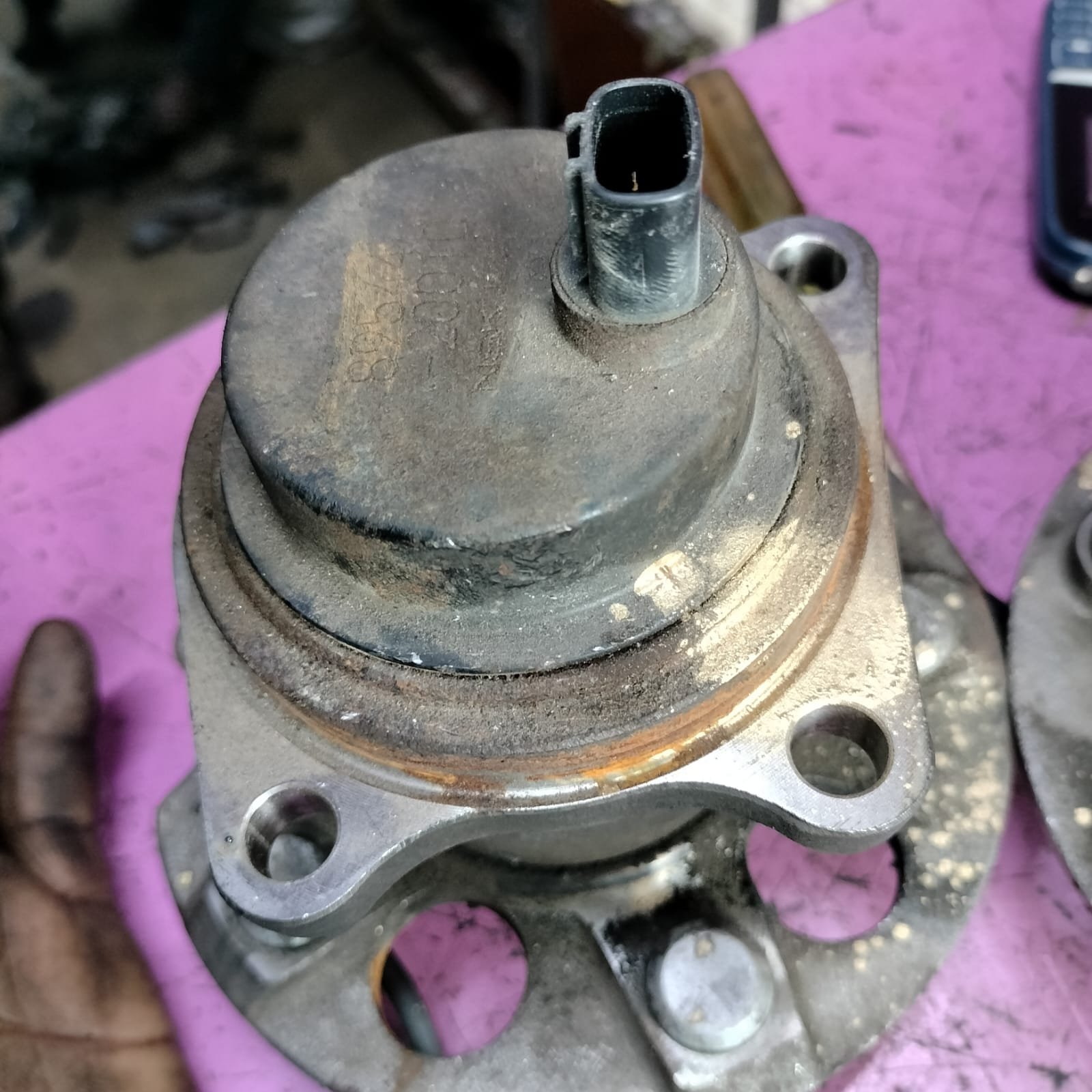

Description
The 2005 Toyota Noah is an 8-seater vehicle with a high curb weight. Consequently, its rear hubs are built much “thicker” than those of a Vitz or Belta. This is a Generation 3 Hub Unit, meaning the bearing is factory-sealed into the hub. It is designed to be maintenance-free, with internal ball bearings packed in high-pressure lithium grease.
Why Ex-Japan is Better Than “New” Budget Parts
At Ksh 5,000, you are often choosing between an original Ex-Japan unit or a brand-new generic part from a local shop. Here is why the Ex-Japan part usually wins:
-
The ABS Sensor Issue: The Noah relies on a magnetic encoder ring inside this hub. Cheap new units often have “weak” magnets that cause the ABS light to flicker on your dashboard. An Ex-Japan original unit uses the factory Denso sensor, ensuring the computer gets a perfect signal.
-
Structural Strength: Genuine Toyota hubs are made from high-carbon, heat-treated steel. Budget aftermarket hubs use softer metals that can warp under the heavy load of a full 8-passenger trip, leading to premature bearing failure.
-
Low-Stress Life: Parts from Japan come from vehicles driven on smooth, perfectly maintained roads. This means the internal bearing races are typically free of the “pitting” caused by the heavy impact of potholes.
Installation & Fitment
-
Direct Bolt-On: This is a 4-bolt flange design. It is a “plug-and-play” replacement—there is no need for a hydraulic press, which reduces the risk of your mechanic damaging the new part during installation.
-
Braking Safety: A fresh hub ensures the rear brake drum or disc sits perfectly square. If a hub is worn, it can cause “pedal pulsation” or uneven braking.
-
Fuel Economy: A seized bearing creates friction. Installing a smooth-rolling OEM hub allows the van to coast more freely, helping you squeeze more km/L out of the 1AZ-FSE engine.
There are no reviews yet.