

Description
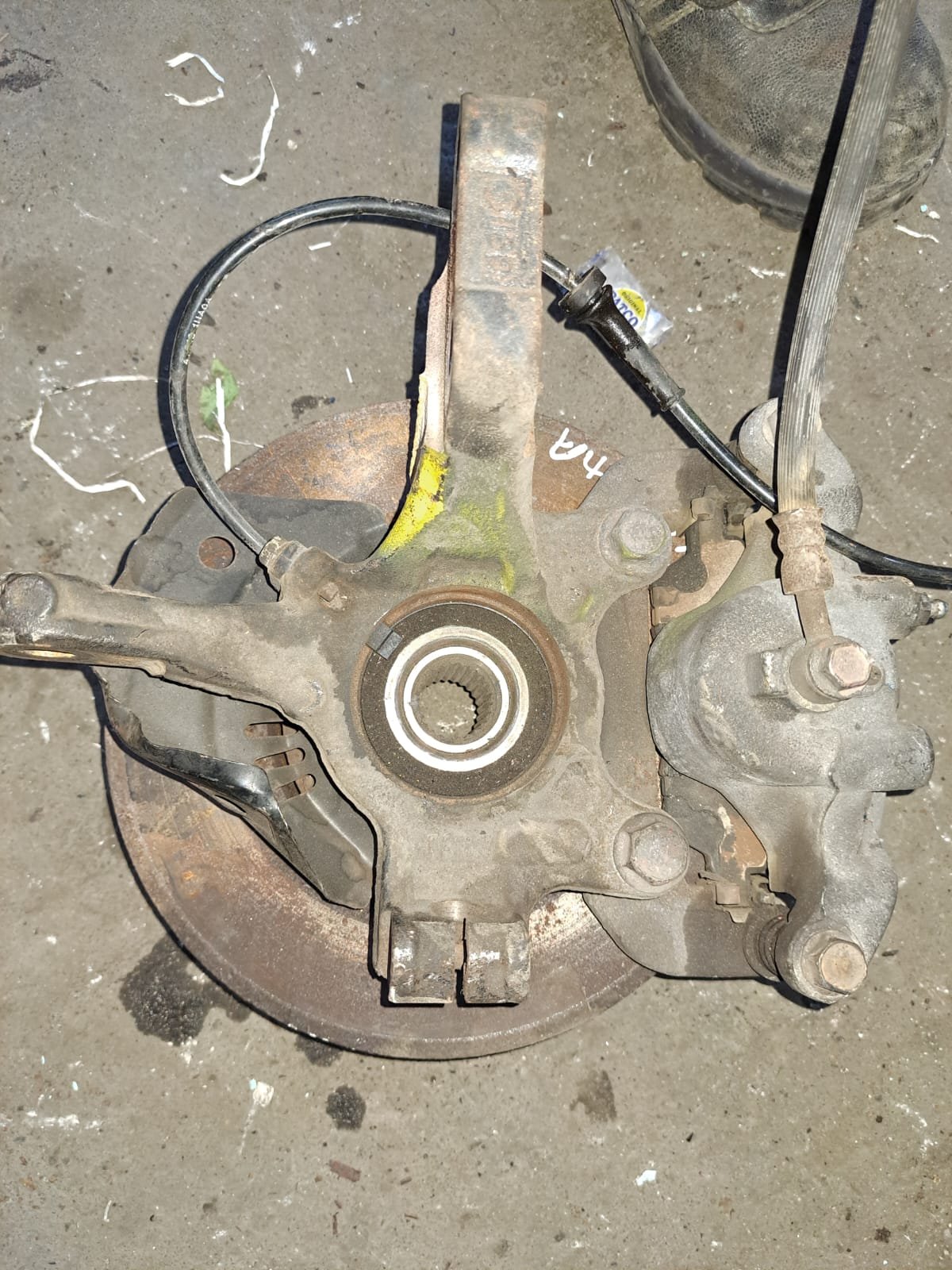
The 2010 Demio is built to be a lightweight, agile city car. Its rear suspension uses a torsion beam where the hub is a Generation 3 bolt-on unit. This means the bearing, hub, and ABS encoder are all sealed into one piece. Buying an Ex-Japan original is the most reliable way to maintain the car’s fuel efficiency and safety.
Why Ex-Japan is Preferred for Demios
-
The ABS Sensor Challenge: The 2010 Demio uses a sensitive magnetic ring inside the hub to communicate with the ABS system. Cheap new aftermarket hubs often have “read errors” that trigger the ABS light on your dash. Ex-Japan units use the original NTN or NSK factory-installed sensors, which work perfectly with the car’s ECU.
-
Fuel Economy (SkyActiv Models): If you have the 1.3L SkyActiv (DEJFS), low rotational friction is key to your high km/L ratings. Genuine Japanese hubs use premium lithium grease and precision-ground ball bearings to minimize drag.
-
Durability: Used parts from Japan are sourced from low-mileage cars driven on perfectly maintained roads. This means the internal bearing races are usually free from the “impact pitting” caused by heavy potholes.
Front vs. Rear: Know the Difference
-
Rear : This is the full hub assembly. It’s a 4-bolt unit that is very easy for a mechanic to replace without special tools like a hydraulic press.
-
Front : On the 2010 Demio, the front hub is a different design. Usually, you only replace the front wheel bearing
When to Replace
-
The “Plane” Sound: If your car sounds like a propeller plane that gets louder as you go faster (60–80 km/h), your hub is failing.
-
ABS Warning: If your ABS light is on and your mechanic’s scanner says “Wheel Speed Sensor Error,” it is often a fault in the hub’s magnetic ring rather than the sensor itself.
-
Vibration: A subtle vibration felt through the floorboards (not the steering wheel) often indicates a worn rear hub.
There are no reviews yet.