
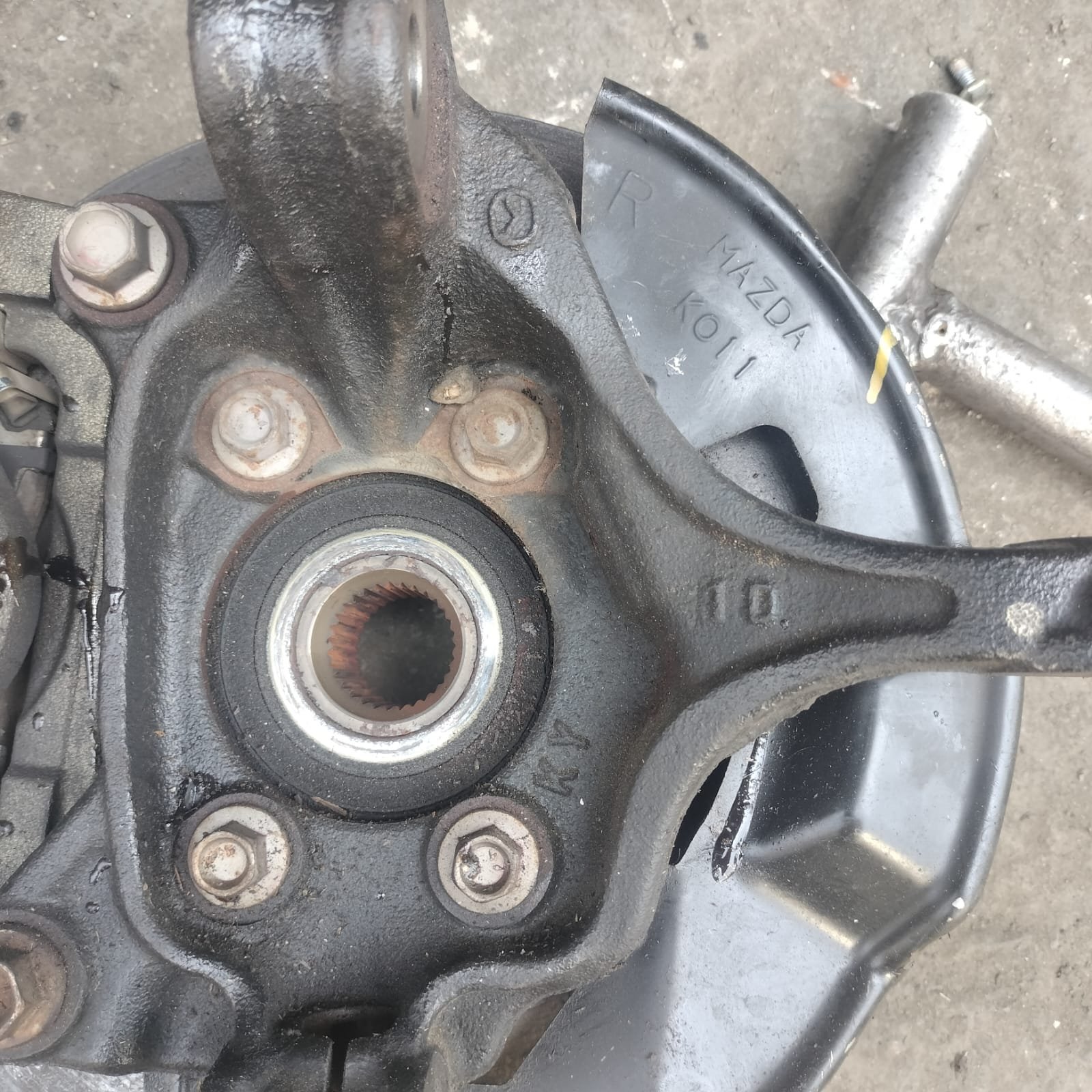

Description
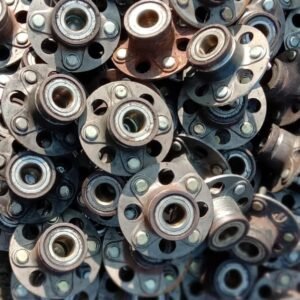
The wheel hub is the foundation of this stability. At Ksh 8,500, an Ex-Japan original unit is often a smarter buy than a “new” budget aftermarket part. Genuine Mazda hubs use high-carbon steel that is induction-hardened to prevent the internal ball-bearing tracks from “pitting” under the weight of an SUV.
Why Ex-Japan is Preferred for CX-5
-
ABS/Traction Control Integrity: The CX-5’s computers (especially on the i-Activ AWD models) are extremely sensitive to wheel speed data. Cheap aftermarket hubs often have “weak” magnetic encoders that cause “ghost” ABS lights or erratic braking. Ex-Japan originals feature the factory-spec magnetic ring, ensuring 100% signal accuracy.
-
Quiet Operation: If your CX-5 sounds like a jet engine taking off when you hit 60 km/h, your bearing is likely “galled.” The precision-ground races in a Japanese OEM hub restore that “whisper-quiet” cabin feel.
-
Heat Dissipation: CX-5s are heavy. These hubs are designed with thermal properties that allow them to dissipate heat from the brakes without melting the internal bearing grease, preventing premature failure during long, hilly drives (e.g., the Limuru escarpments).
Technical Verification: 28 vs. 31 Splines
Before you buy, you must check the Spline Count (the “teeth” inside the hub):
-
31-Spline: Common on most front-wheel-drive (FWD) and many standard Petrol models.
-
28-Spline: Often found on specific AWD or Diesel variants.
Tip: Always have your mechanic count the splines on your old hub before you head to the shop to ensure you get the exact match for your axle.
When to Replace
-
The “Growl”: A low-frequency noise that gets louder as vehicle speed increases, regardless of engine RPM.
-
Steering Vibration: A subtle “shiver” in the steering wheel or floorboards at high speeds.
-
Tire Wear: Uneven “patchy” wear on your tires can be caused by a hub that has developed “play” (wobble).
There are no reviews yet.