
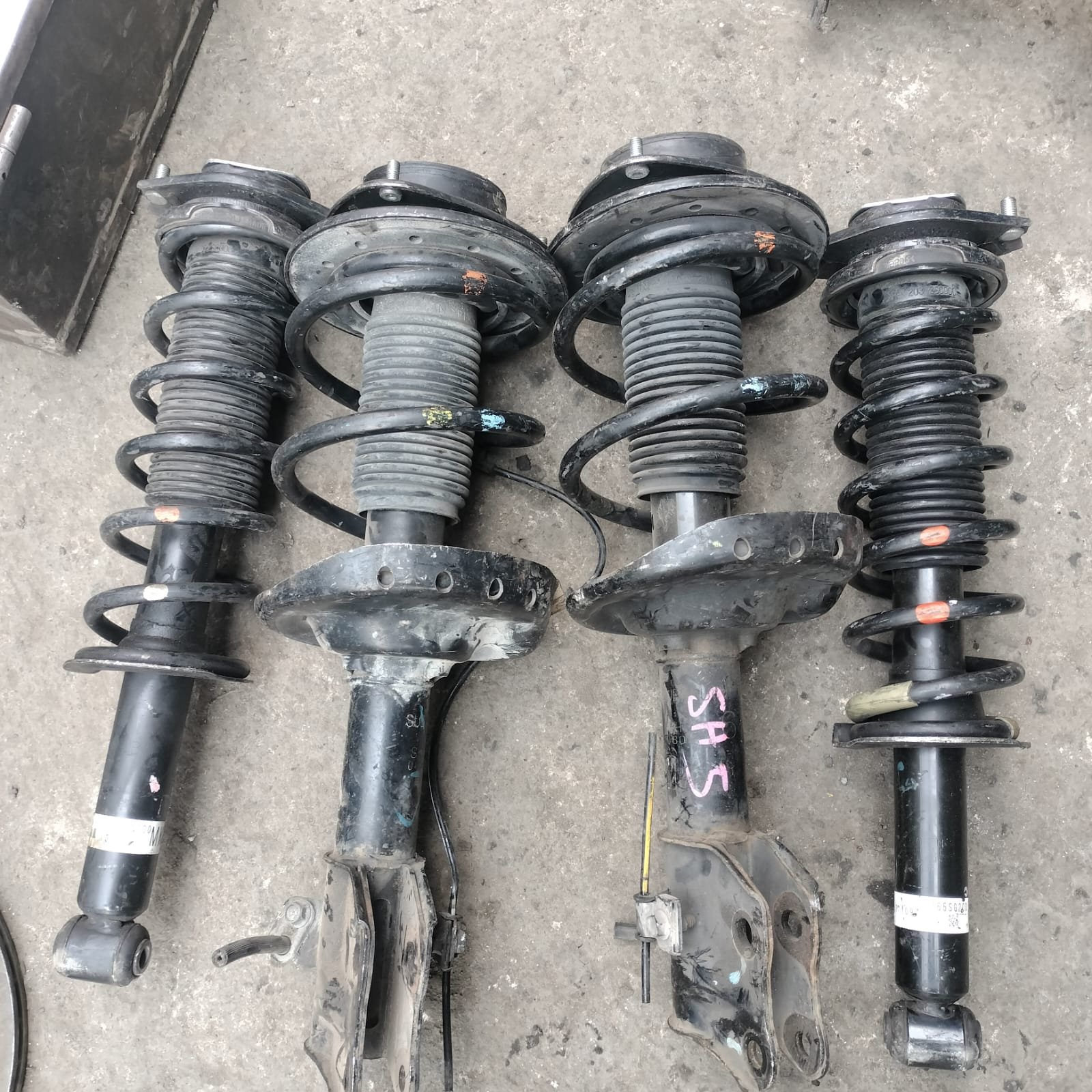

Description
The “SJG” Difference
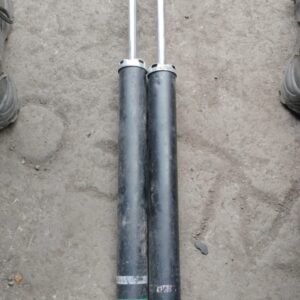
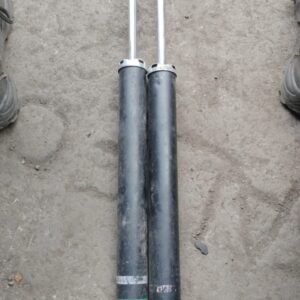
While the SJ5 and SJG share the same body, the SJG (Turbo) comes with a “Sport-Tuned Suspension” from the factory.
-
Valving: The internal damping is stiffer to prevent the “nose-dive” common in powerful SUVs under hard braking.
-
Spring Rate: The coil springs on the SJG are often slightly thicker to manage the extra weight of the intercooled engine and the more aggressive driving style of XT owners.
-
Plug-and-Play: At Ksh 10,000, buying a “complete” unit saves you the labor cost of using a spring compressor. You simply bolt it in, which also ensures the top mount bearing is the original Japanese part.
Why Ex-Japan is the Smart Move
For a Subaru, “Ex-Japan” parts are often preferred over new “budget” aftermarket brands:
-
Self-Leveling Issues: Some rear SJGs came with self-leveling shocks. If yours has failed, replacing it with a standard Ex-Japan SJG shock and spring is the most common and reliable “delete” kit used in Kenya.
-
Autobahn/Expressway Specs: Japanese SJGs are built to handle high-speed toll roads. This means even a used unit often has better high-speed stability than a brand-new, unbranded replacement.
-
Aluminum vs. Steel: Genuine Subaru struts use high-quality alloys that are lighter and dissipate heat faster than cheap steel replacements, keeping your handling sharp during long trips.
Installation Advice
-
Check for “Sweating”: On a used SJG shock, look under the dust boot. If you see an oil film, the gas seal is beginning to fail.
-
Top Mount Bearing: Since this is a complete unit, turn the top mount by hand. It should spin silently. If it feels “gritty,” the bearing is worn.
-
Wheel Alignment: After installing a complete strut, your “camber” and “toe” will definitely be off. Always perform a professional 3D wheel alignment immediately to protect your tires.
There are no reviews yet.