
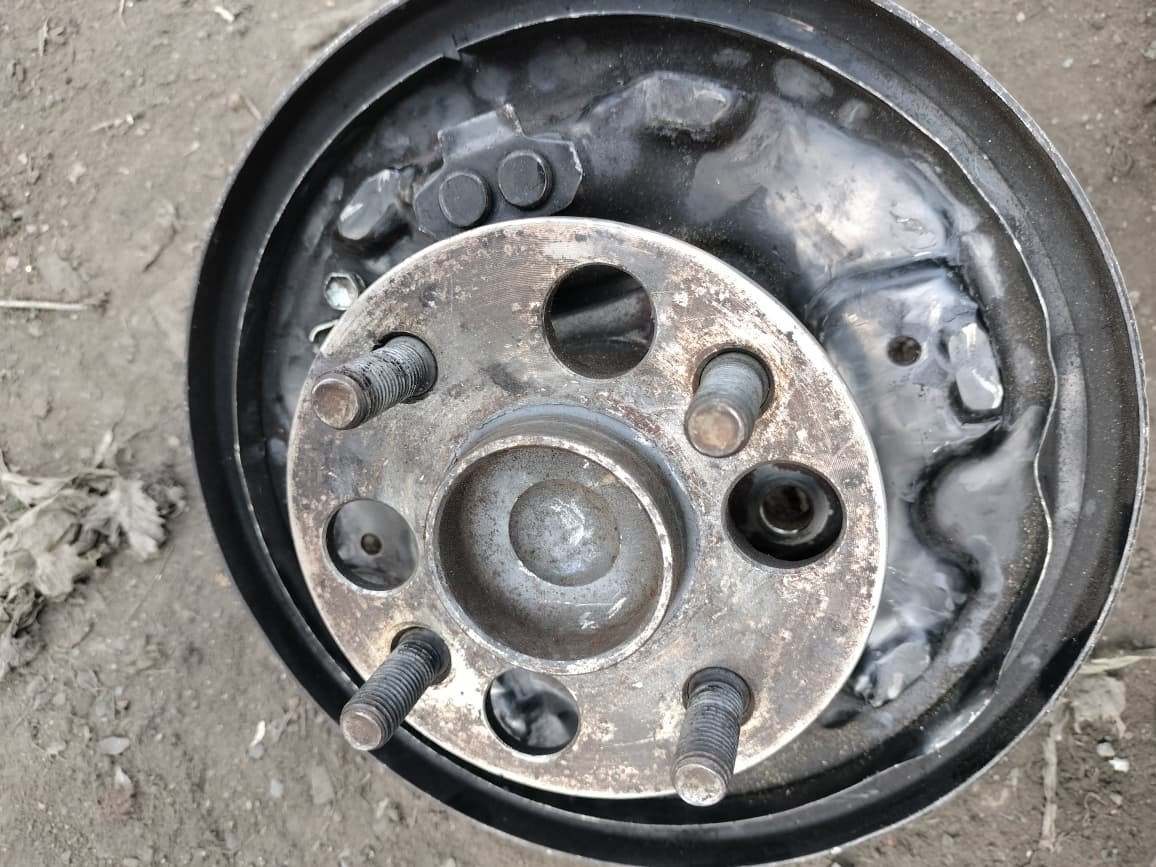

Description
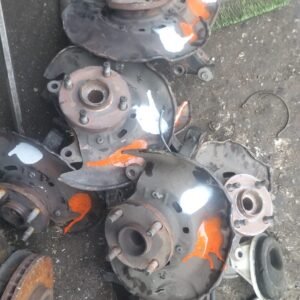
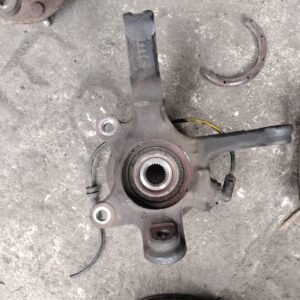
The Toyota Belta rear wheel hub is a unitized component, meaning the wheel bearing, the hub flange, and the ABS sensor are all factory-pressed into a single, non-serviceable unit. When the bearing fails—usually marked by a rhythmic humming noise that increases with speed—the entire assembly must be replaced.
The “Ex-Japan” Advantage
Choosing a genuine Ex-Japan hub at Ksh 6,000 is often considered a “safer” bet than buying a brand-new, unbranded aftermarket part.
-
OEM Sensor Accuracy: The Belta’s computer is very sensitive to the ABS signal. Ex-Japan hubs use original Toyota/Denso magnetic encoders, preventing the “ABS” or “Check Engine” lights that often plague cheap aftermarket replacements.
-
Superior Metallurgy: Japanese OEM hubs are forged from high-carbon steel designed to dissipate heat efficiently. This prevents the internal ball bearings from “pitting” or scarring, even during long-distance travel on Kenyan highways.
-
Tested Integrity: These units are salvaged from vehicles that have passed Japan’s rigorous “Shaken” inspections, meaning they have lived a relatively low-stress life on smooth roads.
Performance & Safety Benefits
-
Silent Ride: Replacing a worn hub with this genuine unit immediately restores the quiet cabin environment of the Belta.
-
Stability & Handling: As a primary load-bearing part, a fresh hub ensures your rear wheels remain perfectly aligned. This prevents “camber” wear on your tires and improves the car’s tracking during high-speed cornering.
-
Fuel Efficiency: A seized or worn bearing creates friction. By installing a smooth-rolling OEM hub, you reduce “rolling resistance,” which helps maintain the Belta’s excellent fuel economy (km/L).
Technical Compatibility Note
The Toyota Belta comes in both 2WD (KSP92/SCP92) and 4WD (NCP96) variants.
-
2WD Hubs: These are typically solid in the center.
-
4WD Hubs: These have a splined hole in the middle to receive the rear driveshaft.
There are no reviews yet.