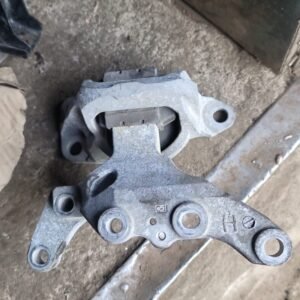
Nissan Xtrail NT32 Engine Mountain
KSh8,000.00 Buy Via WhatsappEngine Mount System Layout
- Total Number of Mounts: 4 individual mounting points [1]
- Mount Components:
- Right-Hand (Passenger Side): Main engine rubber-metal suspended engine mount
- Left-Hand (Driver Side): Transmission / Gearbox rubber pad mounting
- Upper Front / Right: Torque strut rod / Torque stabilizer link (prevents engine twisting under acceleration)
- Rear (Lower): Rear torque support mount / "Dog bone" mount attached to the subframe [1, 2, 3, 4, 5]
- Mounting Materials: Heavy-duty vulcanized elastomer rubber structurally bonded to cast aluminum and forged steel outer brackets. [1, 2]
Engine Mount Torque Specifications
- Right-Hand Suspended Mount Bolt (Body Side): 62 Nm (approx. 45 ft-lbs)
- Right-Hand Suspended Mount Bolt (Engine Side): 62 Nm (approx. 45 ft-lbs)
- Upper Engine Torque Strut Link Bolts: 75 Nm (approx. 55 ft-lbs)
- Left-Hand Gearbox Mount (To Bracket): 62 Nm (approx. 45 ft-lbs)
- Left-Hand Rubber Pad Bolt (To Body): 21 Nm (approx. 15 ft-lbs)
- Left-Hand Rubber Pad Bolt (To Mounting): 105 Nm (approx. 77 ft-lbs)
- Transmission Mount Main Stud (Gearbox Side): 180 Nm (approx. 132 ft-lbs)
- Rear Lower Torque Rod (Engine Tie-Bar Bolt): 180 Nm (approx. 132 ft-lbs) [1, 2]
Supported Engine Specifications (NT32 Core Block - MR20DD)
The NT32 chassis configuration denotes the 4WD version of the T32 X-Trail, which houses the 2.0L MR20DD powertrain: [1, 2]
- Engine Code: MR20DD
- Configuration: Inline 4-Cylinder, DOHC, 16 Valves with Twin CVTC
- Fuel Injection: Direct Fuel Injection (Nissan Di)
- Displacement: 1,997 cc
- Cylinder Bore x Piston Stroke: 84.0 mm × 90.1 mm
- Compression Ratio: 11.2:1
- Maximum Power: 147 PS (108 kW / ~145 HP) @ 6,000 rpm
- Maximum Torque: 207 Nm (21.1 kg·m) @ 4,400 rpm
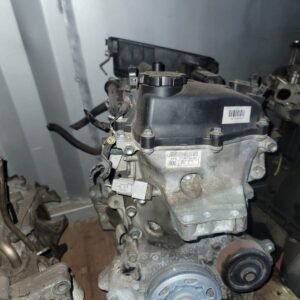
Toyota Vitz 1KR Slim Engine
KSh60,000.00 Buy Via WhatsappCore Engine Architecture
- Engine Code: 1KR-FE
- Configuration: Inline 3-Cylinder, 4-Stroke
- Valvetrain: DOHC (Double Overhead Camshaft), 12 Valves (4 valves per cylinder)
- Timing Drive: Chain-driven
- Phase Regulator: VVT-i (Variable Valve Timing-intelligence) on the intake side
- Displacement: 996 cc (commonly referenced as 1.0L or 998 cc depending on the market variant)
- Cylinder Bore x Piston Stroke: 71.0 mm × 83.9 mm
- Compression Ratio: 10.5:1
- Aspiration: Naturally Aspirated (Non-turbocharged)
- Material: Aluminum alloy cylinder block and cylinder head
- Dry Weight: ~67–75 kg (without starter/alternator/compressor) [1, 2, 3, 4, 5, 6, 7, 8, 9, 10, 11]
Performance & Output
- Maximum Power: 68–71 PS (50–52 kW / ~69–71 HP) @ 6,000 rpm
- Maximum Torque: 92–94 Nm (9.4–9.6 kg·m) @ 3,600 rpm to 4,300 rpm
- Idle Speed: 730–830 rpm [1, 2, 3, 4, 5, 6]
Fuel & Ignition Systems
- Fuel Delivery System: EFI (Electronic Fuel Injection) with Multi-Point Manifold Fuel Injection (MPFI)
- Ignition System: DIS (Direct Ignition System)
- Ignition Timing: 0 to 15° BTDC
- Fuel Type: Regular Unleaded Gasoline [1, 2, 3, 4, 5]
Service & Fluid Specifications
- Engine Oil Capacity: 3.1 Liters (total refill capacity) [1, 2]
- Recommended Oil Viscosity: 0W-20 / 5W-20 (5W-30 is also widely adopted locally depending on ambient operating conditions) [1, 2]
- Hydraulic Lifters: None (Requires manual periodic valve clearance adjustments) [1]
- Valve Clearance (Cold):
- Intake: 0.145–0.235 mm
- Exhaust: 0.275–0.365 mm [1]
- Standard Cylinder Compression Pressure: 1,422 kPa (206 psi) standard / 1,079 kPa (156 psi) minimum
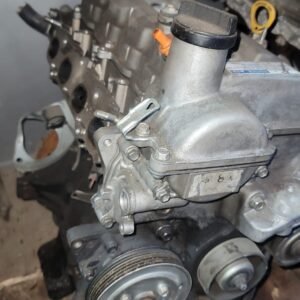
2SZ Slim Engine Toyota Vits Model 2005
KSh150,000.00 Buy Via Whatsapp1. Core Engine Architecture
- Engine Code: 2SZ-FE.
- Configuration: Transverse inline 4-cylinder, 4-stroke, petrol.
- Valvetrain: DOHC (Double Overhead Cam), 16 valves, chain-driven with VVT-i (Variable Valve Timing with intelligence).
- Displacement: 1,296 cc (1.3 Litres).
- Bore x Stroke: 72.0 mm × 79.6 mm.
- Compression Ratio: 11.0:1 (High compression setup specifically engineered for the Japanese domestic market).
- Block Material: Cast-iron closed-deck block featuring an offset Desaxe crankshaft to optimize piston side-load friction. [1, 2, 3, 4, 5]
2. Performance Outputs & Drivetrain
- Maximum Power output: 87 PS / 86 hp (64 kW) @ 6,000 RPM.
- Maximum Torque: 116 N·m (11.8 kg-m) @ 4,000 RPM.
- Fuel System: Multi-point Electronic Fuel Injection (EFI) governed by a MAP sensor and an electronic throttle body assembly.
- Transmission Pairing: Mated directly to an ultra-efficient, smooth Aisin Continuously Variable Transmission (CVT). (Note: The 4WD Vitz from 2005 uses the older, wider 2NZ-FE engine paired with a 4-speed conventional automatic). [1, 2, 3, 4, 5, 6]
3. Key Visual & Mechanical Identifiers (The JDM Layout)
The JDM 2SZ-FE engine block is visually compact and features distinct localized technology compared to standard export engines: [1]
- Roller Rocker Valvetrain: Incorporates specialized friction-reducing rocker arm mechanisms. [1]
- EGR System Integration: The JDM engine features an integrated EGR (Exhaust Gas Recircirculation) valve system to lower cylinder emissions. [1]
- Compact Intake Runners: Features a curved, lightweight intake manifold setup built tightly to the engine frame to save room in the subcompact engine bay.
4. Critical Maintenance Specifications
Because the 2SZ-FE is a high-compression, tight-clearance machine, proper fluid maintenance is highly critical to avoid piston ring coking or timing chain stretch: [1]
| Maintenance Category | Factory Technical Specification |
|---|---|
| Recommended Oil Grade | 5W-30 Fully Synthetic |
| Engine Oil Capacity | 3.4 Litres (when changing with a new oil filter) |
| Valve Lifter Type | Solid bucket lifters (Requires manual checking/adjustment via shims; no hydraulic lifters) |
| Spark Plug Type | Long-life Iridium plugs (e.g., NGK LFR6C-11 or Denso K20HR-U11 variants) |
| Timing Element | High-durability Morse silent type timing chain |
| Cooling Capacity | ~4.5 Litres (Toyota Super Long Life Pink Coolant) |
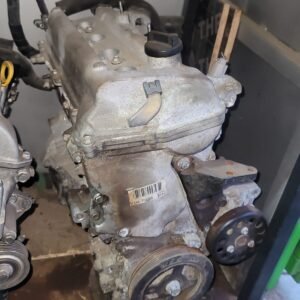
1NZ Slim Engine Probox
KSh130,000.00 Buy Via Whatsapp1. Architectural & Core Specifications
- Engine Code: 1NZ-FE (Late-generation "Slim" architecture).
- Configuration: Transverse Inline 4-cylinder, 4-stroke, petrol.
- Valvetrain: DOHC (Double Overhead Cam), 16 valves, chain-driven with VVT-i on the intake camshaft.
- Displacement: 1,496 cc (1.5 Litres).
- Bore x Stroke: 75.0 mm x 84.7 mm.
- Compression Ratio: 10.5:1 to 11.0:1 (depending on the exact manufacturing year).
2. Performance Outputs
- Maximum Power: 105 to 109 hp (77 to 80 kW) @ 6,000 RPM.
- Maximum Torque: 138 to 141 N·m (102 to 104 ft-lbs) @ 4,200 RPM.
- Fuel System: Multi-point Electronic Fuel Injection (EFI) governed by an ETCS-i (Electronic Throttle Control System-intelligent) drive-by-wire system.
3. Key Upgrades Over the Older "Fat" 1NZ Engine
The mechanical enhancements that give the "Slim" engine its distinctive look and character include:
- Roller Rocker Arms: The valvetrain features integrated needle-bearing roller rockers instead of flat bucket lifters, significantly reducing internal friction and valvetrain noise.
- Hydraulic Lash Adjusters (HLAs): Uses oil pressure to maintain zero valve clearance automatically. This eliminates the need for periodic manual valve shim maintenance.
- Plastic Intake Manifold: A compact, lightweight, and curved composite plastic runner system replaces the bulkier aluminum intake setup found on early-2000s models.
- Ignition Blocks: Utilizes updated, narrower Stick Coil-on-Plug (COP) ignition coils that slide straight down into a tighter valve cover design.
4. Critical Maintenance Specifications
Because the Slim engine relies on tighter internal oil clearance paths and hydraulic valve components, using the correct lubricants is paramount to preventing early timing chain wear or hydraulic lash ticking.
| Service Category | Factory Recommended Data |
|---|---|
| Recommended Oil Viscosity | 0W-20 (Highly Recommended) or 5W-30 Fully Synthetic |
| Engine Oil Capacity | 3.7 Litres (with new oil filter change) / 3.4 Litres dry drain |
| Spark Plug Type | Iridium / Platinum Long-Life (e.g., NGK DF6H-11B or equivalent) |
| Spark Plug Electrode Gap | 1.1 mm (0.043 inches) |
| Firing Order | 1 — 3 — 4 — 2 |
| Cooling System Capacity | 4.8 Litres (Toyota Super Long Life Coolant - Pink) |
| Timing Component | Maintenance-free steel Timing Chain (requires no interval changes) |
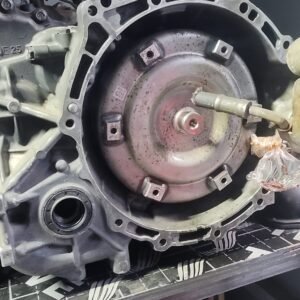
Toyota 1NZ Gearbox
KSh220,000.00 Buy Via Whatsapp1. Continuously Variable Transmission (CVT) — Aisin K210 / K310
The Super CVT-i system is the standard automatic transmission paired with the 1NZ-FE in Japanese domestic market (JDM) models built from the mid-2000s onward.
- Gearbox Type: Steel push-belt style CVT with an electronically controlled torque converter.
- Gear Ratio Range: Continuously variable from 2.400 to 0.400 (Infinite step adjustments).
- Fluid Specification:
- Pre-2012 Production: Toyota CVT Fluid TC.
- 2012–Present Production: Toyota CVT Fluid FE (Lower viscosity for improved fuel economy).
- Fluid Service Capacity: ~3.5 to 4.1 Litres for a standard drain-and-fill service (~7.0 Litres dry fill).
2. 5-Speed Manual Transmission — Toyota C50 / C54
Standard across manual variants of the Yaris, Vitz, and Corolla running the 1NZ-FE engine.
- Gearbox Type: 5-Speed transverse manual transaxle with multi-cone synchronizers.
- Factory Gear Ratios:
- 1st Gear: 3.545
- 2nd Gear: 1.904
- 3rd Gear: 1.310
- 4th Gear: 0.969
- 5th Gear: 0.815
- Reverse: 3.250
- Final Drive Gear Ratio: 3.722:1 or 4.058:1 (Depending on wheel diameter sizing specs).
- Fluid Specification: Toyota Genuine Gear Oil manual (75W-90) or any API GL-4 / GL-5 high-quality gear oil.
- Fluid Service Capacity: 1.9 Litres.
3. Hybrid Electronic CVT (e-CVT) — Toyota P410 Transaxle
Mated exclusively to the Atkinson-cycle 1NZ-FXE hybrid engine found in the 2nd Generation Toyota Prius (NHW20) and the Aqua/Yaris Hybrid (NHP10).
- Gearbox Type: Hybrid Synergy Drive transaxle containing a planetary gear power-split device linked directly to two electric motor-generators (MG1 and MG2).
- Gear Ratio: Conceptually infinite, controlled dynamically via electric motor speed variance.
- Differential Gear Ratio: 4.113:1 (Prius NHW20 layout).
- Fluid Specification: Toyota Genuine ATF World Standard (ATF WS).
- Fluid Service Capacity: 3.8 Litres (Requires regular drain-and-fill intervals; has no internal filter element to replace).
4. 4-Speed Automatic Transmission — Toyota U340E / U341F
Found on older production models (pre-2006) and commercial/4WD versions (like the 4WD Corolla Fielder or Probox).
- Drivetrain Variant:
U340Eis the standard 2WD automatic;U341Fincludes a transfer case tail housing for 4WD models. - Gear Ratios: 1st: 2.847, 2nd: 1.552, 3rd: 1.000, 4th: 0.700, Reverse: 2.343.
- Final Drive Ratio: 3.939:1 (U340E) or 4.237:1 (U341F).
- Fluid Specification: Toyota Genuine ATF Type T-IV (Always verify via the dipstick stamping, as later U-series modules transitioned to ATF WS).
- Fluid Service Capacity: ~2.5 to 3.0 Litres for a quick pan drain-and-fill service.
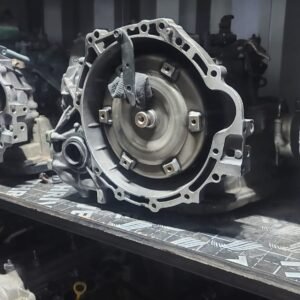
Toyota 2ZR Gear Box
KSh270,000.00 Buy Via Whatsapp1. Continuously Variable Transmission (CVT) — Aisin K313
The K313 CVT is the most common automatic transmission paired with the 2ZR-FE and 2ZR-FAE engines in non-hybrid models like the Corolla Fielder and Axio. [1, 2]
- Gearbox Type: Push-belt type CVT with an electronic torque converter clutch solenoid arrangement. [1]
- Gear Ratio Range: Continuously variable from 2.480 to 0.396 (Infinite steps). [1]
- Final Drive Ratio: 5.698:1 or 5.356:1 (depending on exact sub-trim).
- Fluid Specification:
- Pre-2013 Models: Toyota CVT Fluid TC.
- 2013–Present Models: Toyota CVT Fluid FE. [1]
- Fluid Service Capacity: ~4.0 to 5.0 Litres for a drain-and-fill service (~7.7 Litres dry capacity). [1]
2. 6-Speed Manual Transmission — Toyota EC60
Standard across European and North American manual configurations, the EC60 Transverse 6-speed is engineered to handle up to 250 Nm of torque. [1, 2]
- Gearbox Type: 6-Speed manual transaxle with integrated synchromesh mesh architecture. [1]
- Factory Gear Ratios:
- 1st Gear: 3.538
- 2nd Gear: 1.913
- 3rd Gear: 1.310
- 4th Gear: 0.971
- 5th Gear: 0.714 (0.820 on 2017+ trims)
- 6th Gear: 0.619 (0.700 on 2017+ trims)
- Reverse: 3.333 [1]
- Final Drive Gear Ratio: 4.214:1 [1, 2]
- Fluid Specification: Toyota Genuine Gear Oil LF (75W) or equivalent GL-4 API specifications.
- Fluid Service Capacity: 2.3 Litres.
3. Hybrid Electronic CVT (e-CVT) — Toyota P410 / P610 Transaxle
Mated exclusively to the Atkinson-cycle 2ZR-FXE hybrid engine (found in the Prius, Aqua, and Corolla Hybrid), this unit is not a traditional belt-driven CVT. [1]
- Gearbox Type: Hybrid Synergy Drive planetary gear splitting mechanism combining two integrated electric motor-generators (MG1 and MG2).
- Gear Ratio: Conceptually infinite, controlled dynamically via electric motor speed variance.
- Differential Gear Ratio: 2.834:1
- Fluid Specification: Toyota Genuine ATF World Standard (ATF WS).
- Fluid Service Capacity: 3.4 Litres (No transmission filter inside to change; drain and fill only). [1, 2, 3]
4. 4-Speed Automatic Transmission — Toyota U341E
Found on early-production models (2007–2010) or specific regional configurations running the base 2ZR-FE block. [1, 2]
- Gearbox Type: 4-Speed electronically controlled torque-converter automatic transaxle.
- Gear Ratios: 1st: 2.847, 2nd: 1.552, 3rd: 1.000, 4th: 0.700, Reverse: 2.343.
- Final Drive Ratio: 4.237:1
- Fluid Specification: Toyota Genuine ATF Type T-IV or ATF WS (Check dipstick label for confirmation).
- Fluid Service Capacity: ~3.0 Litres for pan drop drain-and-fill. [1]
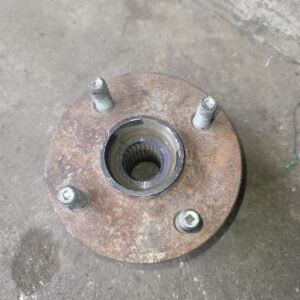
Fielder Model 2010 4WD Rear Hub
KSh6,000.00 Buy Via WhatsappStructural & Dimensional Specifications
- Design Architecture: Integrated Gen 3 Hub Unit (the dual-row angular contact ball bearing, hub flange, outer casing, and magnetic ABS tone ring are integrated as a single non-serviceable assembly).
- Internal Core Configuration: Splined center bore engineered to clamp down on the rear CV half-shaft axle.
- Bolt Pattern (PCD): 4 x 100 mm (4 lug stud configurations spaced on a 100 mm pitch circle).
- Brake Integration: Mates with the factory rear drum brake assembly. [1]
- ABS Setup: Features a built-in internal magnetic encoder ring. The ABS speed sensor mounts through the rear backing plate directly behind the hub facing the inner seal. [1]
Genuine Toyota OEM Part Numbers
The rear hub units differ by location side to clear specific anti-lock braking harnesses and mounting paths:
- Rear Axle Hub & Bearing Assy (Right Hand - RH):
42410-52070/42410-12260 - Rear Axle Hub & Bearing Assy (Left Hand - LH):
42440-52030/42440-12260 - Axle Spindle Center Lock Nut:
90177-22001(Locking type, replaces whenever axle is extracted). - Hub Assembly Mounting Bolts:
90119-10940(4 mounting bolts per wheel assembly). [1, 2]
Factory Installation Torque Specifications
Important Mechanical Notice: The 4WD rear hub relies heavily on the clamping pressure of the outer axle spindle nut to keep the internal bearing races preloaded. Never roll the vehicle on its wheels or lower it off a lift without the axle shaft inserted and the center lock nut torqued down, as doing so will permanently separate the internal bearing rows and ruin the component.
| Connection Location Profile | Metric Torque (N·m) | Imperial Torque (ft-lbs) |
|---|---|---|
| Main Rear Axle Center Lock Nut (Attaching CV Axle to Hub) | 216 N·m | 159 ft-lbf |
| Hub Bearing Casing Bolts to Knuckle (4 bolts, 14 mm socket) | 80–90 N·m | 59–66 ft-lbf |
| Wheel Lug Nuts (Securing wheel to hub flange studs) | 103 N·m | 76 ft-lbf |
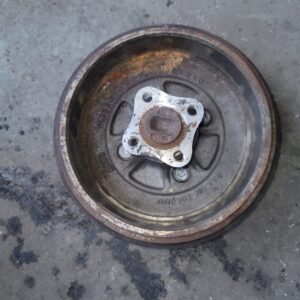
Nissan Note Model E12 Drum
KSh6,500.00 Buy Via WhatsappDimensional & Structural Specifications
- Inner Brake Drum Diameter: 203 mm (Standard baseline nominal dimension).
- Maximum Wear/Reboring Limit: 204.5 mm (The drum must be discarded and replaced if the inner surface wears past this diameter).
- Inner Friction Height (Shoe Contact Width): 50.5 mm to 52 mm.
- Total Exterior Drum Height: 75 mm to 76 mm.
- Outer Total Diameter: 234 mm or 244 mm (Depending on the specific sub-trim and brake dust shield casing shape).
- Bolt Pattern (PCD): 4 x 100 mm (4 lug holes spaced on a 100mm pitch circle).
- Center Wheel Hub Bore Size: 52 mm to 55 mm.
- Compatible Rear Brake Shoe Size: 203 mm x 38 mm. [1, 2, 3, 4, 5, 6]
Hydraulic System Configurations
- Wheel Cylinder Bore Piston Diameter: 19.1 mm.
- Adjustment System: Mechanical ratchet assembly with automatic self-adjustment activated whenever the parking brake is engaged.
- ABS Integration: The drum housing sits flush over an integrated tone ring or wheel hub speed sensor assembly depending on whether the wheel bearing is pressed straight into the drum assembly. [1, 2, 3]
Factory Fastener Torque Specifications
Crucial Assembly Rule: When tightening the primary spindle center hub nut to retain the brake drum/bearing layout, you must rotate the brake drum concurrently by hand to prevent damaging the internal bearing shells or crushing the outer races. [1]
| Connection Location | Metric Spec (N·m) | Imperial Spec (ft-lbs) |
|---|---|---|
| Main Rear Spindle Center Hub Nut (30mm Axle Socket) | 240 N·m | 177 ft-lbf |
| Wheel Lug Nuts (Attaching wheel to drum flange) | 114 N·m | 84 ft-lbf |
| Brake Backing Plate to Rear Axle Beam Bolts | 55 N·m | 41 ft-lbf |
| Wheel Cylinder Mounting Bolt | 10 N·m | 7.5 ft-lbf |
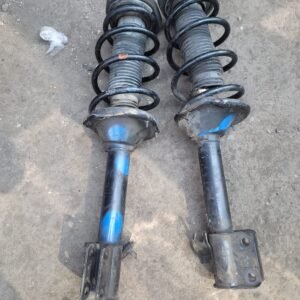
Subaru Forester SG5 Rear Shocks
KSh10,000.00 Buy Via Whatsapp1. Core & Dimensional Specifications
- Design Type: Gas-pressure suspension strut assembly incorporating an integrated lower spring seat. [1]
- Internal Construction: Standard replacement units (such as the premium Japanese JDM-spec KYB Excel-G series) utilize a low-pressure nitrogen gas-charged twin-tube system to eliminate oil aeration and foaming during rough driving. [1, 2]
- Mounting Interfaces:
- Key Measurements (Standard KYB 334344/334345 specs):
- Extended Length: ~610 mm
- Collapsed Length: ~415 mm
- Piston Stroke Travel: ~195 mm
2. The Self-Leveling Suspension (SLS) vs. Standard Setup
Many JDM/Ex-Japan SG5 models arrived equipped with SLS struts, which feature a wider body cylinder housing a built-in hydraulic pump mechanism. This internal pump relies on the vehicle’s natural bouncing motion to pump fluid and raise the rear to standard ride height under heavy cargo loads.
- The SLS Failure Issue: When the internal seals fail, the vehicle's rear end sags significantly.
- The Conversion Metric: Because replacement OEM SLS struts are highly expensive, many owners convert to standard struts (like KYB 334344 / 334345). Crucial Note: If converting from SLS to standard shocks, you must also replace the rear coil springs with stiffer, standard-matching coils. The original SLS coil springs are much softer and cannot support the vehicle's weight on standard non-SLS dampers alone. [1, 2, 3]
3. Genuine OEM & Brand Cross-Reference Numbers
- Rear Left Hand (LH) Strut Assembly:
20360SA010,20360SA050,20360SA130(KYB Aftermarket Cross:334345/339150). - Rear Right Hand (RH) Strut Assembly:
20360SA000,20360SA040,20360SA120(KYB Aftermarket Cross:334344/339149). [1, 2, 3]
4. Factory Torque Specifications
Important: To prevent premature bushing binding and twisting, snug all fasteners while the car is raised, lower the vehicle completely until it sits under its own weight (at ride height), and apply the final torque settings. [1, 2]
| Fastener Connection Profile | Metric Spec (N·m) | Imperial Spec (ft-lbs) |
|---|---|---|
| Lower Strut-to-Knuckle Bolts (2 large M14 bolts per side) | 200 N·m | 145 ft-lbf |
| Upper Strut Tower Top Hat Nuts (3 per side inside the cabin) | 30 N·m | 22 ft-lbf |
| Central Piston Shaft Top Lock Nut | 60 N·m | 44 ft-lbf |
| Rear Sway Bar End Link Nuts | 45 N·m | 33 ft-lbf |

Subaru Impreza GG2 Rear Shocks
KSh10,000.00 Buy Via WhatsappComponent & Material Specifications
- Right Hand (RH) Engine Mount (Timing Side):
- Type: Hydraulic (Hydro-filled) dampening insulator.
- Function: Houses an internal fluid chamber that dampens engine movement and prevents low-frequency idle vibration from passing into the cabin frame. This is crucial for smoothing out the natural imbalances of the 3-cylinder turbo variants.
- Body Material: Die-cast aluminum alloy bracket joined to a stamped steel chassis anchoring flange.
- Left Hand (LH) Transmission Mount (Gearbox Side):
- Type: Compressed rubber-to-metal bonded cushion insulator.
- Function: Suspends the 5-speed manual, 6-speed automatic, or CVT gearbox housing securely onto the left-hand subframe frame rail.
- Rear Torque Rod (Lower Engine Pitch Stopper):
- Type: "Dog-bone" structural link assembly.
- Function: Limits fore-and-aft engine rotational pitching during sudden throttle changes, clutch engagement, and heavy braking.
Genuine Suzuki OEM Part Numbers
Part numbers vary based on engine type, transmission pairing (Manual vs. CVT), and whether it is a standard hatchback or a Swift Sport variant. Core OEM production part numbers include:
- Right Hand (RH) Hydraulic Engine Mount:
11610-52R00/11610-68R00 - Left Hand (LH) Transmission Mount Assembly:
11620-52R00/11620-68R10 - Rear Lower Torque Rod / Stopper:
11710-52R00/11710-68R00
Factory Fastener Torque Specifications
Important: To avoid twisting the vulcanized rubber compounds out of their neutral resting positions, support the engine weight with an under-hoist support stand or floor jack. Fully lower the vehicle's weight onto its suspension before applying final torque settings to the primary chassis fasteners.
| Fastener Connection Profile | Metric Spec (N·m) | Imperial Spec (ft-lbs) |
|---|---|---|
| RH Engine Mount Central Through-Bolt (to Engine Bracket) | 85 N·m | 63 ft-lbf |
| RH Mount-to-Chassis Frame Bolts | 50 N·m | 37 ft-lbf |
| LH Transmission Mount Center Nut/Bolt | 80 N·m | 59 ft-lbf |
| Rear Torque Rod Frame Through-Bolts | 90 N·m | 66 ft-lbf |
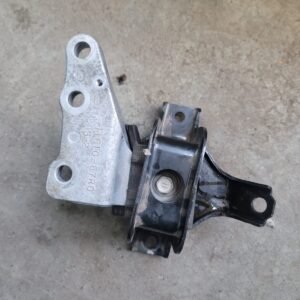
Suzuki Swift Model 2018 Engine Mountain
KSh8,000.00 Buy Via WhatsappComponent & Material Specifications
- Right Hand (RH) Engine Mount (Timing Belt/Chain Side):
- Type: Hydraulic (Hydro-filled) dampening insulator.
- Function: Isolates high-amplitude vibrations, which is highly critical on the 3-cylinder K10C models to prevent rough idling resonance from vibrating the cabin.
- Housing Material: High-pressure die-cast aluminum alloy bracket with structural steel base plates.
- Left Hand (LH) Transmission Mount (Gearbox Side):
- Type: Rubber-metal bonded cushion insulator.
- Function: Suspends the 5-speed manual, 6-speed automatic, or CVT gearbox directly to the frame rail.
- Rear Torque Rod (Lower Engine Pitch Stopper):
- Type: "Dog-bone" style anchor bracket with high-durometer rubber bushings.
- Function: Restricts front-to-back engine twisting (torque reaction) during quick acceleration and heavy braking.
Genuine Suzuki OEM Part Numbers
Part configurations differ slightly between standard hatchbacks and the Swift Sport. The core reference numbers for the standard 2018 platform include:
- Right Hand (RH) Engine Mount Assembly:
11610-52R00/11610-68R00 - Left Hand (LH) Gearbox Mount Assembly:
11620-52R00/11620-68R10 - Rear Lower Torque Rod / Stopper:
11710-52R00
Factory Fastener Torque Specifications
Note: To avoid twisting the internal rubber matrices out of their neutral seat, the engine block must be safely supported with a screw jack, and the chassis must be sitting level before bringing the primary bracket through-bolts up to final torque.
| Fastener Connection Profile | Metric Spec (N·m) | Imperial Spec (ft-lbs) |
|---|---|---|
| RH Engine Mount Central Through-Bolt (to Engine Bracket) | 85 N·m | 63 ft-lbf |
| RH Mount-to-Chassis Frame Bolts | 50 N·m | 37 ft-lbf |
| LH Transmission Mount Center Nut/Bolt | 80 N·m | 59 ft-lbf |
| Rear Torque Rod Through-Bolts (Subframe to Transmission) | 90 N·m | 66 ft-lbf |
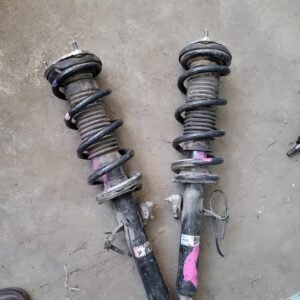
Nissan Skyline Ex-Japan Shocks
KSh10,000.00 Buy Via Whatsapp1. Structural & Core Specifications
- Internal Internal Dampening Technology: Premium Ex-Japan dampers (such as the standard KYB Excel-G or Japanese KYB New SR Special) rely on a low-pressure Nitrogen gas-charged twin-tube system. This design prevents internal oil aeration and fade under high-speed cornering. [1, 2]
- Mounting Profiles (R33 / R34 platforms as benchmark):
- Dampening Fluid Seal: Multi-lip high-pressure synthetic oil seals bonded with micro-polished chrome piston rods to withstand extreme travel loads. [1]
2. Multi-Link Generation & Drivetrain Variances
When purchasing "Ex-Japan" shocks out of salvage or parts warehouses, you must specify the exact drivetrain configuration:
- Rear-Wheel Drive (RWD / 2WD - GT, GTS, GT-T): The lower front shock uses an open fork/clevis base that wraps directly around the knuckle linkage. [1]
- All-Wheel Drive (AWD / 4WD - GT-R, GTS-4): The front shock uses a cylindrical eyelet base instead of a fork to safely clear the front CV half-shafts axle assemblies. The valving profile is significantly stiffer to cope with the heavy RB26DETT/ATTESA E-TS weight footprint. [1]
3. Representative Dimensions & OEM Cross-References
Typical physical constraints for standard R-Chassis 2WD front replacement shocks (e.g., KYB 340000 series) include: [1]
- Extended Length: ~540 mm to 556 mm
- Collapsed/Compressed Length: ~383 mm to 388 mm
- Piston Rod Stroke: ~150 mm to 170 mm
- Piston Rod Core Diameter: 12 mm to 22 mm heavy-duty shaft
- Baseline Front OEM Replacement Part Number:
56110-15U02[1, 2]
4. Factory Torque Specifications
To secure the multi-link shock dampening towers correctly, follow these factory torque settings: [1]
| Connection Location | Metric Torque (N·m) | Imperial Torque (ft-lbs) |
|---|---|---|
| Front Strut Top Mount-to-Chassis Body | 40–55 N·m | 29–40 ft-lbf |
| Front Shock Base Clevis Bolt-to-Link | 39–54 N·m | 28–40 ft-lbf |
| Rear Shock Tower Upper Nuts | 16–19 N·m | 12–14 ft-lbf |
| Rear Shock Lower Eyelet Bracket-to-Knuckle | 88–108 N·m | 65–80 ft-lbf |
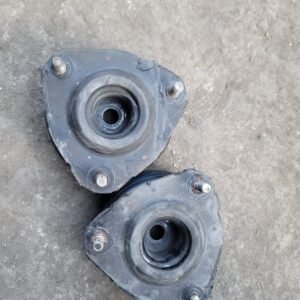
Mazda Demio Model 2005 Shocks Mountain
KSh2,000.00 Buy Via WhatsappFront Top Strut Mount Specifications
-
- Design Profile: Single-unit heavy-duty upper suspension plate. It houses a vulcanized rubber cushion island surrounding a central metal guide sleeve, paired with an independent low-friction thrust ball bearing.
- Material Construction: Stamped carbon steel frame plates bonded with high-durability natural rubber (elastomer) compound.
- Bearing Function: The separate strut mount bearing sits directly beneath the top cap, allowing the entire spring and strut cylinder to rotate without friction when the steering wheel turns.
Genuine Mazda OEM Part Numbers
Depending on the automotive parts market, the upper mounting plate and the inner rotational bearing can be bought together or as individual replacement units.
-
- Front Strut Top Mount (Left & Right are identical):
DD32-34-380C(Commonly manufactured aftermarket by brands like Febest under part number MZSS-DY3F). [1] - Front Strut Bearing Only:
D350-34-38X/D651-34-38XA. - Compatible Shock Strut Assemblies (KYB Dampers):
-
- Front Right Hand (RH):
333400/NST3017R - Front Left Hand (LH):
333401/NST3017L[1]
- Front Right Hand (RH):
-
- Front Strut Top Mount (Left & Right are identical):
Rear Shock Mounting Specification
-
- Configuration: The rear setup uses a separate shock absorber and coil spring configuration. The top mount of the rear shock does not use a large metal plate assembly like the front strut; instead, it utilizes a heavy-duty top pin mounting bushed sleeve (
Top Pin, Bottom Eyedesign) secured directly through the vehicle's rear wheel well frame arch. [1]
- Configuration: The rear setup uses a separate shock absorber and coil spring configuration. The top mount of the rear shock does not use a large metal plate assembly like the front strut; instead, it utilizes a heavy-duty top pin mounting bushed sleeve (
Factory Fastener Torque Specifications
Warning: When replacing the front shock mount, the central piston rod lock nut must only be unscrewed or tightened while the coil spring is safely locked down with a physical strut spring compressor tool to avoid catastrophic failure. [1]
| Fastener Location | Metric Spec (N·m) | Imperial Spec (ft-lbs) |
|---|---|---|
| Strut Top Mount Nuts (Attaching the plate to the body tower) | 31–45 N·m | 23–33 ft-lbf |
| Central Piston Rod Lock Nut (Strut shaft to Mount) | 60–75 N·m | 44–55 ft-lbf |
| Lower Strut Pinch Bolts (Strut base to Steering Knuckle) | 93–117 N·m | 69–86 ft-lbf |
| Rear Shock Absorber Upper Pin Nut | 25–35 N·m | 18–26 ft-lbf |
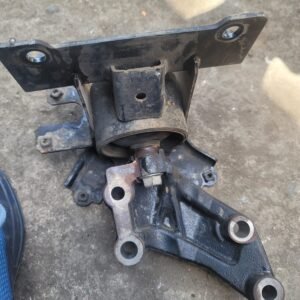
Suzuki Solio Gear Box Mountain
KSh45,000.00 Buy Via WhatsappStructural & Material Specifications
- Mounting Configuration: 3-Point multi-mount dampening system (Left Gearbox Mount, Right Engine Mount, Rear Torque Mount). [1]
- Body Material: Stamped structural carbon steel plate or die-cast aluminum housing bracket assembly.
- Dampening Compound: High-density, natural rubber elastomer (or upgraded aftermarket hardened rubber) bonded directly onto the inner sleeve matrix to handle rotational torque. [1, 2]
- Operational Hardness: Engineered to meet standard Shore A hardness levels (55–65 Durometer) to maximize energy dissipation without generating interior resonance or cabin noise.
Generation-Specific Layouts & OEM Part Numbers
First Generation (2000–2010: Wagon R Solio — MA34S / MA64S)
- Platform Info: Paired alongside the 1.3L M13A engine and a traditional 4-speed automatic transmission (4AT). [1, 2]
- Gearbox Mount Type: Standard cylindrical rubber-metal bracket mount. [1]
- Common OEM Part Numbers:
Second & Third Generation (2011–2020: MA15S, MA26S, MA36S, MA46S)
- Platform Info: Re-engineered for the fuel-efficient K12B/K12C engines mated to a high-efficiency CVT or Mild Hybrid powertrain. The gearbox housing mount was enlarged to account for the unique weight distribution of the CVT casing. [1, 2, 3]
- Gearbox Mount Type: Dual-stage heavy-duty rubber insulator dampener.
- Common OEM Part Numbers:
Standard Tightening Torque Specifications
To secure the transmission housing safely onto the frame rail, the fasteners require precise progressive torquing:
| Connection Location | Metric Spec (N·m) | Imperial Spec (ft-lbs) |
|---|---|---|
| Gearbox Mount Central Thru-Bolt (Mount to Bracket) | 85 N·m | 63 ft-lbf |
| Chassis Frame Mounting Bolts (Mount to Subframe) | 55 N·m | 41 ft-lbf |
| Transmission Bracket Bolts (Bracket to Gearbox Casing) | 60 N·m | 44 ft-lbf |
| Rear Lower Torque Bracket Bolt | 90 N·m | 66 ft-lbf |

Suzuki Swift Model 2018 Shock Absorber
KSh10,000.00 Buy Via WhatsappComponent & Sizing Specifications
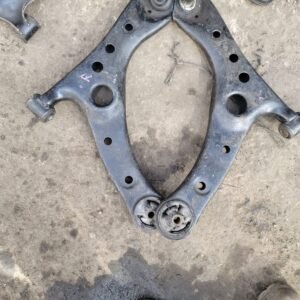
The factory front lower control arms use a integrated layout where the ball joint is pressed directly into the arm assembly.
- Material Construction: Heavy-gauge stamped sheet steel.
- Dimensions & Physical Profiles:
- Inner Flange Length: ~336 mm
- Outer Pivot Length: ~374 mm
- Ball Joint Stud Joint Diameter: 20 mm
- Small Front Bushing Hole: 16.2 mm diameter (Outer diameter: 53 mm)
- Large Rear Bushing Hole: 23.3 mm diameter (Outer diameter: 82 mm)
- Bushing Layout: Features a small front horizontal bushing and a large, vertically oriented rear cylindrical rubber dampening bushing designed to isolate high-amplitude road shocks and harshness.
Genuine Mazda OEM Part Numbers
Part numbers vary slightly depending on the build origin (Japan vs. Mexico plants) and drivetrain (FWD vs. AWD). The base numbers for the complete front arm assemblies include the ball joint and pre-installed bushings.
- Front Right (RH) Lower Control Arm Assy:
KD35-34-300P/KD35-34-300T(Supersedes previous revisions ending in D, E, F, G, H, J, L, R, S). - Front Left (LH) Lower Control Arm Assy:
KD35-34-350T/KA0G-34-350. - Front Small Bushing Only:
TK48-34-470A. - Front Mounting Pivot Bolt:
9YA0-21-603C.
Factory Torque Specifications
Important: To protect the inner rubber elements from tearing prematurely, you must pre-load the suspension using a jack to mimic the vehicle resting at normal ride height on its wheels before applying the final torque to the subframe pivot bolts.
| Fastener Connection Location | Metric Spec (N·m) | Imperial Spec (ft-lbs) |
|---|---|---|
| Front Pivot Horizontal Bolt (to Subframe) | 244 N·m | 180 ft-lbf |
| Rear Bushing Vertical Mount Bolts (2 per arm) | 149 N·m | 110 ft-lbf |
| Ball Joint Stud Pinch Nut/Bolt (to Steering Knuckle) | 40 N·m | 30 ft-lbf |
Toyota Voxy Lower Control Arms 4
KSh4,000.00 Buy Via Whatsapp1st Gen (2001–2007: AZR60 / AZR65) & 2nd Gen (2007–2014: ZRR70 / ZRR75)
These early platforms feature highly interchangeable chassis architecture. The control arms use a classic independent dual-bushing layout with a removable lower ball joint. [1, 2]
-
- Material Construction: Stamped heavy-gauge sheet steel. [1]
- Bushing Layout: Combines a small horizontal front bushing and a large vertical rear bushing (
48655-21010). The rear "Big Bushing" is notorious for tearing on these generations due to the vehicle's high curb weight and braking load. [1] - OEM Part Numbers:
-
- Right Hand (RH):
48068-29235/48068-28120 - Left Hand (LH):
48069-29235/48069-28120[1]
- Right Hand (RH):
-
- Torque Specs:
-
- Front Horizontal Pivot Bolt: 137 N·m (101 ft-lbs)
- Rear Vertical Mount Bolt: 113 N·m (83 ft-lbs)
- Ball Joint Castle Nut: 98 N·m (72 ft-lbs)
-
3rd Generation (2014–2022: ZRR80, ZRR85, ZWR80)
The 3rd generation updated the subframe interface. The ball joint is integrated directly into the steel frame of the control arm assembly rather than bolted on. [1]
-
- Drivetrain Variance: 2WD (ZRR80/ZWR80) and 4WD (ZRR85) models use distinct arm designs to account for the steering geometry variations and clearance needed for the front axle half-shafts on 4WD variants. [1]
- OEM Part Numbers (Common 2WD/Hybrid platforms):
-
- Right Hand (RH):
48068-29255 - Left Hand (LH):
48069-29255[1]
- Right Hand (RH):
-
- Torque Specs:
-
- Front Subframe Pivot Bolt: 140 N·m (103 ft-lbs)
- Rear Vertical Bushing Bracket Bolts: 130 N·m (96 ft-lbs)
- Ball Joint Pinch Bolt to Steering Knuckle: 63 N·m (46 ft-lbs)
-
4th Generation (2022–Present: MZRA90, MZRA95, ZWR90, ZWR95)
Built on the modern TNGA-C (Toyota New Global Architecture) platform, the 4th generation Voxy has completely reimagined suspension geometry. The control arm design is wider and lighter to yield a lower roll center and sharper turn-in response. [1, 2]
- Chassis Integration: Shared with the 90-series Toyota Noah. It utilizes high-tensile strength steel designed to cope with the increased torque load of the 5th-generation 1.8L Hybrid (2ZR-FXE) and 2.0L Dynamic Force (M20A-FKS) drivetrains. [1]
- OEM Part Numbers:
-
- Right Hand (RH):
48068-NV9056(Base candidate series) - Left Hand (LH):
48069-NV9056[1]
- Right Hand (RH):
-
- Torque Specs:
- Front Inner Crossmember Bolt: 150 N·m (111 ft-lbs)
- Rear Vertical Bracket Bolts: 140 N·m (103 ft-lbs)
- Ball Joint Stud Nut: 75 N·m (55 ft-lbs)

Mazda CX5 Model 2015 Lower Control Arms
KSh6,000.00 Buy Via WhatsappComponent & Sizing Specifications
The factory front lower control arms use a integrated layout where the ball joint is pressed directly into the arm assembly. [1, 2]
Genuine Mazda OEM Part Numbers
Part numbers vary slightly depending on the build origin (Japan vs. Mexico plants) and drivetrain (FWD vs. AWD). The base numbers for the complete front arm assemblies include the ball joint and pre-installed bushings. [1, 2]
-
- Front Right (RH) Lower Control Arm Assy:
KD35-34-300P/KD35-34-300T(Supersedes previous revisions ending in D, E, F, G, H, J, L, R, S). - Front Left (LH) Lower Control Arm Assy:
KD35-34-350T/KA0G-34-350. - Front Small Bushing Only:
TK48-34-470A. - Front Mounting Pivot Bolt:
9YA0-21-603C. [1, 2, 3, 4, 5, 6, 7]
- Front Right (RH) Lower Control Arm Assy:
Factory Torque Specifications
Important: To protect the inner rubber elements from tearing prematurely, you must pre-load the suspension using a jack to mimic the vehicle resting at normal ride height on its wheels before applying the final torque to the subframe pivot bolts. [1, 2]
| Fastener Connection Location | Metric Spec (N·m) | Imperial Spec (ft-lbs) |
|---|---|---|
| Front Pivot Horizontal Bolt (to Subframe) | 244 N·m | 180 ft-lbf |
| Rear Bushing Vertical Mount Bolts (2 per arm) | 149 N·m | 110 ft-lbf |
| Ball Joint Stud Pinch Nut/Bolt (to Steering Knuckle) | 40 N·m | 30 ft-lbf |
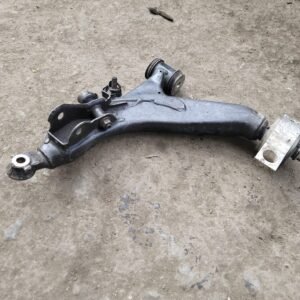
Toyota Mark X GRX 120 Lower Control Arm
KSh5,500.00 Buy Via WhatsappComponent & Structural Specifications
- Material Construction: High-tensile forged steel or heavy-duty cast iron body.
- Bushing Layout: Features a dual-bushing design. The front pivot uses a standard horizontal press-fit bushing, while the rear uses a heavy-duty vertical "Big Bush" fluid-filled or hardened rubber insulator bracket assembly to isolate road vibration and maintain toe alignment under heavy braking. [1, 2]
- Chassis Compatibility: Interchangeable across the Toyota X-Chassis platform. The GRX120 front lower control arms are identical to those found on the Lexus IS250/IS350 (GSE20), Lexus GS300/GS350 (GRS190), and the Toyota Crown (GRS180/GRS182). [1, 2]
- Drive Configuration: Specifically engineered for 2WD models (AWD models use a different lower control arm geometry to clear the front axle half-shafts). [1, 2]
Genuine Toyota OEM Part Numbers
The lower control arm is serviced as separate left/right assemblies, and the rear brackets/bushings can be sourced independently.
- Front Right (RH) Lower Control Arm Assy:
48620-30290(also supersedes to48620-53020,48620-0N010). - Front Left (LH) Lower Control Arm Assy:
48640-30290. - Rear-Facing LCA Bracket No. 1 (Right Side Big Bush):
48075-30020/48075-0N010. - Rear-Facing LCA Bracket No. 2 (Left Side Big Bush):
48076-30020/48076-0N010. - Front Lower Ball Joint Assy (RH):
43330-39625. - Front Lower Ball Joint Assy (LH):
43340-39505. [1, 2, 3, 4]
Factory Torque Specifications
To preserve bushing health, all main arm bolts must receive final torque only when the car's weight rests fully on the wheels (at ride height). [1, 2]
| Fastener Connection | Metric Spec (N·m) | Imperial Spec (ft-lbs) |
|---|---|---|
| LCA Front Pivot Bolt to Frame (Camber adjustment cam) | 196 N·m | 145 ft-lbf |
| Shock Absorber Lower Mount to Control Arm | 137 N·m | 101 ft-lbf |
| LCA Rear Bracket (Big Bush) to Chassis Frame | 135–150 N·m | 100–110 ft-lbf |
| Lower Ball Joint Assembly to Steering Knuckle | 115 N·m | 85 ft-lbf |
| Ball Joint Stud Castle Nut to Lower Control Arm | 125 N·m | 92 ft-lbf |

Toyota Passo Model 2010 Engine Mountain
KSh4,000.00 Buy Via WhatsappFirst Generation (Early 2010 / 2004–2010: KGC10, KGC15, QNC10)
This version typically pairs with either a 1.0L (1KR-FE) or a 1.3L (K3-VE) engine. It utilizes a multi-mount layout consisting of independent right, left, and rear insulators. [1]
- Right Engine Mount (Front Right / Timing Belt Side):
- Left Engine Mount (Transmission Side):
- Type: Rubber cushion insulator.
- OEM Part Numbers:
12306-B1020,12306-B1030. [1]
- Rear Engine Mount (Torque Rod / Firewall Side):
- Type: Anchor bracket insulator to prevent front-to-back engine pitching during acceleration.
- OEM Part Numbers:
12309-B1020,12309-B1040. [1]
Second Generation (Late 2010 / 2010–2016: KGC30, KGC35, NGC30)
Introduced in February 2010, this generation structural redesign accompanies the 1.0L (1KR-FE) and the newer 1.3L (1NR-FE) dual VVT-i engines. The mounting architecture was modified for improved cabin noise, vibration, and harshness (NVH) levels. [1, 2]
- Left Engine Mount (Transmission Side):
- Right Engine Mount & Rear Brackets:
- Type: Transverse-engine structural frame brackets.
- OEM Part Number (Rear Bracket No. 1):
12321-B1070. [1]
Material & Operational Characteristics
- Vibration Absorption: The right-hand primary mount relies on a hydraulic fluid chamber. This fluid shifts inside internal orifices to counteract engine frequencies at idle, keeping the 3-cylinder (1KR-FE) inherently balanced engine noise out of the cabin. [1, 2]
- Hardness Standard: The rubber components meet automotive Shore A hardness standards to deliver a balance between structural rigidity (preventing engine shift) and pliability (dampening shock).
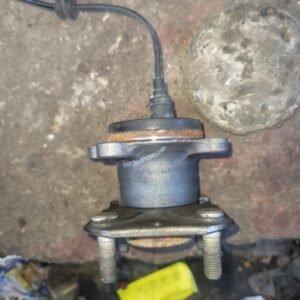
Mazda Demio Model 2017 Rear Hub
KSh12,000.00 Buy Via WhatsappComponent Configuration & Architecture
- Component Type: Integrated Hub Unit Assembly (Third Generation pre-assembled, sealed hub unit integrating both the wheel flange and bearing elements).
- Bearing Construction Type: Double-row angular contact ball bearing setup optimized for low-friction city driving.
- Fitting Position: Rear Axle (Left Hand and Right Hand sides share identical, symmetrical units).
- ABS Integration: Natively includes an integrated electronic anti-lock braking system (ABS sensor ring/magnetic encoder).
- Average Operational Lifespan: ~120,000 Kilometers (under standard operating loads). [1, 2, 3, 4, 5]
Dimensional & Geometric Tolerances
- Pitch Circle Diameter (PCD): 4 x 100 mm
- Wheel Hub Stud Count: 4-Hole hub face
- Brake Setup Compatibility: Engineered primarily for rear drum brake configurations. [1, 2, 3]
Genuine OEM Part Numbers & Cross-References
- Primary JDM OEM Part Reference:
D09H-26-15X(Specifically configured for standard DJ platform releases including DJ3FS and DJ5FS chassis runs). - Common Industry Aftermarket Part Interchange:
3DACF037D3[1, 2, 3]
Vehicle & Drivetrain Platform Compatibility
- Chassis Series: Mazda DJ Generation (Production range spanning late 2014 through 2022).
- Drive Layout Layouts: Tailored for standard Front-Wheel Drive (2WD/FF) models.
- Engine Architecture pairing: Universal hub assembly across 1.3L P3-VPS petrol lines, 1.5L P5-VPS petrol lines, and 1.5L S5-DPTS SkyActiv-D clean diesel powertrains. [1, 2, 3]
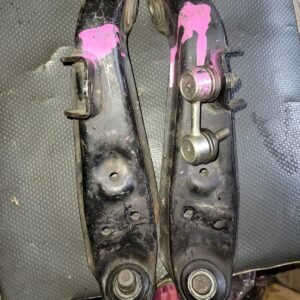
Mitsubishi eK Wagon Lower Arms Control
KSh4,000.00 Buy Via WhatsappSystem Design & Layout
- Suspension Type: Independent MacPherson Strut lower suspension link.
- Component Type: Track Control Arm / Lower Wishbone.
- Fitting Position: Front Axle (Left Hand and Right Hand sides are non-interchangeable mirror images).
Structural & Material Specifications
- Arm Construction: Heavy-gauge stamped sheet steel or structural forged steel matrix.
- Bushing Composition: High-durability vulcanized natural rubber compounds bonded to steel inner sleeves (designed to limit micro-vibrations across kei-car weight limits).
- Ball Joint Configuration: Integrated or press-fit non-adjustable ball joint with a polished steel tapered pin and high-elasticity synthetic rubber dust boot.
- Average Component Weight: ~1.85 kg to 2.40 kg per arm assembly.
Genuine OEM Part Numbers & Cross-References
First & Second Generation (H81W / H82W Series | 2001 – 2013)
- Right Hand (RH) Front Lower Arm:
MR594248,4013A066,4013A232 - Left Hand (LH) Front Lower Arm:
MR594247,4013A065,4013A231 - Common Aftermarket Reference (555):
SA-B222R(RH) /SA-B222L(LH)
Third Generation (B11W Series | 2013 – 2019)
- Right Hand (RH) Front Lower Arm:
4013A426 - Left Hand (LH) Front Lower Arm:
4013A425
Platform Compatibility
- Chassis Cross-Sharing: Universally interchangeable with corresponding generation Nissan Otti (H81W/H82W equivalents) and Nissan Dayz (B11W equivalents) due to the joint Nissan-Mitsubishi NMKV development venture.
- Powertrain Layouts: Fits both 2WD and 4WD configurations running the 3G83 657cc or 3B20 659cc engine variants.
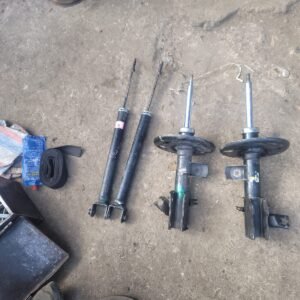
Nissan Teana Shocks Model J32
KSh7,500.00 Buy Via Whatsapp1. Front Shock Absorbers (Strut Assembly)
- Suspension Design: MacPherson Strut setup [1, 2]
- System Type: Gas Pressure, Twin-Tube (Double Cylinder) [1, 2, 3]
- Fitting Position: Front Axle (Left and Right side specific) [1]
- Mounting Type: Top pin/stem mount, Bottom clamp configuration [1, 2]
- Damping Effect: Single Action / Single Effect damping force [1]
- Common Aftermarket Part Numbers:
- Genuine OEM Cross-References:
54302-JN81A,54302-KA30A,E4302-JN01D[1]
2. Rear Shock Absorbers
- Suspension Design: Independent Multi-link suspension layout
- System Type: Gas Pressure, Telescopic Twin-Tube damper
- Fitting Position: Rear Axle (Left and Right are interchangeable)
- Mounting Type: Top pin/stem mount, Bottom eye-ring mount
- Piston Rod Diameter: 12 mm
- Outer Tube Diameter: 45 mm
- Stroke/Length Profiles: Max length 359 mm | Min length 253 mm
- Common Aftermarket Part Number: KYB
348024, TRWJGT960T - Genuine OEM Cross-References:
E6210JC43A[1, 2, 3, 4, 5]
3. Platform & Powertrain Compatibility
- Chassis Platform: Nissan J32 / J32R / J32Z series
- Drivetrain Layouts: Optimized for Front-Wheel Drive (FWD) and All-Wheel Drive (250XL Four / QR25DE) setups
- Engine Variations: Tuned for the weight distributions of the 2.0L (MR20DE), 2.5L V6 (VQ25DE), and 3.5L V6 (VQ35DE) models
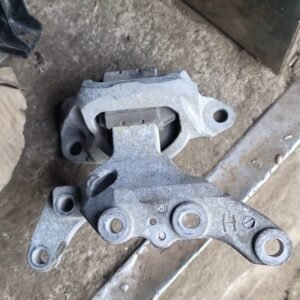
Nissan Xtrail NT32 Engine Mountain
KSh8,000.00 Buy Via WhatsappSystem Configuration
The Nissan X-Trail NT32 utilizes a 4-point modular powertrain suspension layout designed to handle heavy torque transfer across the intelligent 4WD layout.
- Front Mount: Controls initial lateral torque reaction.
- Rear Mount (Torque Strut): Manages engine pitch, rollback, and longitudinal twist under hard acceleration.
- Right Hand (RH) Mount: Primary engine weight-bearing component.
- Left Hand (LH) Mount: Primary transmission/CVT housing support.
Material & Engineering Specifications
- Isolator Type: Hybrid dampening configuration. The primary load-bearing engine mount (RH) utilizes a fluid-filled hydraulic core to cancel out high-frequency idle harmonics. The remaining mounts rely on high-density vulcanized rubber-to-metal bonding.
- Housing Composition: Stamped high-tensile structural steel base brackets combined with lightweight die-cast aluminum upper brackets (RH side) for mass reduction.
- Dampening Fluid Chemistry: High-viscosity ethylene glycol based compound sealed within dual pressure chambers (RH side only).
- Average Component Weights:
- RH Hydraulic Assembly: ~2.10 kg
- LH Gearbox Assembly: ~1.85 kg
- Rear Torque Link: ~0.95 kg
Genuine OEM Part Numbers & Cross-References
(Note: These apply specifically to the NT32 4WD platform paired with the MR20DD 2.0L engine or QR25DE 2.5L engine configurations)
- Right Hand (RH) Engine Mount:
11210-4BA0A,11210-4BU0A - Left Hand (LH) Transmission Mount:
11220-4BA0A - Rear Engine Torque Mount:
11360-4BA0A - Front Engine Mount:
11350-4BA0A
Platform Compatibility
- Chassis Run: T32/NT32 Platform Series
- Drivetrain Constraints: Tailored specifically for all-wheel-drive/four-wheel-drive layouts (NT32) to absorb additional transfer case and propeller shaft vibrations.

Mazda Demio Model 2015 Engine mountain
KSh8,000.00 Buy Via WhatsappSystem Architecture
The 2015 Mazda Demio uses a 3-point decoupled layout to suspend the compact SkyActiv powertrain configuration. This system distributes support across three crucial coordinate positions: [1, 2]
- Right-Hand Side (RHS) Mount: Primary engine compartment weight-bearing isolator.
- Left-Hand Side (LHS) Mount: Gearbox and transmission stabilizing bracket.
- Rear Center Torque Mount: Lower structural pitch rod that controls longitudinal displacement during shifting and hard torque applications. [1, 2, 3, 4, 5]
Structural & Material Specifications
- Insulation Core Technology: Uses a combination of natural solid rubber blocks molded between high-tensile steel mounting plates, alongside a fluid-filled hydraulic core on the primary load-bearing RHS node to maximize SkyActiv micro-vibration absorption. [1, 2]
- Dampening Fluid Chemistry: High-viscosity ethylene glycol mixture configured inside internal pressure chambers (hydraulic variants) to prevent high-frequency idle harmonics from passing to the chassis rails. [1]
- Housing Composition: Combination of die-cast structural aluminum alloys (for weight reduction) and heavy-gauge stamped steel base arms. [1, 2]
- Average Component Weight:
Genuine OEM Part Numbers & Cross-References
- Left-Hand Side (LH / Transmission) Mount:
D10G-39-070(Universal configuration for JDM DJ3FS / DJ5FS chassis runs). - Right-Hand Side (RH / Engine) Mount:
DA6V-39-060/D10G-39-060. - Rear Lower Torque Mount:
D651-39-040. [1, 2, 3, 4]
Platform Compatibility
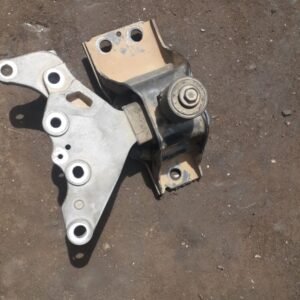
Alto 2017 GearBox Mountain
KSh5,000.00 Buy Via Whatsapp1. Global / Indian Market Variant (Alto K10 2nd Gen)
This variant utilizes a 3-point powertrain mounting structure supporting the 1.0L K10B engine layout. [1, 2]
- System Layout: 3-Point Structural Isolation (1 Front-Right Engine, 1 Front-Left Gearbox, 1 Rear Torque Stabilizer).
- Gearbox Mount Position: Front-Left Axle Side (LH Mounting). [1, 2]
- Mounting Type: Heavy-duty rubber-metal bond matrix. [1, 2]
- Body / Housing Material: Structural Die-Cast Aluminum alloy housing with high-density vulcanized rubber isolators. [1, 2]
- Mounting Style: Bolt-on configuration. [1]
- Primary Function: Isolates cyclic transmission resonance and load-reversal deflection during manual or AMT (Auto Gear Shift) gear changes. [1]
- Genuine OEM Part Numbers:
2. Japanese Domestic Market (JDM) Variant (Alto HA36S / HA36V)
This variant supports the 658cc R06A naturally aspirated or turbocharged powertrain layout coupled to a CVT, Manual, or 5-speed AGS gearbox. [1, 2]
- System Layout: Multi-point lightweight NVH (Noise, Vibration, and Harshness) dampening suspension.
- Gearbox Mount Position: Transmission-side frame rail (Left-Hand Side).
- Mounting Type: Steel or Aluminum bracket shell featuring high-elasticity elastomer damping blocks designed for micro-car weight limits. [1]
- Average Component Weight: ~0.55 kg to 0.85 kg (dependent on specific AGS vs. manual chassis specification).
- Genuine OEM Part Numbers:
- LH Transmission Bracket / Mount:
11620-74P00(Base manual/AGS platform layout series) - Rear Torque Support Rod:
11710-74P00
- LH Transmission Bracket / Mount:
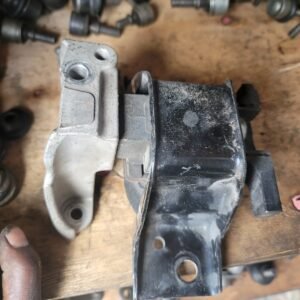
Nissan Serena Engine Mount
KSh4,500.00 Buy Via Whatsapp4-Piece System Configuration
The Nissan Serena utilizes a 4-point modular engine mounting network to secure the MR20DE engine and CVT powertrain layout. This configuration divides support across four distinct positions: [1, 2]
- Right Hand (RH) Mount: Main engine support mount.
- Left Hand (LH) Mount: Main gearbox/transmission support mount.
- Rear Mount / Torque Strut: Manages longitudinal engine pitching under acceleration.
- Front Mount / Pull-Down Rod: Stabilizes base structural vibration. [1]
Hardware & Material Specifications
- Primary Bracket Composition: Die-cast structural steel or high-tensile reinforced aluminum brackets. [1, 2]
- Isolator Type: Natural shock-reducing rubber matrix, with select primary load-bearing points using hydraulic (fluid-filled) dampening modes to maximize vibration mitigation. [1, 2]
- Average System Component Weight:
Genuine OEM Part Numbers & Cross-References
3rd Generation (C25 Series) | 2005 – 2010 [1]
- Front Mount (Pull-Down Rod): 11380-EN000, 11380-EN00A (Interchangeable with C26)
- Rear Engine Mount: 11360-CY00A
- Aftermarket Reference (Febest): NM-C25R (Rear), NM-C26 (Front) [1, 2, 3, 4]
4th Generation (C26 Series) | 2010 – 2016 [1]
- Right Hand (RH) Engine Mount: 11210-1V30B
- Left Hand (LH) Transmission Mount: 11220-1V30A
- Rear Torque Mount: 11360-JD00A
- Front Pull-Down Rod: 11380-EN00A
- Aftermarket Reference (VAICO): V20-0480 (Hydraulic)
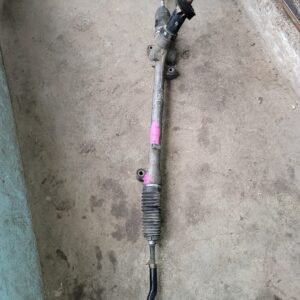
Mazda CX5 Steering Rack Model 2015
KSh15,000.00 Buy Via WhatsappSystem Configuration
- Steering Gear Type: Rack and Pinion Steering Gear
- Power Assist Type: Electric Power-Assist Steering (EPAS) / Electronic Power Steering
- Assistance Parameter: Vehicle Speed Proportional Power Steering
- Steering Wheel Lock-to-Lock Turns: 2.8 turns
- Net Weight: Approx. 6.4 kg [1, 2, 3]
Hardware Specifications
- Inlet Diameter: 11.2 mm
- Outlet Diameter: 9.6 mm
- Component Inclusions: Assembly natively includes the inner steering rack ends and pinion gear shaft. Outer tie rod ends must generally be sourced or transferred separately. [1, 2, 3]
Genuine OEM Part Numbers & Cross-References
- Primary OEM Reference: KD31-32-110 (Base assembly series) [1]
- Common Revisions / Supersessions:
Vehicle Compatibility
- Chassis Platform: Mazda KE Generation (Production range spanning 2012 to 2016/2017)
- Drivetrain Layouts: Compatible with both Front-Wheel Drive (2WD) and All-Wheel Drive (AWD/4WD) variants
- Engine Configurations: Paired universally across 2.0L SkyActiv-G, 2.5L SkyActiv-G petrol, and 2.2L SkyActiv-D diesel models

Toyota Noah Rear Shocks 2003 To 2015
KSh3,000.00 Buy Via Whatsapp1st Generation (AZR60 / AZR65) | 2001 – 2007
- System Type: Gas Pressure, Twin-Tube telescopic shock absorber
- Fitting Position: Rear Axle (Left and Right)
- Mounting Type: Top pin/stem mount with cushions, bottom eye ring mount
- Genuine OEM Part Numbers: 48531-80735, 48531-80753, 48530-80077
- Common Aftermarket Part Number: KYB 344480
- Drive Layout: Compatible with 2WD (AZR60G) and 4WD (AZR65G) variations [1, 2, 3, 4, 5, 6]
2nd Generation (ZRR70 / ZRR75) | 2007 – 2014
- System Type: Gas Pressure, Twin-Tube
- Fitting Position: Rear Axle (Left and Right)
- Mounting Type: Top pin/stem mount with support assembly, bottom eye ring mount
- Genuine OEM Part Numbers: 48531-80761 (Production years 2010–2014), 48530-28140 (RH), 48540-28020 (LH)
- Common Aftermarket Part Number: KYB 344362
- Chassis Compatibility: Broadly fits ZRR70G, ZRR70W, ZRR75G, and ZRR75W [1, 2, 3, 4, 5, 6, 7, 8, 9]
3rd Generation (ZRR80 / ZRR85) | 2014 – 2021
Showing 168 of 639 results