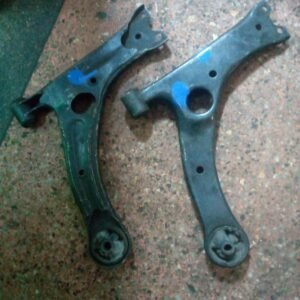
Toyota Axio Model 2007-2012 Lower Control Arms
KSh4,000.00 Buy Via Whatsapp- Right Hand (RH) Front Lower Control Arm:
- 48068-12300 (Primary factory baseline number)
- Interchangeable Structural Refs: 48068-02140, 48068-12290, 48068-02160
- Left Hand (LH) Front Lower Control Arm:
- 48069-12300
- Interchangeable Structural Refs: 48069-02140, 48069-12290, 48069-02160
- Component Weight: Approximately 3.15 kg per side (complete stamped shell assembly with bushings pressed).
- Structural Frame Material: Stamped heavy-gauge cold-rolled structural carbon steel plate.
- Chassis Attachment Layout: 3-Point orientation (Inner forward horizontal bushing + Inner rear vertical trailing bushing + Outer steering knuckle ball joint receiver flange).
- Bushing Internal Steel Sleeve Dimensions:
- Forward Horizontal Bolt Sleeve (Inner Diameter): 14.2 mm (Engineered to receive an M14 pivot bolt)
- Rear Vertical Trailing Bush Sleeve (Inner Diameter): 14.4 mm
- Rear Large Bushing Outer Barrel Diameter (OD): 65.2 mm
- Rear Large Bushing Metal Casing Height: 55.0 mm
- Material Compound: High-durometer vulcanized natural rubber (NR) bonded inside carbon steel inner and outer backing sleeves.
- Bushing Sub-Components (For Independent Pressing/Rebuilds):
- Small Front Bushing Ref: 48654-12150 / RU-494 (Dimensions: 14.2mm ID × 38.2mm OD × 61.0mm Length)
- Large Rear Bushing Ref: 48655-12120 / RU-495 / TAB-145 (Dimensions: 14.4mm ID × 65.2mm OD × 55.0mm Length)
- 2WD vs. 4WD Architecture: 2WD models (NZE141, ZRE142) share identical base control arms. 4WD models (NZE144, ZRE144) utilize alternative rear bushing durometers to mitigate drivetrain twist from the transfer case, though the physical arm geometry remains interchangeable.
- Platform Sharing: The E140 Axio lower control arm shares an identical structural chassis footprint with the Toyota Corolla Fielder (E140), Toyota Auris (E150), and Toyota Blade (E150) variations of the same production era.

Toyota Allion 240 Lower Control Arms
KSh4,000.00 Buy Via Whatsapp- Right Hand (RH) Front Lower Control Arm:
- 48068-20400 (Primary factory baseline number)
- Interchangeable Structural Refs: 48068-02050, 48068-12220, 48068-0M010
- Left Hand (LH) Front Lower Control Arm:
- 48069-20400
- Interchangeable Structural Refs: 48069-02050, 48069-12220, 48069-0M010
- Component Weight: Approximately 3.39 kg per side (complete stamped assembly with bushings pressed).
- Structural Frame Material: Stamped heavy-gauge cold-rolled carbon sheet steel.
- Chassis Attachment Layout: 3-Point orientation (Inner forward horizontal bushing + Inner rear vertical trailing bushing + Outer steering knuckle ball joint receiver).
- Bushing Internal Steel Sleeve Dimensions:
- Forward Horizontal Bolt Sleeve (Inner Diameter): 14.2 mm (Engineered for an M14 pivot bolt)
- Rear Vertical Trailing Bush Sleeve (Inner Diameter): 14.5 mm
- Rear Large Bushing Outer Barrel Diameter (OD): 68.5 mm
- Rear Large Bushing Metal Casing Height: 59.2 mm
- Material Compound: High-durometer vulcanized natural rubber (NR) bonded to carbon steel inner and outer sleeves.
- Bushing Sub-Components (For Independent Pressing/Rebuilds):
- Small Front Bushing Ref: 48654-12120 / RU-357 (Dimensions: 14.2mm ID × 39.0mm OD × 59.0mm Length)
- Large Rear Bushing Ref: 48655-12170 / RU-385 / TAB-026 (Dimensions: 14.5mm ID × 68.5mm OD × 60.0mm Length)
- The T240 Allion lower control arm shares an identical structural chassis footprint and geometry with the Toyota Premio (T240), Toyota Wish (ANE10/ZNE10), Toyota Corolla (NZE121/ZZE122), and the Toyota Matrix/Voltz (ZZE130) platform variations of the same production era.
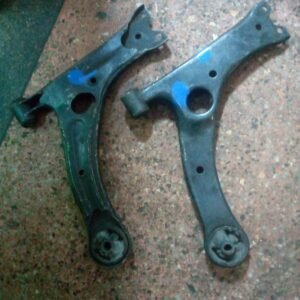
Toyota Premio 240 Lower Control Arms
KSh4,000.00 Buy Via Whatsapp- Right Hand (RH) Front Lower Control Arm:
- 48068-20400 (Primary factory baseline number)
- Interchangeable Structural Refs: 48068-02050, 48068-12220, 48068-0M010
- Left Hand (LH) Front Lower Control Arm:
- 48069-20400
- Interchangeable Structural Refs: 48069-02050, 48069-12220, 48069-0M010
- Component Weight: Approximately 3.39 kg per side (complete stamped assembly with bushings pressed).
- Structural Frame Material: Stamped heavy-gauge cold-rolled carbon sheet steel.
- Chassis Attachment Layout: 3-Point orientation (Inner forward horizontal bushing + Inner rear vertical trailing bushing + Outer steering knuckle ball joint seat).
- Bushing Internal Steel Sleeve Dimensions:
- Forward Horizontal Bolt Sleeve (Inner Diameter): 14.2 mm (Designed for an M14 pivot bolt)
- Rear Vertical Trailing Bush Sleeve (Inner Diameter): 14.5 mm
- Rear Large Bushing Outer Barrel Diameter (OD): 68.5 mm
- Rear Large Bushing Metal Casing Height: 59.2 mm
- Material Compound: High-durometer vulcanized natural rubber (NR) bonded to carbon steel sleeves.
- Bushing Sub-Components (For Independent Pressing/Rebuilds):
- Small Front Bushing Ref: RU-357 / 48654-12120 (Dimensions: 14.2mm ID × 39.0mm OD × 59.0mm Length)
- Large Rear Bushing Ref: RU-385 / TAB-026 / 48655-12170 (Dimensions: 14.5mm ID × 68.5mm OD × 60.0mm Length)
- The T240 Premio lower control arm shares an identical structural chassis footprint with the Toyota Allion (T240), Toyota Wish (ANE10/ZNE10), Toyota Corolla (NZE121/ZZE122), and the Toyota Matrix/Voltz (ZZE130) platform variants of the same manufacturing era.
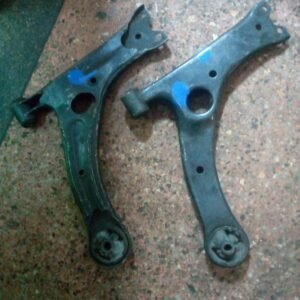
Toyota Premio 260 Lower Control Arms
KSh4,000.00 Buy Via Whatsapp- Right Hand (RH) Front Lower Control Arm:
- Left Hand (LH) Front Lower Control Arm:
- Component Configuration: Shipped structurally as an arm assembly with pre-pressed rubber bushings, but typically excluding the lower ball joint hardware unless explicitly designated. [1]
- Structural Material: Stamped structural sheet carbon steel. [1]
- Mounting Configuration: 3-Point orientation (Inner forward pivot bush + Inner rear vertical pivot bush + Outer ball joint receptacle). [1, 2]
- Inner Bushing Hardware Bore Diameters:
- Rear Bushing Barrel External Outer Diameter: 68.5 mm [1]
- Rear Bushing Shell Total Length: 60.0 mm [1]
- Bushing Compound: High-elasticity vulcanized natural rubber (NR) bonded inside carbon steel backing sleeves. [1]
- Bushing Sub-Components (For Independent Rebuilding):
- 2WD / FWD Base Variations (NZT260, ZRT260, ZRT261): Feature the baseline lightweight stamping profile intended for standard road clearances. [1, 2]
- 4WD Variations (ZRT265): Utilize modified clearance contours along the rear inner arm radius to accommodate structural axle separation and intermediate transfer shaft geometries.
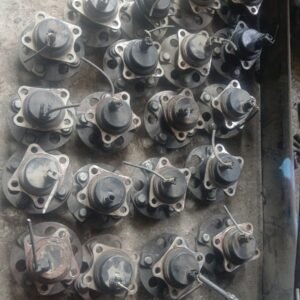
Toyota Axio 161 Model 2015 Rear Wheel Hubs Bearing
KSh5,000.00 Buy Via Whatsapp- OEM Part Numbers:
- 42450-52060 (Primary assembly number)
- 42450-52061 (Superseded / Updated factory specification)
- 42410-52060 / 42410-52061 [1]
- Industry/Aftermarket Reference: PHU2370 / MW-11529 [1, 2]
- Component Class: Generation 3 Double-Row Ball-Type Hub Unit. [1]
- Pitch Circle Diameter (PCD / Lug Pattern): 4 × 100 mm
- Hub Center Pilot Bore Diameter: 54.1 mm
- Flange Outer Diameter: 135 mm
- Internal Bore Diameter (Bearing Inner Diameter): 30 mm
- Thread Pitch/Size (Wheel Studs): M12 × 1.5
- Number of Rim Holes / Studs: 4
- Brake Setup Configuration: Form-fitted to seat flush against standard rear brake drum systems.
- Weight: Approximately 2.58 kg. [1, 2, 3, 4]
- ABS System Type: Magnetized active wheel speed encoder ring embedded directly into the bearing's inner rubber sealing lip.
- Signal Mechanism: Tracks vehicle wheel velocity via an external active magnetic sensor bolted to the stationary axle housing. [1, 2]
- Drive Configuration (NZE161): 2WD/FWD non-driven solid layout. The center bore remains completely smooth with no inner drive splines.
- Mounting Interface: Anchors to the rear trailing arm stub axle axle carrier flange using a standard 4-bolt backing arrangement (Bolt part numbers: 42421E / 42422A).[1, 2, 3]
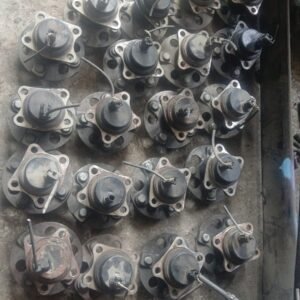
Toyota Fielder 161 Model 2015 Rear Wheel Hubs Bearing
KSh5,000.00 Buy Via Whatsapp- OEM Part Numbers:
- 42450-52060 (Standard factory production number)
- 42450-52061 (Superseded/Updated factory spec)
- 42410-52060 / 42410-52061
- Industry/Aftermarket Cross-References: PHU2370 / MW-11529 / 512370
- Assembly Layout: Generation 3 Hub Unit (Integrated inner and outer bearing races with dual structural flanges).
- Pitch Circle Diameter (PCD): 4 × 100 mm
- Hub Center Pilot Bore Diameter: 54.1 mm
- Flange Outer Diameter: 135.0 mm
- Wheel Stud Threads: M12 × 1.5
- Number of Flange Studs/Holes: 4
- Brake Configuration Interfacing: Engineered exclusively for standard rear drum brake configurations.
- Inner Hub Configuration: Solid/Smooth center bore housing (No internal splines; exclusive to 2WD/FWD applications).
- Bearing Construction Type: Double-row, maintenance-free angular contact ball bearing.
- Lubrication/Seal Dynamics: Factory pre-loaded with premium high-temperature wheel bearing grease; fully enclosed with dual-lip synthetic rubber sealing rings to mitigate debris ingress.
- ABS Technology: Pre-installed magnetic active wheel speed encoder ring embedded directly behind the bearing's internal rubber sealing lip.
- Signal Mechanism: Reads vehicle speed via an external active magnetic sensor anchored to the stationary axle trailing arm frame.
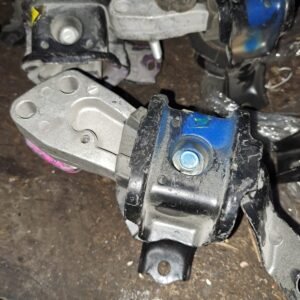
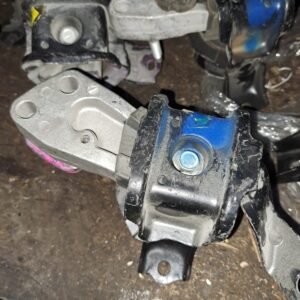
Toyota Axio Model 2007-2012 Engine Mountain
KSh4,000.00 Buy Via Whatsapp- Right-Hand Side (RH) Engine Mount:
- Left-Hand Side (LH) Gearbox/Transmission Mount:
- Rear Engine Torque Rod/Steady Mount:
- Type: Longitudinal roll-control torque stopper (prevents back-and-forth rotational engine displacement under clutch release or rapid deceleration).
- OEM Part Numbers: 12371-21150 / 12371-21250. [1]
- Front Engine Mount Buffer:
- Type: Snubber structural damper.
- OEM Part Number: 12361-21040 / 12361-21050. [1]
- Chassis Core Framing: Robotic MIG-welded stamped high-tensile carbon steel housings mated to structural cast-aluminum block-side mounting brackets. [1]
- Elastomeric Core: Vulcanized natural rubber (NBR/NR matrix) engineered for continuous oil resistance and high thermal stability within the engine bay. [1, 2]
- Dampening Medium: Glycol-based fluid buffer built directly into the internal chamber of the RH passenger-side assembly. [1]
- 2WD / FF Variants (NZE141, ZRE142): Utilize flat, non-extended rear roll isolation brackets that anchor directly into the front crossmember subframe channel. [1, 2]
- 4WD Variants (NZE144, ZRE144): Employ a modified clearance geometry bracket setup on the rear mount assembly to provide necessary spatial clearance for the transfer case output flange and intermediate drive shafts. [1]
Toyota Fielder Model 2005 Engine Mountain
KSh4,000.00 Buy Via Whatsapp- Right-Hand Side (RH) Engine Mount:
- Left-Hand Side (LH) Transmission Mount:
- Type: Transverse rubber-to-metal isolator assembly supporting the gearbox housing shell.
- OEM Reference: 12372-22080 / 12372-21110. [1]
- Rear Engine Torque Mount:
- Front Engine Stop Mount:
- Type: Longitudinal movement restrictor.
- OEM Reference: 12361-21020. [1]
- Structural Housing Material: Cold-rolled heavy-gauge carbon steel framing coupled with die-cast aluminum sub-brackets.
- Elastomeric Element: High-tensile vulcanized natural rubber (NR) specialized to optimize shore hardness against under-hood heat cycles.
- Standard Fastening Threads: Metric coarse thread matrix (predominantly M10 × 1.25 body frame bolts and M12 × 1.25 engine bracket anchoring studs). [1]
- 1NZ-FE (1.5L Petrol) / 1ZZ-FE (1.8L Petrol): Share lightweight aluminum engine bracket configurations interacting with fluid-dampened RH engine bays. [1, 2, 3]
- 3C-E (2.2L Diesel Variant - CE121G): Employs distinct high-durometer solid rubber compound mounts with upgraded metal frame thickness to isolate standard high-torque diesel harmonic vibrations. [1, 2]
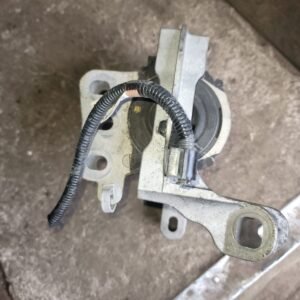
Mazda Demio Model 2010-2018 Engine Mountain
KSh7,500.00 Buy Via Whatsapp- Chassis System Codes: DE3FS, DE5FS, DE3AS, DEJFS [1]
- Engine Codes Covered: 1.3L ZJ-VE, 1.3L P3-VPS (SkyActiv-G), 1.5L ZY-VE [1]
- Mounting Architecture Components:
- Right-Hand Side (RH) Engine Mount: Hydro-elastic cushion mount filled with glycol fluid designed to dampen structural frequencies.
- OEM Factory Ref: D652-39-060 / D652-39-060H
- Left-Hand Side (LH) Gearbox/Transmission Mount: Multi-plate rubber-to-metal bracket designed for transmission casing isolation.
- OEM Factory Ref: D653-39-070 (CVT models) / D651-39-070 (Manual transmission)
- Rear (Lower Trailing) Engine Torque Mount: Solid molded elastomer bracket managing rotational engine twist under heavy acceleration.
- Right-Hand Side (RH) Engine Mount: Hydro-elastic cushion mount filled with glycol fluid designed to dampen structural frequencies.
- Chassis System Codes: DJ3FS, DJ3AS, DJ5FS, DJ5AS [1]
- Engine Codes Covered: 1.3L P3-VPS, 1.5L P5-VPS (SkyActiv-G), 1.5L S5-DPTS (SkyActiv-D Diesel) [1]
- Mounting Architecture Components:
- Right-Hand Side (RH) Engine Mount: Heavy-duty fluid-filled hydraulic isolator structurally upgraded to manage the higher torque load of SkyActiv setups.
- OEM Factory Ref: D10E-39-060 / DA6V-39-060
- Left-Hand Side (LH) Gearbox/Transmission Mount: Top-bracket multi-point bushing isolator.
- OEM Factory Ref: D10G-39-070
- Rear (Lower Trailing) Engine Torque Mount: Center anti-twist rod connecting the lower engine block casting to the vehicle's front subframe assembly.
- Right-Hand Side (RH) Engine Mount: Heavy-duty fluid-filled hydraulic isolator structurally upgraded to manage the higher torque load of SkyActiv setups.
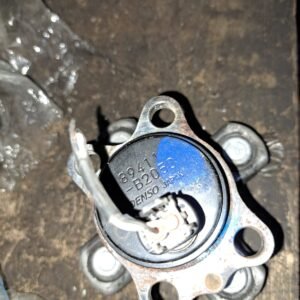
Toyota Passo B2050 Rear Wheel Hub
KSh5,000.00 Buy Via Whatsapp- OEM Part Numbers:
- Industry/Aftermarket Cross-References: HUB200T-3 [1]
- Assembly Layout: Hub Unit Generation 3 (One-piece fully sealed unit with integrated mounting flange and sensor tracking).
- Pitch Circle Diameter (PCD): 4 × 100 mm
- Outer Flange Diameter (Ø): 130.0 mm
- Hub Assembly Width: 67.0 mm
- Number of Rim/Wheel Bores: 4 threaded stud positions
- Brake Setup Compatibility: Built with an integrated rear drum backing face to align squarely inside the vehicle's drum brake layout. [1, 2, 3, 4, 5]
- ABS System Type: Magnetized active wheel speed encoder ring fully enclosed inside the bearing seal.
- Terminal Interface: 2-Pin (2P) electronic plug connector reading directly off the unit. [1, 2]
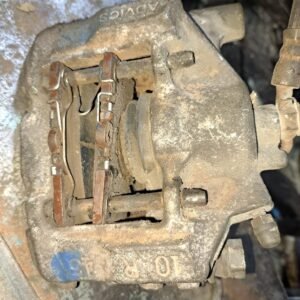
Toyota Markx Rear Calipers
KSh6,500.00 Buy Via Whatsapp- Caliper Design Type: Single-piston sliding/floating caliper layout.
- Piston Diameter: 43.0 mm
- Piston Repair Kit Ref: 04479-53070 / 47731B (Individual piston core).
- Caliper Weight: Approximately 2.96 kg per side assembly (with carrier bracket). [1, 2, 3, 4]
- Right Hand (RH) Cylinder Assembly OE:
- Left Hand (LH) Cylinder Assembly OE:
- Brake System Manufacturer: ADVICS Co., Ltd. [1, 2]
- Compatible Brake Disc Thickness: 10.0 mm (Standard solid rear rotor layout).
- Factory Caliper Designation Stamp: Fits standard 40 Y1 brake hardware classifications.
- Compatible Brake Pad Kit OEM: 04466-30210 / 04466-30230. [1, 2, 3, 4, 5]
- Guide Pin Configuration: Two-part slide pins featuring Pin Cylinder Slide No.1 (47814-30300) paired with specialized dampening slide bushes (47769-30300) to alleviate low-frequency brake groan.
- Hexagon Mounting Bolts: M10 hex shoulder fastening bolts (Part 90105-10525). [1]

Toyota Fielder Model 2014-2018 Rear Wheel Hubs
KSh5,000.00 Buy Via Whatsapp- OEM Part Numbers:
- Industry/Aftermarket Reference: PHU2370 / MW-11529
- Assembly Layout: One-piece unitized assembly housing both the hub mechanism and pre-loaded internal bearings. [1]
- Pitch Circle Diameter (PCD): 4 × 100 mm
- Hub Center Pilot Bore: 54.1 mm
- Flange Outer Diameter: 135.0 mm
- Wheel Stud Threads: M12 × 1.5
- Number of Flange Stud Holes: 4
- Brake Configuration Compatibility: Form-fitted specifically to interface with standard rear drum brake systems. [1, 2, 3]
- ABS Technology: Pre-installed magnetic active encoder ring encased inside the sealed assembly bearing lip.
- Signal Pickup: Interfaces directly with the axle-mounted external active wheel speed sensor reading off the internal magnetic tracking ring. [1]
- 2WD / FWD Variants (NZE161G, NRE161G, ZRE162G, NKE165G): Features a smooth inner bore housing with a flat rear mounting surface. It unbolts directly from the trailing arm axle assembly using 4 backing bolts per side (Bolt OEM Ref: 90105-12350). [1, 2]
- 4WD Variants (NZE164G): Engineered with an internal female-splined center bore tracking all the way through the hub core to receive the rear CV drive axle shaft spindle and its outer locknut.

Toyota Axio Model 2015-2018 Rear Wheel Hub
KSh5,000.00 Buy Via Whatsapp- OEM Part Numbers:
- Industry/Aftermarket Cross-Reference: PHU2370 / MW-11529 [1, 2]
- Assembly Type: Hub Unit Generation 3 (Integrated double-row angular contact bearing with a integrated mounting flange and ABS wheel speed encoder ring). [1, 2, 3]
- Bolt Pattern (PCD): 4 × 100 mm
- Hub Center Bore Diameter: 54.1 mm
- Outer Flange Diameter: 135 mm
- Thread Size (Wheel Studs): M12 × 1.5
- Number of Flange Splines/Holes: 4 wheel stud holes.
- Brake Setup Compatibility: Engineered to seat natively with standard rear drum brake systems. [1, 2, 3, 4]
- ABS System Type: Integrated magnetic encoder ring embedded directly inside the pre-sealed bearing casing.
- Sensor Configuration: Active wheel speed sensor reads directly off the inner magnetic tracking ring. [1, 2]
- 2WD / FWD Models (NZE161, NRE161, NKE165): Uses a flat backing-plate surface that mounts directly onto the rear trailing axle carrier via a standard 4-bolt layout. No center drive axle splines inside the hub bore. [1]
- 4WD Models (NZE164): Features an internal splined center bore passing all the way through the hub to receive the rear CV drive axle shaft spindle.
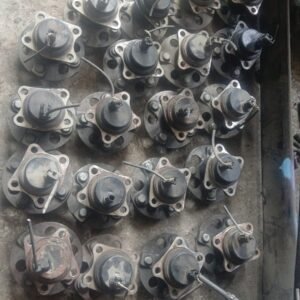
Toyota Belta Rear Wheel Hubs
KSh5,000.00 Buy Via Whatsapp- OEM Part Numbers:
- Industry/Aftermarket Reference: PHU2370 [1]
- Layout Configuration: One-piece integrated unit (Hub + Bearing + ABS sensor ring). [1, 2]
- Bolt Pattern (PCD): 4 × 100 mm
- Number of Flange Holes / Studs: 4 holes
- Brake Setup Compatibility: Integrated layout matching standard rear drum brakes.
- Bearing Type: Double-row maintenance-free angular contact ball bearing (BFC/BWD designation), completely pre-sealed and pre-loaded from the manufacturer.
- Weight: Approximately 2.09 kg per hub assembly. [1, 2, 3]
- FWD / 2WD Models (KSP92, SCP92): Utilizes standard axle-mounted flange unbolting mechanics via 4 backing bolts per side (Bolt part number: 90105-12350). [1, 2]
- 4WD Models (NCP96): Features a splined inner bore configuration built to accommodate the rear CV drive shaft axle layout and a locking rear axle shaft spindle nut. [1, 2]
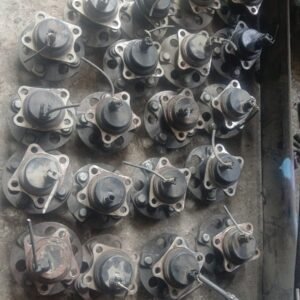
Toyota Vits Rear Wheel Hubs
KSh5,000.00 Buy Via Whatsapp- Component Design Style: Generation 3 (Gen 3) Hub Assembly Unit. The double-row ball bearing, wheel hub flange, inner race, and digital speed sensor form a single, factory-sealed, non-serviceable component.
- Drive Type Configuration: 2WD / 4x2 standard layouts.
- Braking Compatibility: Engine-matched for standard drum brake setups (mounts flush behind the rear brake drum backplate).
- ABS Sensor Integration: Integrated internal magnetic encoder ring with an external plug-in connector terminal molded into the back plate of the hub housing.
- Wheel Bolt Pattern / PCD: 4 x 100 mm
- Number of Hub Wheel Studs: 4 pre-installed M12 x 1.5 studs
- Hub Center Pilot Diameter (Center Bore): 54.1 mm
- Axle Beam Mounting Flange: 4-bolt rectangular symmetrical mounting pattern.
- Hub Flange Unit-to-Axle Beam Mounting Bolts (4x): 80 Nm (59 ft-lbs) — Note: These fasteners pass through the rear brake backing plate to anchor the assembly directly to the rear torsion axle beam.
- Wheel Lug Nuts (Road Wheel to Hub Studs): 103 Nm (76 ft-lbs)
- Maximum Factory Allowable Hub Axle Backlash (End Play): 0.05 mm (0.0020 inch) max

Toyota Fielder 161 Rear Wheel Hubs
KSh5,000.00 Buy Via Whatsapp- Component Design Style: Generation 3 (Gen 3) Modular Hub Assembly Unit. The wheel bearing, hub flange, inner race, and integrated ABS speed sensor are structurally built into a sealed, non-serviceable assembly. [1, 2]
- Drive Type Configuration: 2WD / 4x2 standard layouts. [1, 2]
- Braking Integration: Designed primarily for drum brake setups (fits directly behind the rear brake drum sub-assembly). [1, 2]
- Factory Genuine OEM Part Reference:
- ABS System Integration: Integrated internal multi-pole electronic magnetic sensor ring within the hub unit housing. [1]
- Wheel Bolt Pattern / PCD: 4 x 100 mm
- Number of Hub Wheel Studs: 4 pre-installed studs
- Hub Center Pilot Diameter (Bore): 54.1 mm
- Mounting Configuration: 4-bolt symmetrical diamond mounting flange on the rear axle beam/carrier. [1, 2, 3, 4, 5]
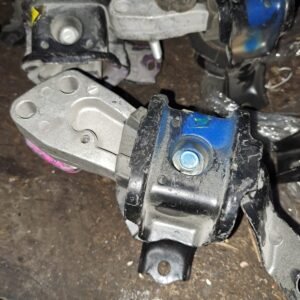
Toyota Nze Engine Mountain
KSh4,000.00 Buy Via Whatsapp- Total Number of Mounts: 4 structural mounting units.
- Mounting Positions & Configuration:
- Front Engine Mount: Solid rubber cushion assembly positioned on the front radiator core crossmember to arrest forward rotational pitch.
- Right-Hand (RH) Engine Mount: Heavy-duty rubber-metal isolation mount bolted to the engine timing chain cover bracket. This acts as the structural anchor for vertical engine mass.
- Left-Hand (LH) Transmission Mount: Isolation block securing the gearbox/transaxle casing directly to the structural side-frame rail.
- Rear Engine Mount: High-load torque-reaction insulator anchoring the rear differential/gearbox assembly to the rear engine subframe to eliminate longitudinal twist during gear shifts and acceleration.
- Material Architecture: High-damping vulcanized synthetic rubber bonded to die-cast aluminum and heavy-gauge stamped steel mounting shells.
- Right-Hand (RH) Mount Through-Bolt to Engine Bracket: 95 Nm (70 ft-lbs)
- Right-Hand (RH) Mount Base Plate to Body Bracket Bolts: 52 Nm (38 ft-lbs)
- Left-Hand (LH) Transmission Mount to Transaxle Bracket Bolt: 56 Nm (41 ft-lbs)
- Left-Hand (LH) Transmission Mount Base to Chassis Frame Bolts: 95 Nm (70 ft-lbs)
- Front Engine Mount Centering Through-Bolt to Crossmember: 95 Nm (70 ft-lbs)
- Front Engine Mount Bracket to Chassis Frame Bolts: 85 Nm (63 ft-lbs)
- Rear Engine Mount Longitudinal Through-Bolt: 95 Nm (70 ft-lbs)
- Rear Engine Mount Bracket to Subframe Structural Bolts: 87 Nm (64 ft-lbs)
- Engine Code: 1NZ-FE
- Configuration: Inline 4-Cylinder, 16-Valve DOHC with VVT-i
- Displacement: 1,496 cc
- Cylinder Bore x Stroke: 75.0 mm × 84.7 mm
- Compression Ratio: 10.5:1
- Peak Power Output: 109 PS (80 kW / 107 HP) @ 6,000 rpm
- Peak Torque Output: 141 Nm (104 lb-ft) @ 4,200 rpm
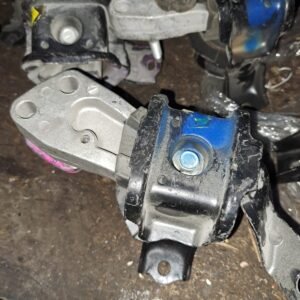
Toyota Axiom Engine Mountain
KSh4,000.00 Buy Via Whatsapp- Total Number of Mounts: 4 structural mounting assemblies. [1]
- Mounting Positions & Configuration:
- Front Engine Mount: Solid rubber-to-metal dampening cushion mounted directly onto the front crossmember subframe assembly.
- Right-Hand (RH) Engine Mount: A high-isolation, liquid-filled hydraulic mount (hydro-mount) attached to the engine's timing chain cover bracket. This is the primary load-bearing mount for engine mass.
- Left-Hand (LH) Transmission Mount: A structural rubber isolator linking the transaxle/gearbox casing to the main vehicle side-frame rail.
- Rear Lower Engine Mount: A torque-reaction "dog-bone" style insulator anchoring the rear transmission casing to the subframe to manage longitudinal engine twist during acceleration. [1, 2, 3, 4]
- Right-Hand (RH) Mount Through-Bolt to Engine Bracket: 95 Nm (70 ft-lbs)
- Right-Hand (RH) Mount Main Structural Nut (Nut A): 95 Nm (70 ft-lbs)
- Right-Hand (RH) Mount Insulator Stopper Nut (Nut B): 52 Nm (38 ft-lbs)
- Right-Hand (RH) Mount Base Plate to Body Bolts: 95 Nm (70 ft-lbs)
- Left-Hand (LH) Transmission Mount to Transaxle Bracket: 56 Nm (41 ft-lbs)
- Left-Hand (LH) Transmission Mount to Chassis Body Bolts: 95 Nm (70 ft-lbs)
- Front Engine Mount Insulator to Crossmember Bolt: 95 Nm (70 ft-lbs)
- Front Engine Mount Bracket to Chassis Body: 85 Nm (63 ft-lbs)
- Rear Lower Engine Mount Through-Bolt to Bracket: 95 Nm (70 ft-lbs)
- Front Subframe Crossmember Assembly to Body Bolts: 99 Nm (73 ft-lbs) [1, 2]
| Engineering Metric | 1.5L 1NZ-FE Powertrain | 1.5L 2NR-FKE Powertrain |
|---|---|---|
| Configuration | Inline 4-Cylinder, 16-Valve DOHC | Inline 4-Cylinder, 16-Valve DOHC |
| Cam Timing Tech | VVT-i (Variable Valve Timing) | Dual VVT-iE (Electric Intake, Hyd. Exhaust) |
| Displacement | 1,496 cc | 1,496 cc |
| Bore x Stroke | 75.0 mm × 84.7 mm | 72.5 mm × 90.6 mm |
| Compression Ratio | 10.5:1 | 13.5:1 (Atkinson-cycle setup) |
| Peak Power Output | 109–110 PS @ 6,000 rpm | 109 PS (80 kW) @ 6,000 rpm |
| Peak Torque Output | 140–143 Nm @ 4,200–4,400 rpm | 136 Nm @ 4,400 rpm |

Suzuki Alto Model 2018 Front Shocks
KSh5,000.00 Buy Via WhatsappProduct Description: Suzuki Alto / Alto Works / Alto Turbo RS (HA36S & HA36V Chassis, 2014–2021 / 2018 Model Year) Complete Front Shock Absorber Set
Overview
The Front Shock Absorber Set for the 2018 Suzuki Alto (HA36S 2WD & HA36V Van / 4WD Chassis, 8th Generation 2014–2021 with 660cc R06A Naturally Aspirated & Turbocharged Powertrains) is an OEM-spec, gas-pressurized front strut replacement set engineered to restore light, responsive steering control, eliminate nose-diving, and absorb harsh urban road impacts. Specially calibrated for the lightweight, high-rigidity HEARTECT platform architecture of the HA36 Suzuki Alto, these twin-tube dampers restore factory ride stability and cornering balance.
Technical Specifications & Characteristics
-
Vehicle Compatibility:
-
8th Generation Suzuki Alto: HA36S (2WD Passenger / Works / Turbo RS) & HA36V (2WD / 4WD Commercial Van) (2014–2021 / 2018 Model Year) (Also cross-fits twin platform Mazda Carol HB36S).
-
-
Position: Front Axle (Left Front LH & Right Front RH specific).
-
Operating System: Twin-Tube Low-Pressure Nitrogen Gas-Charged Hydraulic Struts.
-
Damping Medium: High-viscosity all-weather synthetic hydraulic fluid charged with nitrogen gas to prevent fluid foaming, internal aeration, and thermal performance fade during daily urban driving.
-
Build Quality: High-tensile seamless steel body cylinder, micro-polished induction-hardened chrome piston rod, and multi-lip NOK fluid seals to eliminate oil leaks.
-
Mounting Configuration: Direct factory bolt-on fitment attaching to upper strut top mounts, lower steering knuckle clevis bolts, stabilizer link brackets, and brake hose/ABS sensor wiring clips.
Key Features & Performance Benefits
-
Stops Front-End Nose-Diving & Pitching: Restores firm front rebound control, eliminating forward pitching under braking and controlling body lean through tight turns.
-
Absorbs Potholes & Rough Road Chatter: Dampens sharp pavement chatter, expansion joints, and speed humps, preserving a comfortable ride for driver and front passenger.
-
Restores Precise Steering & Wheel Alignment: Holds front camber and toe angles steady under dynamic travel, protecting front tires from patchy tread cupping and uneven shoulder wear.
-
Reinforced Lower Knuckle Brackets: Heavy-duty lower clevis brackets withstand severe road impacts and maintain rigid steering geometry alignment.
Variant & Fitment Notes (2WD HA36S vs. 4WD HA36V / Standard vs. Works Turbo RS)
Important: While standard HA36S Alto 2WD models share identical front strut body dimensions, 4WD variants and performance-oriented Alto Turbo RS / Alto Works models feature firmer damper valving and altered spring seat heights:
-
Standard 2WD (HA36S / HA36V) OEM Reference:
-
Front Right (RH) Strut:
41601-74P00,41601-74P10,41601-74P01 -
Front Left (LH) Strut:
41602-74P00,41602-74P10,41602-74P01
-
-
Alto Turbo RS / Works (HA36S Sport Trim) OEM Reference:
-
Front Right (RH) Strut:
41601-74P50,41601-74P60 -
Front Left (LH) Strut:
41602-74P50,41602-74P60
-
-
Popular Aftermarket Brands: KYB (Excel-G / New SR Special
NST5628R/Lfor HA36S), Tokico, Monroe OESpectrum, GAB, Febest, and SenSen.

Honda N Wagn Front Shocks
KSh5,000.00 Buy Via Whatsapp- Suspension Type: Independent MacPherson strut suspension.
- Dampening System: Hydraulic twin-tube, low-pressure nitrogen gas-charged strut assembly.
- Mounting Configuration:
- Top Mount: 3-bolt upper strut mount plate with an integrated rubber isolation spring seat and strut bearing.
- Bottom Mount: Rigid 2-bolt clamp bracket welded to the outer shell casing, clamping directly onto the front steering knuckle.
- Integrated Hardware: Features a welded bracket for the stabilizer link (sway bar end-link) and a mounting clip for the brake hose line.
- Extended Length: 455 mm to 468 mm (varies marginally between 2WD JH1/JH3 and 4WD JH2/JH4 ride height setups).
- Collapsed Length: 315 mm to 325 mm.
- Total Piston Stroke: 140 mm to 143 mm.
- Piston Rod Diameter: 18.0 mm (high-tensile chrome-plated steel).
- Outer Cylinder Casing Diameter: 45.0 mm.
- Upper Strut Center Piston Rod Nut: 44 Nm (approx. 33 ft-lbs).
- Upper Strut Mount Base Flange Nuts (To Chassis Body): 34 Nm (approx. 25 ft-lbs).
- Lower Strut-to-Knuckle Pinch Bolts (M12): 78 Nm to 85 Nm (approx. 58–63 ft-lbs).
- Stabilizer / Sway Bar Link Nut (To Strut Bracket): 39 Nm (approx. 29 ft-lbs).
- Front Wheel Lug Nuts (Road Wheel to Hub): 103 Nm (approx. 76 ft-lbs).
- Average Unit Mass (Dry Strut Assembly): ~3.8 kg to 4.2 kg per side (excluding the coil spring).
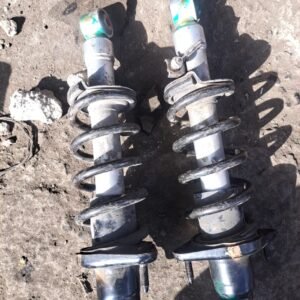
Honda Odyssey Rear Shocks Absorbers
KSh8,500.00 Buy Via Whatsapp- Suspension Type: Independent multi-link rear suspension or trailing-arm setup (depending on generation).
- Dampening System: Low-pressure, nitrogen gas-charged twin-tube or mono-tube hydraulic shock absorber.
- Mounting Configuration:
- Top Mount: Two-bolt top mounting flange bracket or traditional stem/pin setup passing through the rear chassis tower body.
- Bottom Mount: Clevis/fork bracket or heavy-duty eyelet sleeve mounted directly to the lower control arm or rear knuckle trailing bracket.
- Aspiration/Adjustability: Deployed as passive variable dampening units (amplitude reactive dampers) or multi-valve configurations.
- Extended Length (Mount Center to Center): 520 mm to 545 mm (varying slightly by model year trim levels).
- Collapsed Length: 345 mm to 365 mm.
- Total Piston Stroke: 175 mm to 180 mm.
- Piston Rod Diameter: 14.0 mm to 16.0 mm (high-strength induction hardened steel).
- Outer Shell Tube Diameter: 45.0 mm to 51.0 mm.
- Lower Mount Inner Bushing Diameter: 12.2 mm / 14.1 mm (designed for M12/M14 heavy-load shoulder bolts).
- Upper Shock Absorber Flange Mounting Bolts (To Body): 59 Nm (approx. 44 ft-lbs).
- Upper Shock Pin/Stem Locknut (Where Applicable): 29 Nm (approx. 22 ft-lbs).
- Lower Shock Absorber Mounting Bolt (To Lower Arm): 88 Nm to 98 Nm (approx. 65–72 ft-lbs) — Must be fully tightened only when the vehicle suspension is under full normal load (resting on the ground).
- Rear Wheel Lug Nuts (Road Wheel to Hub): 108 Nm (approx. 80 ft-lbs).
- Average Unit Mass (Dry): ~2.4 kg to 2.9 kg per shock absorber unit.

Toyota Passo Rear Shocks Absorbers
KSh2,500.00 Buy Via Whatsapp- Suspension Type: Trailing-arm type torsion beam rear suspension.
- Dampening System: Hydraulic twin-tube, low-pressure gas-charged shock absorber.
- Mounting Configuration:
- Top Mount: Pin/stem-type top rod configuration (secured through the inner vehicle wheel-well arch via rubber isolating bushings, steel washers, and a locknut).
- Bottom Mount: Eyelet sleeve configuration (secured via a horizontal bolt passing through the lower trailing arm bracket).
- Operation Principle: Double-acting (dampens both compression/jounce and extension/rebound cycles).
- Extended Length (Eye-to-Pin Center): 465 mm to 480 mm (depending on specific model year / aftermarket OEM cross-references).
- Collapsed Length: 305 mm to 315 mm.
- Total Piston Stroke: 160 mm to 165 mm.
- Piston Rod Diameter: 12.0 mm.
- Outer Shell Tube Diameter: 38.0 mm to 42.0 mm.
- Lower Eyelet Bushing Inner Diameter: 12.1 mm (fits standard M12 shoulder bolt).
- Upper Stem/Pin Locknut: 25 Nm (approx. 18 ft-lbs) — Note: Do not over-tighten, as over-compressing the upper rubber isolation bushings leads to premature bushing failure.
- Lower Eyelet Mounting Bolt (To Trailing Arm): 80 Nm (approx. 59 ft-lbs) — Crucial: This lower bolt must be given its final torque sequence only while the vehicle is resting at its standard static ride height on the ground to prevent bushing twist.
- Rear Wheel Lug Nuts (Road Wheel to Hub): 103 Nm (approx. 76 ft-lbs).
- Average Unit Mass (Dry): ~1.65 kg to 1.85 kg per shock absorber side.
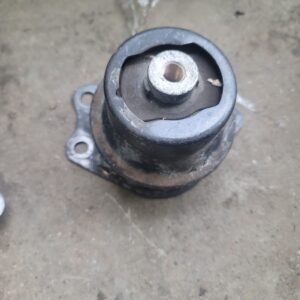
Honda Fit 2012 Engine Mountain
KSh4,000.00 Buy Via Whatsapp- Total Number of Mounts: 3 structural mounting assemblies [1, 2]
- Mounting Positions & Configuration:
- Front / Right-Hand Mount: A heavy-duty, fluid-filled hydraulic isolation mount (hydro-mount) attached to the engine block side. It bears vertical load and dampens mid-to-high frequency block frequencies.
- Left-Hand Transmission Mount: A solid rubber-metal isolation assembly supporting the gearbox casing to the structural framing.
- Rear Lower Torque Strut Mount: Known as the "torque rod" or "dog-bone" link. It connects the transmission housing directly back into the front crossmember/subframe to absorb front-to-rear rotational energy during acceleration and engine braking. [1, 2, 3, 4, 5]
- Isolation Material: Vulcanized synthetic elastomer combined with glycol fluid dampening internals (on the primary side mount). [1]
- Front Right-Hand Mount (Side Bracket to Block Bolts): 54 Nm (40 ft-lbs)
- Front Right-Hand Mount (Through-Bolt to Body): 64 Nm (47 ft-lbs)
- Left-Hand Gearbox Side Mount Through-Bolt: 54 Nm (40 ft-lbs)
- Rear Lower Torque Strut Mount Horizontal Bolt (To Frame): 83 Nm (approx. 61 ft-lbs)
- Rear Lower Torque Strut Mount Vertical Bolt (To Bracket): 93 Nm (approx. 68 ft-lbs) [1, 2]
| Engineering Parameter | 1.3L Variant (L13A Engine) | 1.5L Variant (L15A Engine) |
|---|---|---|
| Engine Code | L13A | L15A (L15A7 i-VTEC) |
| Configuration | Inline 4-Cylinder, 4-Stroke | Inline 4-Cylinder, 4-Stroke |
| Valvetrain | 16-Valve SOHC i-VTEC | 16-Valve SOHC i-VTEC |
| Timing Drive | Chain-driven | Chain-driven |
| Displacement | 1,339 cc | 1,497 cc |
| Bore x Stroke | 73.0 mm × 80.0 mm | 73.0 mm × 89.4 mm |
| Compression Ratio | 10.5:1 | 10.4:1 |
| Maximum Power | 100 PS (73 kW / 99 HP) @ 6,000 rpm | 117–120 HP (88 kW) @ 6,600 rpm |
| Maximum Torque | 127 Nm @ 4,800 rpm | 145 Nm (106 lb-ft) @ 4,800 rpm |
| Fuel System | PGM-FI Multi-Point Injection | PGM-FI Multi-Point Injection |
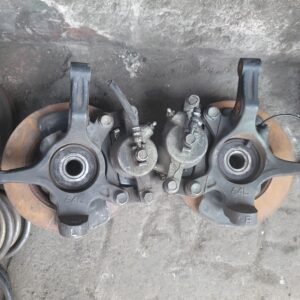
Suzuki Wagon R Wheel Hub Bearing
KSh4,000.00 Buy Via Whatsapp- Bearing Design Style: Generation 1 (Gen 1) Double-Row Angular Contact Ball Bearing (Sealed, pre-greased, press-in configuration). [1, 2]
- Core Dimensions (Standard K-Car / MH / Wagon R+ Generations):
- Part Interactivity: Fits symmetric left and right steering knuckles.
- ABS Integration: Available as standard passive sealed or featuring a built-in magnetic multi-pole ABS encoder ring on the inner seal face, depending on the manufacturing year and trim. [1, 2]
- Standard Mass / Weight: ~0.43 kg. [1]
- Bearing Design Style: Hub Unit I (Internal double-row setup or integrated wheel hub assembly depending on chassis configuration, e.g., MH21S, MH34S, MH44S). [1, 2]
- Core Dimensions (Standard Wagon R / Stingray Variations):
- Inner Diameter (ID): 25.0 mm
- Outer Diameter (OD): 52.0 mm
- Width / Thickness: 42.0 mm [1]
- Wheel Lug Mounting (Flange Type Hubs):
- Bolt Pattern / PCD: 4 x 100 mm
- Centering Pilot Diameter: 54.0 mm [1]
- Total Component Weight: ~0.37 kg [1]
- Main Front Axle Center Hub Nut Torque: 175 Nm to 210 Nm (Approx. 129–155 ft-lbs) — Must be torqued to spec while the vehicle is lifted to set the correct non-adjustable internal bearing preload.
- Rear Axle Hub Nut Torque:
- For Drum/Spindle Setup: 180 Nm (Approx. 132 ft-lbs)
- For R+ High-Load Rear Variations: Up to 325 Nm [1]
- Wheel Lug Nuts (Road Wheel to Hub): 85 Nm to 95 Nm (Approx. 63–70 ft-lbs). [1, 2]
- Internal Structural Bearing Tolerances: Acceptable factory end play is 0.001 to 0.005 inches (0.025 to 0.127 mm) maximum.
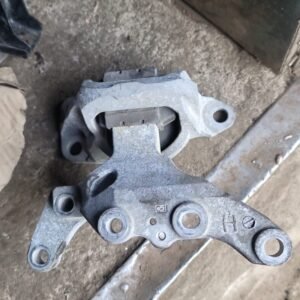
Nissan Xtrail NT32 Engine Mountain
KSh8,000.00 Buy Via Whatsapp- Total Number of Mounts: 4 individual mounting points [1]
- Mount Components:
- Right-Hand (Passenger Side): Main engine rubber-metal suspended engine mount
- Left-Hand (Driver Side): Transmission / Gearbox rubber pad mounting
- Upper Front / Right: Torque strut rod / Torque stabilizer link (prevents engine twisting under acceleration)
- Rear (Lower): Rear torque support mount / "Dog bone" mount attached to the subframe [1, 2, 3, 4, 5]
- Mounting Materials: Heavy-duty vulcanized elastomer rubber structurally bonded to cast aluminum and forged steel outer brackets. [1, 2]
- Right-Hand Suspended Mount Bolt (Body Side): 62 Nm (approx. 45 ft-lbs)
- Right-Hand Suspended Mount Bolt (Engine Side): 62 Nm (approx. 45 ft-lbs)
- Upper Engine Torque Strut Link Bolts: 75 Nm (approx. 55 ft-lbs)
- Left-Hand Gearbox Mount (To Bracket): 62 Nm (approx. 45 ft-lbs)
- Left-Hand Rubber Pad Bolt (To Body): 21 Nm (approx. 15 ft-lbs)
- Left-Hand Rubber Pad Bolt (To Mounting): 105 Nm (approx. 77 ft-lbs)
- Transmission Mount Main Stud (Gearbox Side): 180 Nm (approx. 132 ft-lbs)
- Rear Lower Torque Rod (Engine Tie-Bar Bolt): 180 Nm (approx. 132 ft-lbs) [1, 2]
- Engine Code: MR20DD
- Configuration: Inline 4-Cylinder, DOHC, 16 Valves with Twin CVTC
- Fuel Injection: Direct Fuel Injection (Nissan Di)
- Displacement: 1,997 cc
- Cylinder Bore x Piston Stroke: 84.0 mm × 90.1 mm
- Compression Ratio: 11.2:1
- Maximum Power: 147 PS (108 kW / ~145 HP) @ 6,000 rpm
- Maximum Torque: 207 Nm (21.1 kg·m) @ 4,400 rpm
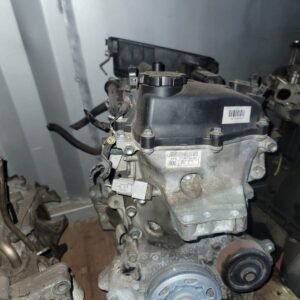
Toyota Vitz 1KR Slim Engine
KSh60,000.00 Buy Via Whatsapp- Engine Code: 1KR-FE
- Configuration: Inline 3-Cylinder, 4-Stroke
- Valvetrain: DOHC (Double Overhead Camshaft), 12 Valves (4 valves per cylinder)
- Timing Drive: Chain-driven
- Phase Regulator: VVT-i (Variable Valve Timing-intelligence) on the intake side
- Displacement: 996 cc (commonly referenced as 1.0L or 998 cc depending on the market variant)
- Cylinder Bore x Piston Stroke: 71.0 mm × 83.9 mm
- Compression Ratio: 10.5:1
- Aspiration: Naturally Aspirated (Non-turbocharged)
- Material: Aluminum alloy cylinder block and cylinder head
- Dry Weight: ~67–75 kg (without starter/alternator/compressor) [1, 2, 3, 4, 5, 6, 7, 8, 9, 10, 11]
- Maximum Power: 68–71 PS (50–52 kW / ~69–71 HP) @ 6,000 rpm
- Maximum Torque: 92–94 Nm (9.4–9.6 kg·m) @ 3,600 rpm to 4,300 rpm
- Idle Speed: 730–830 rpm [1, 2, 3, 4, 5, 6]
- Fuel Delivery System: EFI (Electronic Fuel Injection) with Multi-Point Manifold Fuel Injection (MPFI)
- Ignition System: DIS (Direct Ignition System)
- Ignition Timing: 0 to 15° BTDC
- Fuel Type: Regular Unleaded Gasoline [1, 2, 3, 4, 5]
- Engine Oil Capacity: 3.1 Liters (total refill capacity) [1, 2]
- Recommended Oil Viscosity: 0W-20 / 5W-20 (5W-30 is also widely adopted locally depending on ambient operating conditions) [1, 2]
- Hydraulic Lifters: None (Requires manual periodic valve clearance adjustments) [1]
- Valve Clearance (Cold):
- Intake: 0.145–0.235 mm
- Exhaust: 0.275–0.365 mm [1]
- Standard Cylinder Compression Pressure: 1,422 kPa (206 psi) standard / 1,079 kPa (156 psi) minimum
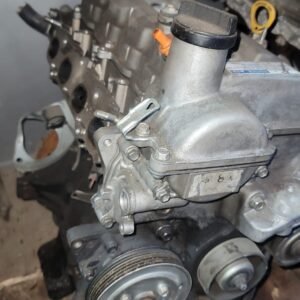
2SZ Slim Engine Toyota Vits Model 2005
KSh150,000.00 Buy Via Whatsapp- Engine Code: 2SZ-FE.
- Configuration: Transverse inline 4-cylinder, 4-stroke, petrol.
- Valvetrain: DOHC (Double Overhead Cam), 16 valves, chain-driven with VVT-i (Variable Valve Timing with intelligence).
- Displacement: 1,296 cc (1.3 Litres).
- Bore x Stroke: 72.0 mm × 79.6 mm.
- Compression Ratio: 11.0:1 (High compression setup specifically engineered for the Japanese domestic market).
- Block Material: Cast-iron closed-deck block featuring an offset Desaxe crankshaft to optimize piston side-load friction. [1, 2, 3, 4, 5]
- Maximum Power output: 87 PS / 86 hp (64 kW) @ 6,000 RPM.
- Maximum Torque: 116 N·m (11.8 kg-m) @ 4,000 RPM.
- Fuel System: Multi-point Electronic Fuel Injection (EFI) governed by a MAP sensor and an electronic throttle body assembly.
- Transmission Pairing: Mated directly to an ultra-efficient, smooth Aisin Continuously Variable Transmission (CVT). (Note: The 4WD Vitz from 2005 uses the older, wider 2NZ-FE engine paired with a 4-speed conventional automatic). [1, 2, 3, 4, 5, 6]
- Roller Rocker Valvetrain: Incorporates specialized friction-reducing rocker arm mechanisms. [1]
- EGR System Integration: The JDM engine features an integrated EGR (Exhaust Gas Recircirculation) valve system to lower cylinder emissions. [1]
- Compact Intake Runners: Features a curved, lightweight intake manifold setup built tightly to the engine frame to save room in the subcompact engine bay.
| Maintenance Category | Factory Technical Specification |
|---|---|
| Recommended Oil Grade | 5W-30 Fully Synthetic |
| Engine Oil Capacity | 3.4 Litres (when changing with a new oil filter) |
| Valve Lifter Type | Solid bucket lifters (Requires manual checking/adjustment via shims; no hydraulic lifters) |
| Spark Plug Type | Long-life Iridium plugs (e.g., NGK LFR6C-11 or Denso K20HR-U11 variants) |
| Timing Element | High-durability Morse silent type timing chain |
| Cooling Capacity | ~4.5 Litres (Toyota Super Long Life Pink Coolant) |
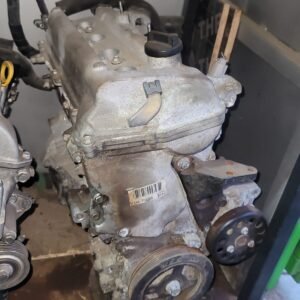
1NZ Slim Engine Probox
KSh130,000.00 Buy Via Whatsapp- Engine Code: 1NZ-FE (Late-generation "Slim" architecture).
- Configuration: Transverse Inline 4-cylinder, 4-stroke, petrol.
- Valvetrain: DOHC (Double Overhead Cam), 16 valves, chain-driven with VVT-i on the intake camshaft.
- Displacement: 1,496 cc (1.5 Litres).
- Bore x Stroke: 75.0 mm x 84.7 mm.
- Compression Ratio: 10.5:1 to 11.0:1 (depending on the exact manufacturing year).
- Maximum Power: 105 to 109 hp (77 to 80 kW) @ 6,000 RPM.
- Maximum Torque: 138 to 141 N·m (102 to 104 ft-lbs) @ 4,200 RPM.
- Fuel System: Multi-point Electronic Fuel Injection (EFI) governed by an ETCS-i (Electronic Throttle Control System-intelligent) drive-by-wire system.
- Roller Rocker Arms: The valvetrain features integrated needle-bearing roller rockers instead of flat bucket lifters, significantly reducing internal friction and valvetrain noise.
- Hydraulic Lash Adjusters (HLAs): Uses oil pressure to maintain zero valve clearance automatically. This eliminates the need for periodic manual valve shim maintenance.
- Plastic Intake Manifold: A compact, lightweight, and curved composite plastic runner system replaces the bulkier aluminum intake setup found on early-2000s models.
- Ignition Blocks: Utilizes updated, narrower Stick Coil-on-Plug (COP) ignition coils that slide straight down into a tighter valve cover design.
| Service Category | Factory Recommended Data |
|---|---|
| Recommended Oil Viscosity | 0W-20 (Highly Recommended) or 5W-30 Fully Synthetic |
| Engine Oil Capacity | 3.7 Litres (with new oil filter change) / 3.4 Litres dry drain |
| Spark Plug Type | Iridium / Platinum Long-Life (e.g., NGK DF6H-11B or equivalent) |
| Spark Plug Electrode Gap | 1.1 mm (0.043 inches) |
| Firing Order | 1 — 3 — 4 — 2 |
| Cooling System Capacity | 4.8 Litres (Toyota Super Long Life Coolant - Pink) |
| Timing Component | Maintenance-free steel Timing Chain (requires no interval changes) |